Live · City St George’s, University of London

Coffee machines for universities

Specialty coffee on campus, open when the union café is shut. 150 cups a day at City St George's, University of London. Zero capital cost to the university.

150cups a day, first London site
2.5 m²and one 16A socket
£0to install and to run
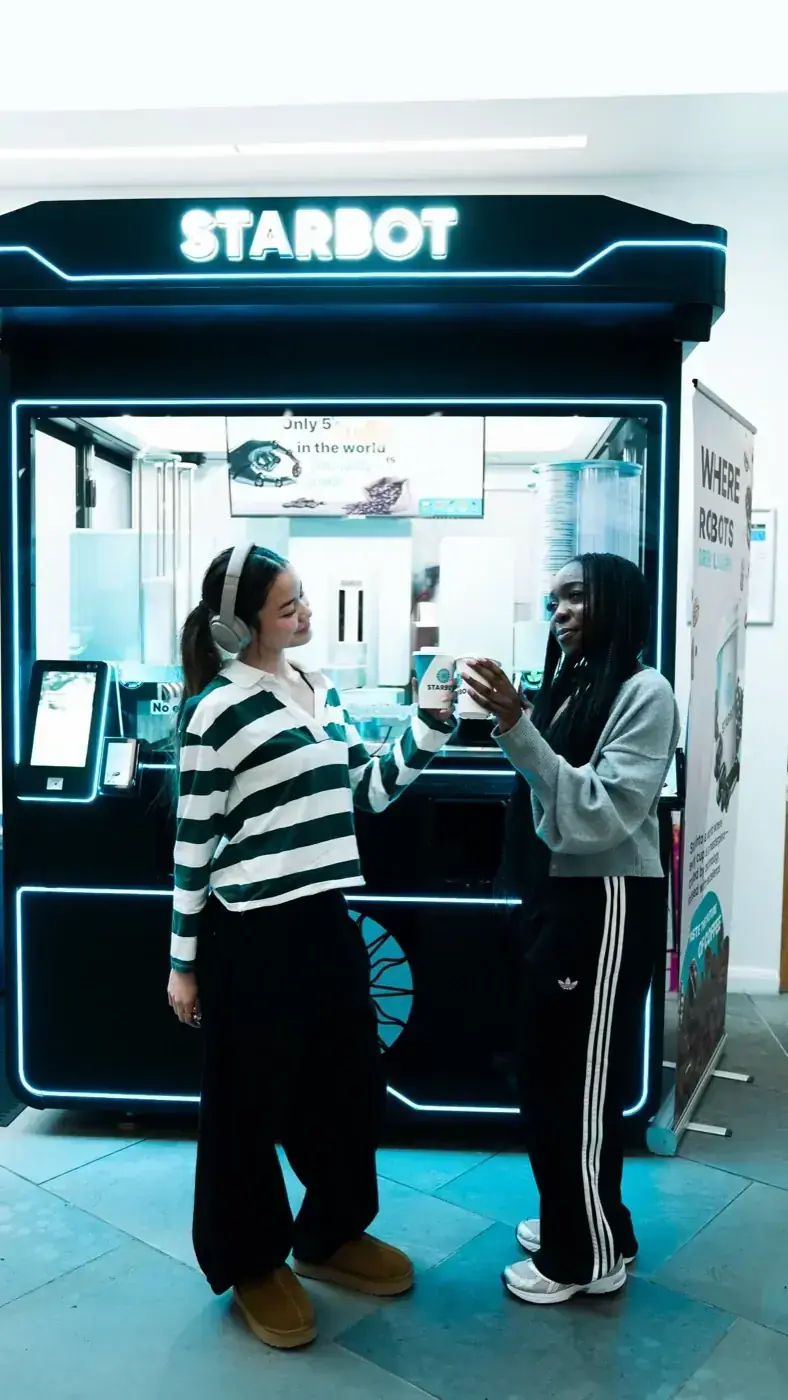
STARBOT venue signage above the kiosk at the live London site
The case

Why a kiosk, in this kind of building.

Brutal ten-minute spikes between lectures, then nothing for fifty minutes. Term-time only, and a dead August.

A campus timetable is the most hostile trading pattern in this country. Lectures release on the hour or at ten to, four hundred people leave one theatre inside three minutes, and fifty minutes later the same corridor is empty. No staffed outlet can open for a ten-minute rush and shut again, so the rush is simply not served — students walk to the high street instead, and the spend leaves the estate with them.

The second thing about a university is that it is not one building with one set of hours. Catering runs the union, the main refectory and perhaps two satellite outlets to a staffed timetable; the library runs to midnight or around the clock in exam weeks, the labs run late, and the sports centre opens at 06:00. Every one of those hours is uncovered, and the kiosk is priced to trade them because standing idle costs it nothing.

This is also the venue type where we have a live reference rather than a projection. The kiosk at our first London site held that rate for two months straight — a central campus building with heavy through-traffic and long opening hours. That is the shape we look for, and it is why universities remain the first channel rather than a diversification.

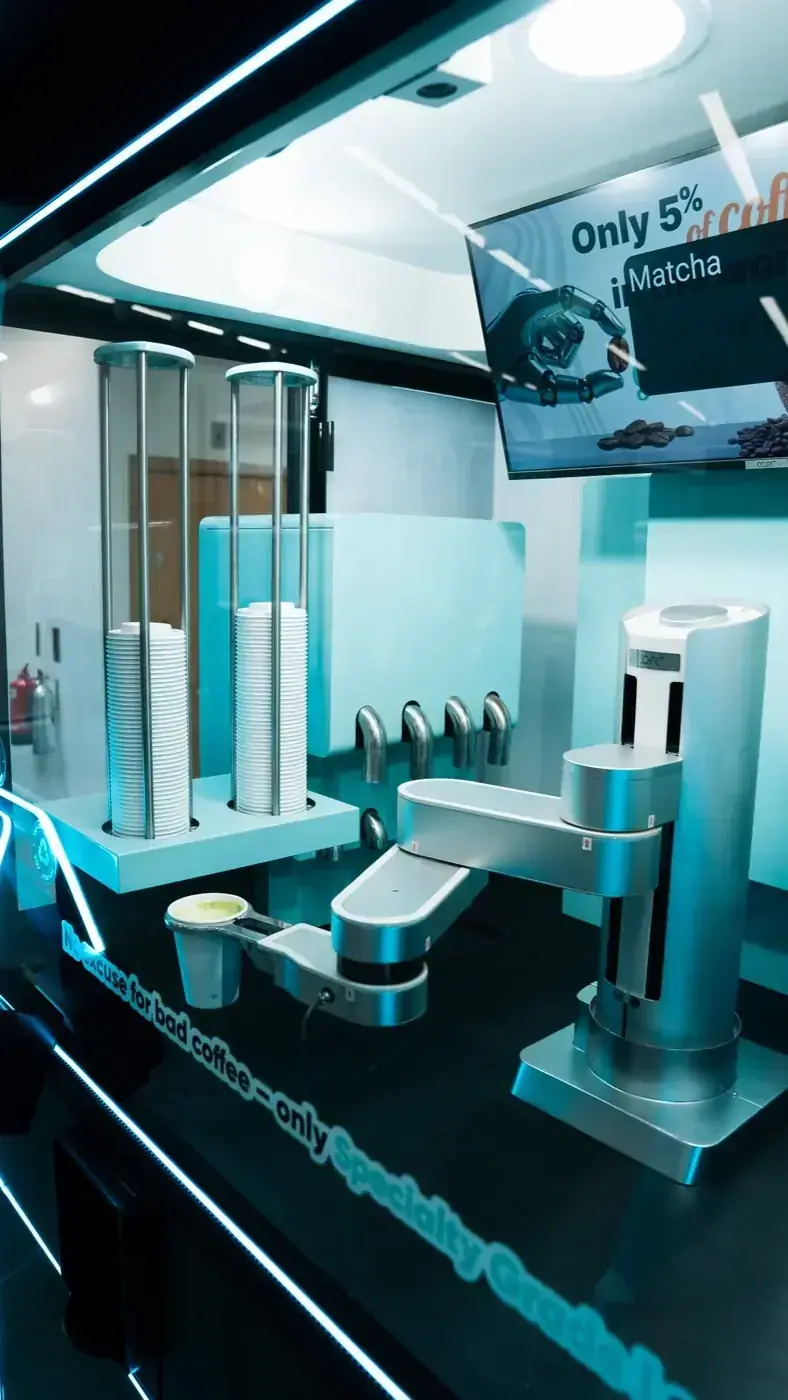
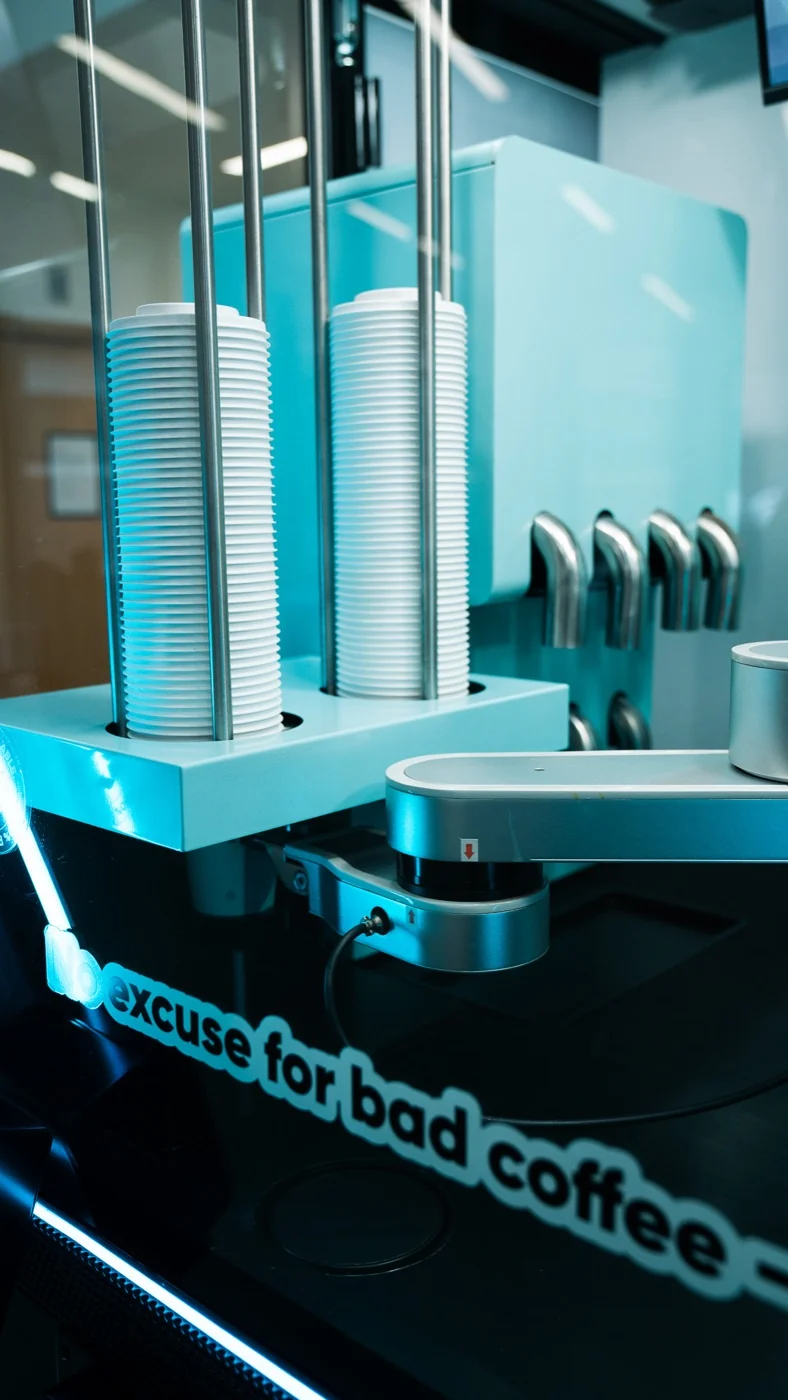
The robotic arm inside the STARBOT kiosk placing a cup
The arm, mid-cycle
Espresso extracting into a cup inside the STARBOT kiosk
Extraction, per cup
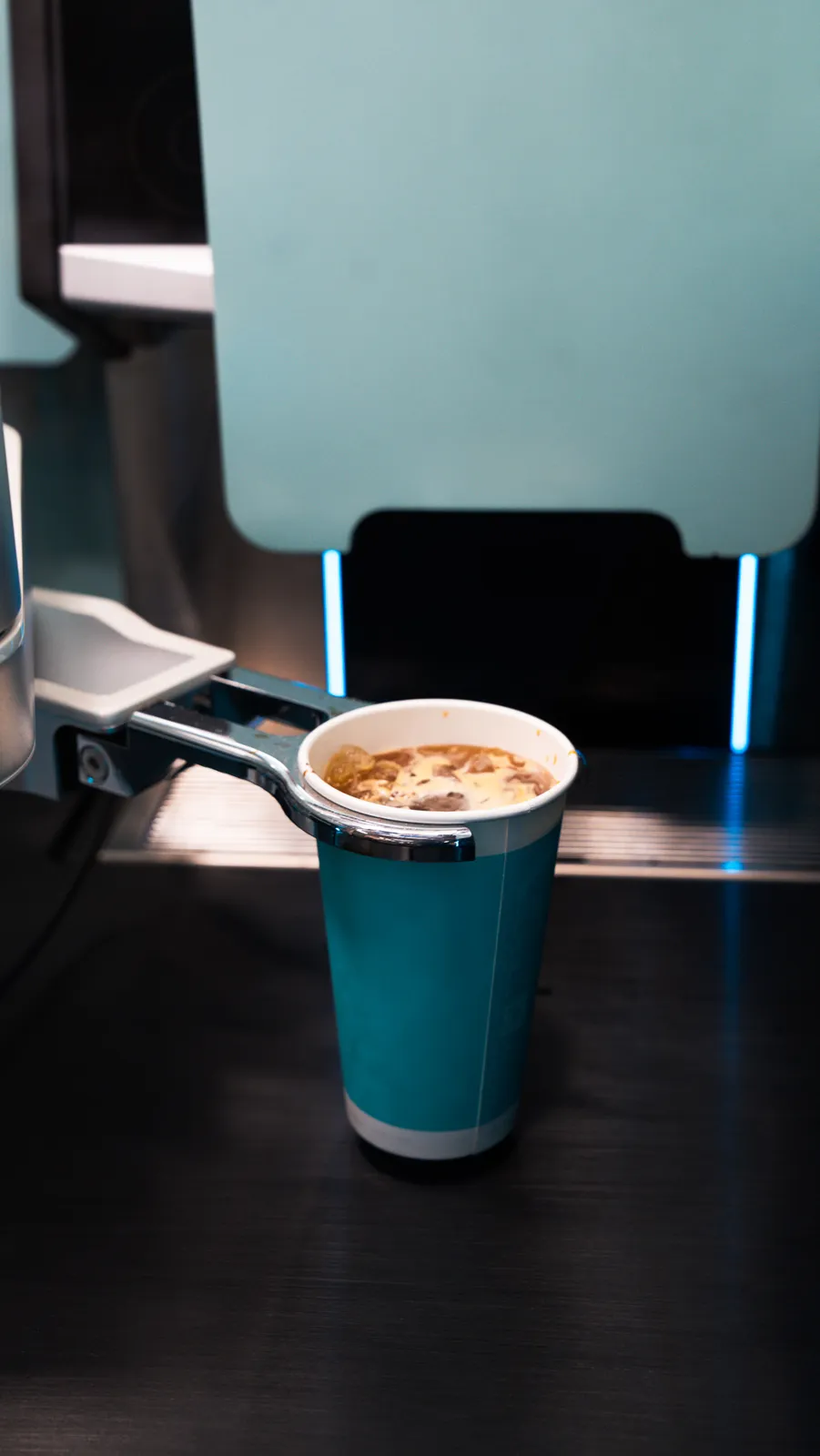
A finished flat white being taken from the STARBOT collection platform
Collected from the platform

Photographed at our live site in London. Real photography, no renders.

The first objection

“Our catering contract already covers hot drinks.”

What actually happens

Where the incumbent gives up

A staffed café cannot open for a ten-minute rush and close again, so students walk off campus and the spend leaves with them.

This is the part nobody puts in the business case, because it is nobody’s job to write it down.

Our answer

What the kiosk does instead

It covers staffed hours. The kiosk earns in the hours your contract cannot justify staffing — evenings, weekends, exam season at 23:00.

Same drink at 06:00 and at 22:00, in under 60 seconds, from 2.5 m² of floor.

The trading day

A day in universities, hour by hour.

Not a generic day. This is how the demand actually arrives in this kind of building — including the hours a staffed counter is paid for and nobody comes.

Trading pattern · universities

Staff arriving and the first teaching slot. Thin, but it is the hour academics decide whether the machine is any good, and they are the people who lobby for a second one.

The first changeover spike. Four hundred people leave a theatre at once and have twenty minutes to be somewhere else, which is the entire market for a drink served without a wait.

The second changeover, usually the heaviest of the day because it runs straight into lunch and nobody has to be anywhere immediately afterwards.

The one window catering genuinely covers well. We are not trying to win it — a kiosk two buildings away from the refectory takes the people who were never going to walk there.

Seminars, labs and library work. Steady rather than spiky, and increasingly the hours when the satellite catering outlets have already closed for the day.

The evening estate: postgraduate teaching, part-time courses, sports centre, and a library filling up. Nothing on campus is staffed for it and the union bar is not selling flat whites.

A 24-hour library at 01:00 is the purest version of the argument. There is no alternative on site, no alternative off site, and a queue that would embarrass a coffee shop.

Close to nothing, plus conferences and open days. An idle kiosk has no wage bill, which is why the term-time pattern is survivable here and would not be for a staffed unit.

Why it holds up here
that figure, measured at our first London site
Serves through the evening and exam periods with no staffing cost
Procurement route exists via the TUCO vending framework rather than a new tender
Where it stands

The position decides the numbers.

Two spots forty metres apart in the same building can differ by half the sales. These are the positions that work in universities — and the one that does not.

The library foyer, on the public side of the gateline

Libraries have the longest opening hours on any campus and the most captive population inside them. The foyer catches people arriving, leaving and taking a break, and it stays useful at 23:00 in May when every other position on the estate is dark. It also sits under existing security cover, which estates will ask about.

A teaching block lobby between two lecture theatres

The changeover spike only converts if the machine is on the route people already walk. A lobby between theatres catches two releases rather than one, and the twenty-minute gap is long enough to buy but far too short to cross campus to the refectory.

The students' union or the sports centre

Both open earlier and later than central catering and both have their own commercial teams, which sometimes makes them a faster route to a first site than the university proper. The sports centre in particular opens at 06:00 for a population that wants a drink on the way out.

Not on the frontage of a staffed catering outlet

Sited beside the refectory the kiosk takes trade the contract caterer was already getting during the hours they are open, and turns a straightforward permission into a commercial dispute. Two buildings away it serves people who were never going to make the walk.

Getting it approved

How a yes actually happens here.

Universities do not have one decision-maker; they have a catering contract, an estates department and a students' union that all have to be comfortable. The person who wants the kiosk is usually a building or faculty manager. The person who can stop it is whoever holds the hot drinks clause in the catering agreement, which is why the first conversation should be about the hours that clause does not cover rather than about the machine.

What moves it along is that there is nothing to build. No plumbing, no drainage, no fixing into the fabric, no alteration to a listed or a leased building — the kiosk stands on a corner of floor and takes a standard 16A socket. That takes the request out of estates' capital process and into a permission, and it means a position can be trialled in one building without committing the estate to anything.

Who has to say yes

What estates and compliance ask · answered

Does this cut across our catering contract?

It should not, and that is a question worth putting to the caterer directly. The kiosk is proposed for hours and buildings the contract does not staff — evenings, weekends, exam nights, a satellite block with no outlet. Where a contract does claim exclusivity over all hot drinks, some caterers waive it for uncovered hours and some do not, and it is better to know which in week one.

What about single-use cups and our sustainability commitments?

It serves into a cup, and that is a real cost on a campus that has spent years reducing them. It is also worth weighing against the alternative behaviour, which is a fifteen-minute walk to a high street chain and a cup that arrives back on campus anyway. We would rather have that conversation honestly at the survey than discover it at the sustainability committee.

Who is liable for it, and who tests it?

We are. It remains our equipment, it is inspected, tested and insured as our equipment, and it never becomes a university asset on revenue share. Estates are not adopting anything into their maintenance schedule and there is no PPM line to add.

Is it accessible?

The screen is a large-target touch interface at standing height and payment is contactless, so there is no cash slot to reach and no small print to read. What matters more in practice is the position: clear approach, no step, and enough space beside it that a wheelchair user is not queueing in a corridor. That is a siting decision we make with your access team rather than a specification we assert.

Does it have to go out to tender?

Often not. There is an established procurement route for vending and coffee equipment through the TUCO framework, which most institutions already use, and a revenue-share placement where the university pays nothing up front is a different animal from a capital purchase. Your procurement team will make the call, but they rarely have to start from a blank tender.

What happens over the summer when the building is empty?

It sits there and earns very little, and that costs the university nothing because there is no rent, no staff and no fixed fee on revenue share. That is the whole reason the term-time pattern works for a kiosk and destroys a staffed satellite outlet.

Nothing here needs plumbing, drainage or a fixing to the fabric of the building. The kiosk stands on the floor and plugs into a standard socket.

What the site has to be able to offer
2.5 m² of clear floor in a building that is open beyond staffed catering hoursA standard 16A socket within reach — no plumbing, no drainage, no fixed servicesA route in through a lift or a level entrance, which is the real constraint in older campus buildingsRestocking access that does not depend on a student escort, or an out-of-hours pass arrangementA named estates contact for the building, so an engineer is not turned away at a locked door in August
Operations

Who does what, once it is in.

A vending contract creates work for your facilities team. This one does not: restocking, cleaning, faults and reporting are ours.

Restocking follows the term, not a calendar

The kiosk reports what it has sold and what it has left, so replenishment is scheduled from the machine rather than a fixed round. On a campus that matters more than anywhere: freshers week and the fortnight before exams empty it at a rate that November never does, and a fixed weekly visit would be both too often and not often enough in the same term.

Cleaning stays with us, including the parts nobody sees

The milk path, the drip tray and the interior are on our schedule. There is no open jug on a counter, no grounds bin for a cleaner to empty and no hot plate left on in an unstaffed foyer overnight — which is usually the point at which the estates manager stops comparing it to the machine in the departmental kitchen.

Faults reach us before they reach the building manager

The kiosk reports its own fault state, so in most cases our engineer is already scheduled before anyone in the building has raised a ticket. There is no number for a librarian to ring at 22:00 and nothing for the university helpdesk to triage.

Sales data that settles the argument with the caterer

Payment is card and contactless only, so every cup is recorded by hour and by day. The first time someone claims the evening trade does not exist, the answer is a chart of drinks sold after 18:00 rather than an opinion, and that is usually what earns the second and third position on an estate.

The interior mechanism of the STARBOT kiosk with cups and hoppers
Inside the unit
Two people choosing drinks at the STARBOT ordering screen
Two at the screen
Finished coffees waiting on the STARBOT collection platform
Ready on the platform

Photographed at our live site in London. Real photography, no renders.

What gets signed

A site licence, not a lease.

What a university signs is a site licence, not a lease. It is permission for us to place and operate a machine in an agreed spot; it gives no exclusive possession of any part of the estate and creates no tenancy. On a campus that distinction is what keeps the paperwork with estates rather than with the university's property solicitors, and it is why a position can be agreed for one building without setting a precedent for the whole estate.

Commercially, the university takes an agreed share of every cup — site commission on a revenue-share placement, with no capital cost and no fixed fee. The share is agreed per site rather than published, because a library foyer with a thousand people a day through it and a departmental lobby in a quiet building are not the same offer and quoting them the same way would mean quoting one of them wrongly.

Where an institution would rather run the equipment itself — some do, particularly where a commercial services department runs its own retail — the same kiosk is available on a five-year lease at £1,790 a month. That route goes through procurement properly, but it is the same machine and the same servicing.

Exit is deliberately simple: notice on either side, we collect the kiosk, and there is nothing to reinstate because nothing was altered. In practice the more common request is a move rather than a removal — a timetable change empties one building and fills another, and relocating a machine that is not plumbed in is a scheduled visit rather than a project.

The commercial shape — a share of every cup, or a fixed monthly fee for the space — is set out before anything is installed. See how hosting works.

Versus the alternatives

Every other option, including where we lose.

If one of the rows above ours fits your building better, take it. We would rather not install a kiosk than install one into a position that cannot carry it.

The optionHow it plays out hereWhere it falls down
The catering contract's own outlets

Staffed, familiar, part of an existing agreement, and genuinely good at the lunch hour they are built around.

They are staffed to a timetable that cannot flex to a ten-minute changeover and cannot justify opening a satellite unit for an evening. The result is that the busiest ten minutes of the academic day and the whole of the evening estate are unserved, which is not a criticism of the caterer — it is arithmetic about wages.

A branded self-serve unit in the foyer

Low effort, recognisable brand, and it will pour something hot at 23:00 without a member of staff.

It is a dispenser: the milk is not textured per cup and the drink is not one a student would choose over the high street if the high street were open. It solves the hours problem and loses on the reason a campus wanted specialty coffee in the first place.

Drinks vending in the corridor

Cheap per position, already procured, and nobody has to think about it.

It sells the drink people settle for. On a campus that competes for applicants on the quality of its student experience, a machine that dispenses something brown into a plastic cup is not a neutral choice — it is a visible one.

A bean-to-cup machine in the departmental common room

Cheap, close, and free at the point of use for staff who already have a key to the room.

It is behind a door students cannot open, it is descaled by whoever remembers, and it serves the twelve people who were already fine. It does nothing about the four hundred leaving the lecture theatre.

A STARBOT kiosk

Specialty drinks without a wait, no staff, that footprint, no capital cost on revenue share, trading every hour the building is open.

It is one machine and a four-hundred-seat theatre emptying at once will queue — the honest answer on a big campus is more positions, not a bigger claim. It sells no food, so it does not solve the student who has been in the library since nine. August earns almost nothing. And where a catering contract claims every hot drink on the estate, we cannot make that clause go away.

The last row is ours, with its real downside written in. Revenue share and unit pricing are agreed per site and are not published.

When to say no

Where this is the wrong answer.

Four cases in this venue type where we would tell you not to bother. They cost us installs; printing them costs less than a kiosk that never earns.

Siting mistakes

Four ways to put it in the wrong place.

Each of these has happened somewhere, and each shows up as the same thing on the report: a position that takes half of what the footfall said it would.

Siting it inside a card-access building

Campus security has spent years locking teaching blocks after hours, and a kiosk behind that line is available only to people who already have a reason to be there. The volume on any campus is the crossing population — the students moving between buildings — and a swipe-card door removes them entirely.

Putting it next to the refectory

During opening hours it takes trade the caterer was already getting, which turns a permission into a commercial argument you will lose. During closed hours it earns, but not enough to justify the fight. Two buildings away it does the opposite: it serves the people the refectory never reached.

Choosing a position on footfall rather than on dwell

A main artery at changeover looks like the obvious spot and often is not — people are moving at pace with twenty minutes to cross campus. The library foyer, where they are already stopping to put a coat on, converts at a rate a busy corridor does not.

Ignoring the vacation profile when choosing between two buildings

A summer school building and a pure teaching block look identical in November and completely different in July. Pick the one with conference, open day and vacation-let traffic and the quiet months are thin; pick the other and they are empty.

Where these cluster

The cities this venue type is thickest in.

Density matters to us as much as footfall: several sites inside one servicing round is what keeps a kiosk free to host.

London

Where the proof is: our first London site, plus around forty institutions on cramped central sites that cannot open a staffed unit for a ten-minute gap.

Manchester

A student population in the hundreds of thousands across the University of Manchester and MMU, with a heavy evening trade that campus catering does not cover.

Sheffield

One of the highest student-to-resident ratios in the UK, concentrated between the University of Sheffield and Hallam in a walkable centre.

Nottingham

Two large universities where the distance between buildings makes a central café useless to anyone with a fifteen-minute gap.

Liverpool

Three universities inside a compact centre, so several campus positions sit within one servicing round.

Questions from this kind of building

The ones worth asking before you sign.

Our catering contract already covers hot drinks. How does this not breach it?

Most catering contracts commit a provider to staff specified outlets at specified hours, and the kiosk is proposed for the hours and buildings that are not staffed — evenings, weekends, exam nights, an outlying block with no outlet at all. Where a contract does claim every hot drink on the estate, that is a genuine blocker and we would rather test it with your caterer at the start than discover it after a survey.

How does a university actually buy this — do we have to tender?

Usually not, because there is nothing to buy. On revenue share the university has no capital cost and no fixed fee; we install, stock and service the kiosk and the institution takes site commission on every cup. Where a purchase is preferred, there is an established route via the TUCO vending framework rather than a fresh tender exercise.

What happens over the summer when the campus is empty?

Sales fall away and neither side pays for it. That is the difference between a kiosk and a staffed satellite outlet: a machine that earns nothing in August costs nothing in August, whereas a member of staff has to be employed or let go. It is the single reason the academic trading pattern works for this model.

Can it go in a library that opens 24 hours in exam season?

That is the strongest position on most campuses. At 01:00 in May there is no alternative on site and nothing open off it, and the kiosk trades those hours with no staffing cost attached. It needs a spot inside existing security cover and a socket, which a library foyer almost always has.

How many cups a day should we expect?

It depends on how many people pass the position and stop, which is why we survey rather than quote an average. The reference point we can give is real: that figure, measured at our first London site, in a central building with long opening hours and heavy through-traffic.

Students do not carry cash. Is that a problem?

It is the opposite of a problem here — the machine is cashless, which is how this population pays for everything anyway. It also means no float, no cash collection from an unstaffed foyer at midnight and nothing worth breaking into a machine for.

Who cleans and restocks it, and does that fall to our staff?

It falls to us. The kiosk reports its stock and fault state, so refills and engineer visits are scheduled from what it has actually sold rather than from a rota. Your cleaning contractor keeps cleaning the floor it stands on, and no one in estates inherits a maintenance line.

Can we move it between buildings as the timetable changes?

Yes, and universities ask for this more than any other venue type. Because it is not plumbed and not fixed to anything, a move is a scheduled visit. A building that empties when a department relocates does not have to become a dead position for the rest of the agreement.

What does the students' union get out of it if it goes in their building?

The same site commission on every cup, agreed with whoever holds the space. Union buildings are often the fastest first site on a campus precisely because the union runs its own commercial operation and can make a decision without waiting for the wider estates process.
Not what you were after? All sixteen venue types · Host a kiosk at your site · Own a STARBOT franchise · Lease a unit · Own one · £1,790/mo

Tell us about your building.

Postcode, venue type and rough daily footfall is enough to start. We come back with a footfall-based model for your site — usually within a day.

Or go direct — WhatsApp hello@starbot.co.uk

Tell us about your site.
We reply the same day.

No obligation, no credit search, no spam — one reply from the team with the exact numbers for your venue.

Prefer to talk? WhatsApp us — or ask Richard, bottom right.