Live · City St George’s, University of London

Coffee machines for train stations

Coffee for the 05:40 commuter, when the concession is still shuttered. Fits a 2.5 m² footprint on a concourse. Free to host — we install, stock and service it; your

150cups a day, first London site
2.5 m²and one 16A socket
£0to install and to run
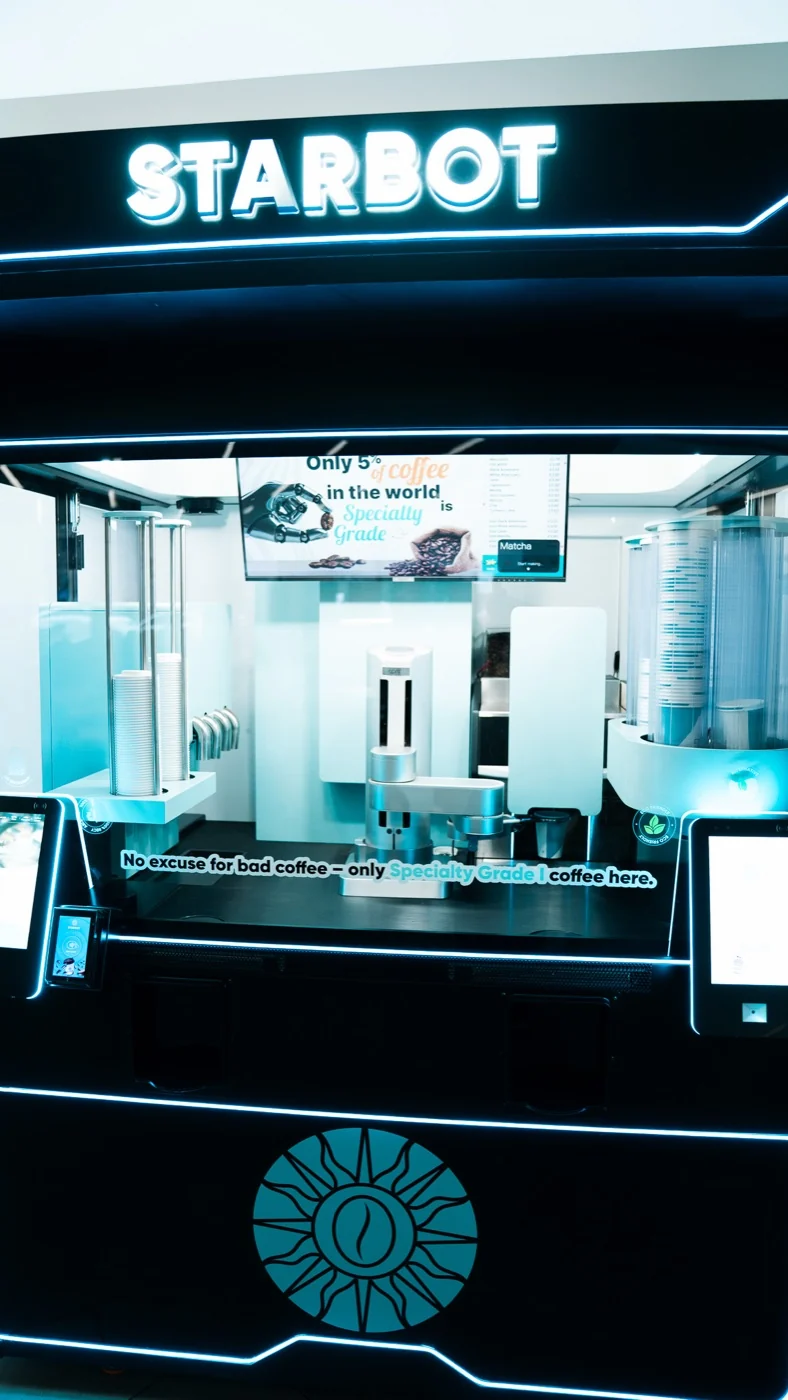
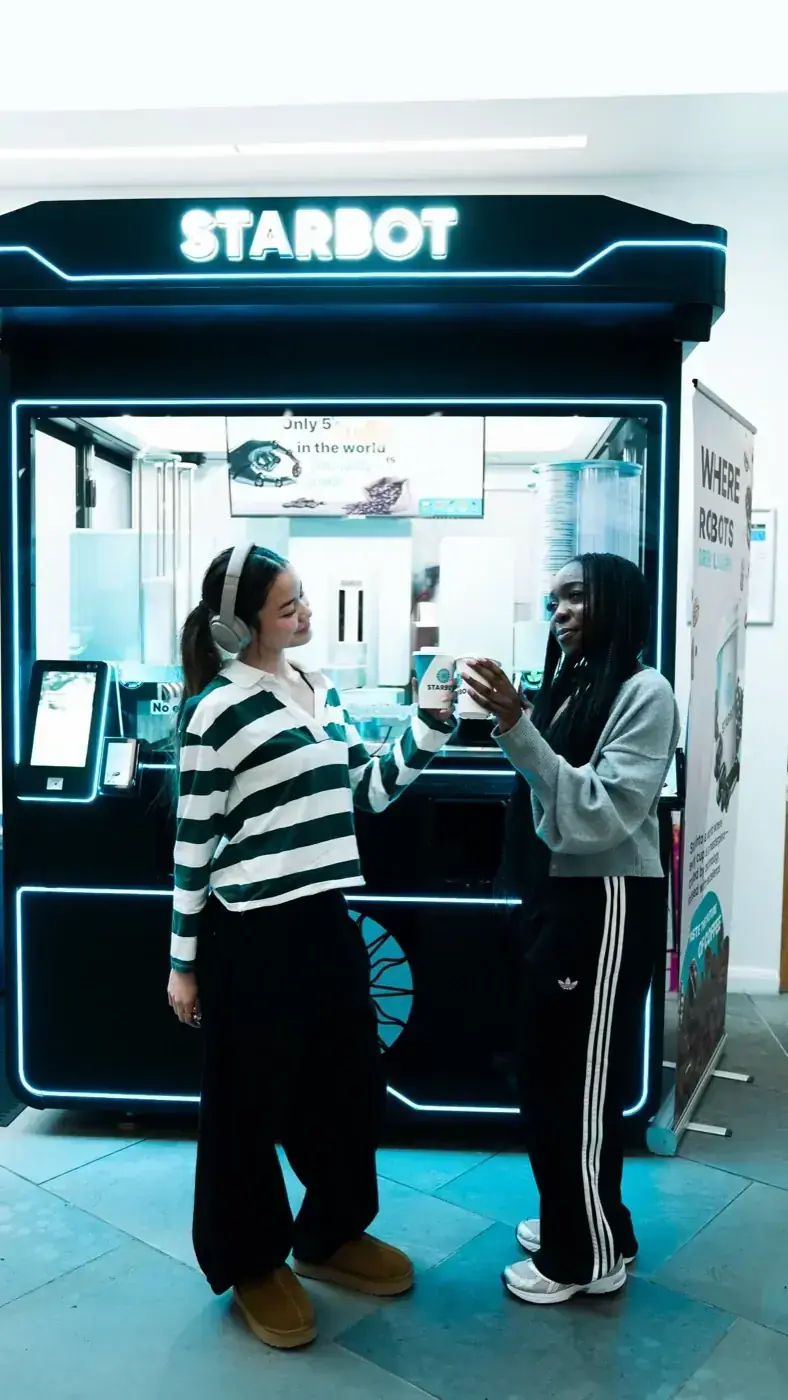
STARBOT venue signage above the kiosk at the live London site
The case

Why a kiosk, in this kind of building.

A vicious 06:00–09:00 peak, a second at 17:00, and a first train that leaves before any staffed unit opens.

The most reliable coffee sale on the railway happens before anything is open to sell it. The first departures leave before 06:00, the people on them left home before 05:30, and the staffed unit on the concourse raises its shutter somewhere between half past six and seven. Every one of those passengers is a certain customer with no option, and on most stations in this country they get nothing at all.

The same thing happens at the other end of the day. Late services, delayed services and the last train home all run after the concession has cashed up, and a platform full of people waiting for a replacement bus at 23:00 is the least served market in British retail. A machine in a corner that pours a flat white in under 60 seconds trades both ends without anyone being rostered for either.

What makes rail hard is not demand, it is process. Station space is let commercially, the party who controls it differs from station to station, and changes to station facilities go through a formal route rather than a conversation. We are direct about this: rail is our third channel rather than our first, and our understanding is that an operator is expected to show a track record of live sites before a coffee application is considered at all.

Two people choosing drinks at the STARBOT ordering screen
Two at the screen
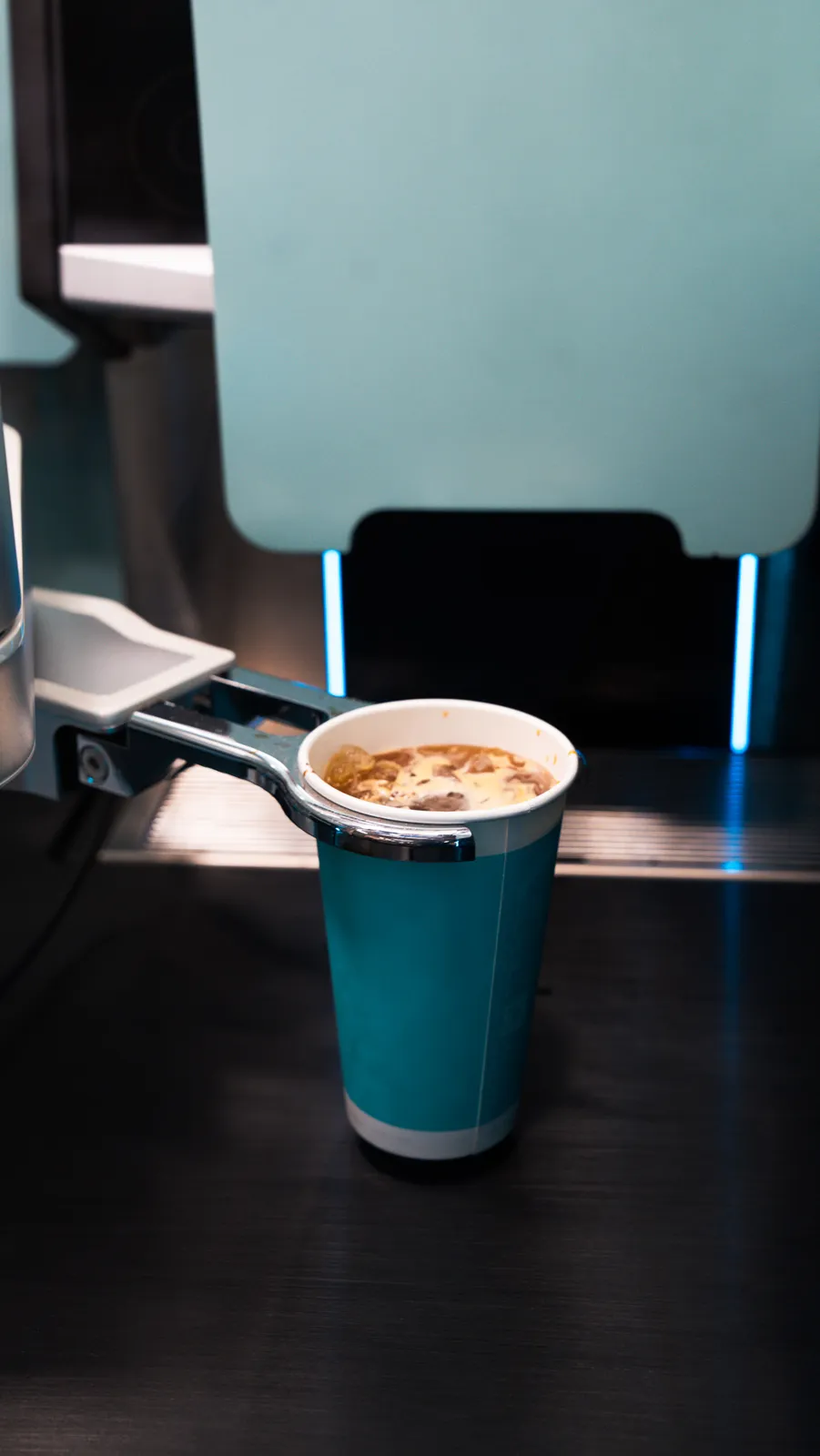
Finished coffees waiting on the STARBOT collection platform
Ready on the platform
The STARBOT kiosk head on, showing the screen and collection hatch
Front elevation

Photographed at City St George’s, University of London — our live site. Real photography, no renders.

The first objection

“Concourse space is let commercially and the process is slow.”

What actually happens

Where the incumbent gives up

The staffed unit cannot open at 05:00 for the first train, which is the most reliable coffee sale of the day.

This is the part nobody puts in the business case, because it is nobody’s job to write it down.

Our answer

What the kiosk does instead

That is true, and it is why rail is our third channel rather than our first — our understanding is that a track record of live sites is expected before a coffee application is considered at all.

Same drink at 06:00 and at 22:00, without a wait, from a corner of floor.

The trading day

A day in train stations, hour by hour.

Not a generic day. This is how the demand actually arrives in this kind of building — including the hours a staffed counter is paid for and nobody comes.

Trading pattern · train stations

First departures. Small numbers, absolute certainty, and nothing open. This is the window that justifies the position on any commuter station in the country.

The peak. Dwell is ninety seconds and the buying decision is made at walking pace, so position on the flow line matters more here than in any other venue we serve.

Off-peak leisure travel and the late-start commuters. Slower, more willing to stand and wait, and the hours the staffed unit is genuinely good at.

A long thin middle. Enough to keep a machine ticking over and nowhere near enough to keep a member of staff paid, which is the whole comparison in one line.

The return peak. Different behaviour from the morning — people are less rushed on the way home and more likely to buy while they wait for a platform announcement.

Evening services, delays and disruption. Nothing is open, dwell is long, and a delayed platform is the one situation where passengers will queue for anything at all.

Rail replacement operations put crowds on a concourse for long periods at exactly the times a concession has chosen not to open. Unpredictable, but reliably underserved.

Why it holds up here
Serves the pre-06:00 and post-22:00 windows that staffed concessions never cover
A unit this size fits where a full unit cannot be let
Contactless only — no cash handling on an unstaffed concourse
Where it stands

The position decides the numbers.

Two spots forty metres apart in the same building can differ by half the sales. These are the positions that work in train stations — and the one that does not.

The unpaid side, near the entrance rather than the gateline

Outside the gates the machine serves passengers, meeters, taxi drivers and station staff, and it catches people while they still have time before they touch in. Inside the gates the audience is smaller and moving faster, and dwell collapses to whatever is left before departure.

The waiting room, on a station with a real one

Dwell in a waiting room is measured in tens of minutes rather than seconds, which converts far better than a busy concourse. It is also enclosed, covered by existing CCTV and out of the main flow — three of the things a station manager is going to ask about anyway.

The ticket hall of a busy suburban station

Suburban stations are where the argument is cleanest: a large morning peak, no staffed retail at all, and a ticket hall with space that could never be let as a full unit. A footprint that size fits where a shop cannot, which is the entire proposition on this part of the network.

Not on the main flow line, and not on an open platform

Anything that creates an obstruction where crowds move at peak will be flagged the moment station capacity is looked at, and a machine on an exposed platform faces weather, vandalism and a servicing problem on a live railway. Both are avoidable by choosing the position properly at the survey.

Getting it approved

How a yes actually happens here.

The first question on any station is who actually controls the space. At the largest termini that is Network Rail, which manages those stations directly. Everywhere else the station facility owner is normally a train operator, and it is their property and retail team who decide what stands on the concourse. Approaching the wrong one is the most common way a rail conversation stalls for months without anybody saying no.

The second thing is that stations do not simply agree to new facilities in a meeting. Changes to what is on a station go through a formal process, alongside a commercial letting decision and a look at pedestrian flow, security and the existing retail agreements. That is slow by design. We would rather set the expectation honestly — this is our third channel, behind venues that can say yes in a fortnight — than pretend a station is a quick win.

Who has to say yes

What estates and compliance ask · answered

Who is the counterparty — Network Rail or the operator?

It depends on the station. The largest termini are managed by Network Rail directly; the great majority of stations have a train operator as station facility owner. Establishing that in the first conversation saves months, because a position agreed with the wrong party has not been agreed at all.

Does it obstruct passenger flow at peak?

It must not, and this is the question that decides the position rather than the principle. A unit this size is small enough to sit outside a flow line in most ticket halls, but the spot has to be chosen against how the station moves at 08:00, not how it looks at eleven o clock on a survey visit.

What about security — unattended equipment in a public interchange?

It is a fixed, standing unit in a fixed position with the mechanism behind glass, in view of existing CCTV where we can arrange it, and there is no cash inside it because payment is card and contactless only. Anything unattended on the railway attracts scrutiny and it should; the answer is position, visibility and a named operator, not a promise.

Does it conflict with our existing retail agreements?

That is for your commercial team to check, and it varies by station. Some concession agreements are exclusive on hot drinks and some are not. Where they are, the honest conversation is about the hours the concession does not open, and whether the letting can accommodate that.

How is it serviced without disrupting the station?

Restocking is a trolley visit through a normal entrance, scheduled around the peaks rather than through them, using whatever access arrangement the station requires. No work is done to the fabric, nothing needs a possession, and nothing about the servicing touches the operational railway.

What power does it need and who provides it?

A standard 16A socket, which is why this can go in a ticket hall or a waiting room rather than only where a retail unit was built. There is no plumbing and no drainage, so the position is limited by flow and power, not by services.

Nothing here needs plumbing, drainage or a fixing to the fabric of the building. The kiosk stands on the floor and plugs into a standard socket.

What the site has to be able to offer
2.5 m² clear of the peak flow line and clear of the gateline queueA standard 16A socket within reach — no plumbing and no drainageA position under cover, and preferably under existing CCTVA servicing access arrangement, including who lets an engineer in outside staffed hoursConfirmation of who the station facility owner is before anything else is agreed
Operations

Who does what, once it is in.

A vending contract creates work for your facilities team. This one does not: restocking, cleaning, faults and reporting are ours.

Restocking is scheduled around the peaks, never through them

The kiosk reports what it has sold, so a visit is triggered by stock rather than by a rota — and on a station that is the difference between arriving in the middle of an 08:00 crush with a trolley and arriving at ten. Rail is the venue type where when we service matters as much as how often.

Nothing on the station has to look after it

The interior, the milk path and the drip tray are ours. Station staff are not asked to open it, refill it, clean inside it or reset it after a fault, which matters because on most stations there is no member of staff with time to do any of those things at any point in the day.

It reports its own faults on an unstaffed concourse

A machine that has failed at 05:00 on a suburban station could otherwise sit dead all day with nobody to notice. Because the kiosk reports its fault state, the engineer is dispatched off that signal, which is the only servicing model that works where there is no one on site to raise a ticket.

Cashless, which is the right answer on the railway

Payment is by card or phone. There is no float, no cash collection from an unstaffed concourse and nothing inside the machine worth attacking at two in the morning — which removes the single largest practical objection to putting equipment on a station overnight.

Espresso extracting into a cup inside the STARBOT kiosk
Extraction, per cup
A finished flat white being taken from the STARBOT collection platform
Collected from the platform
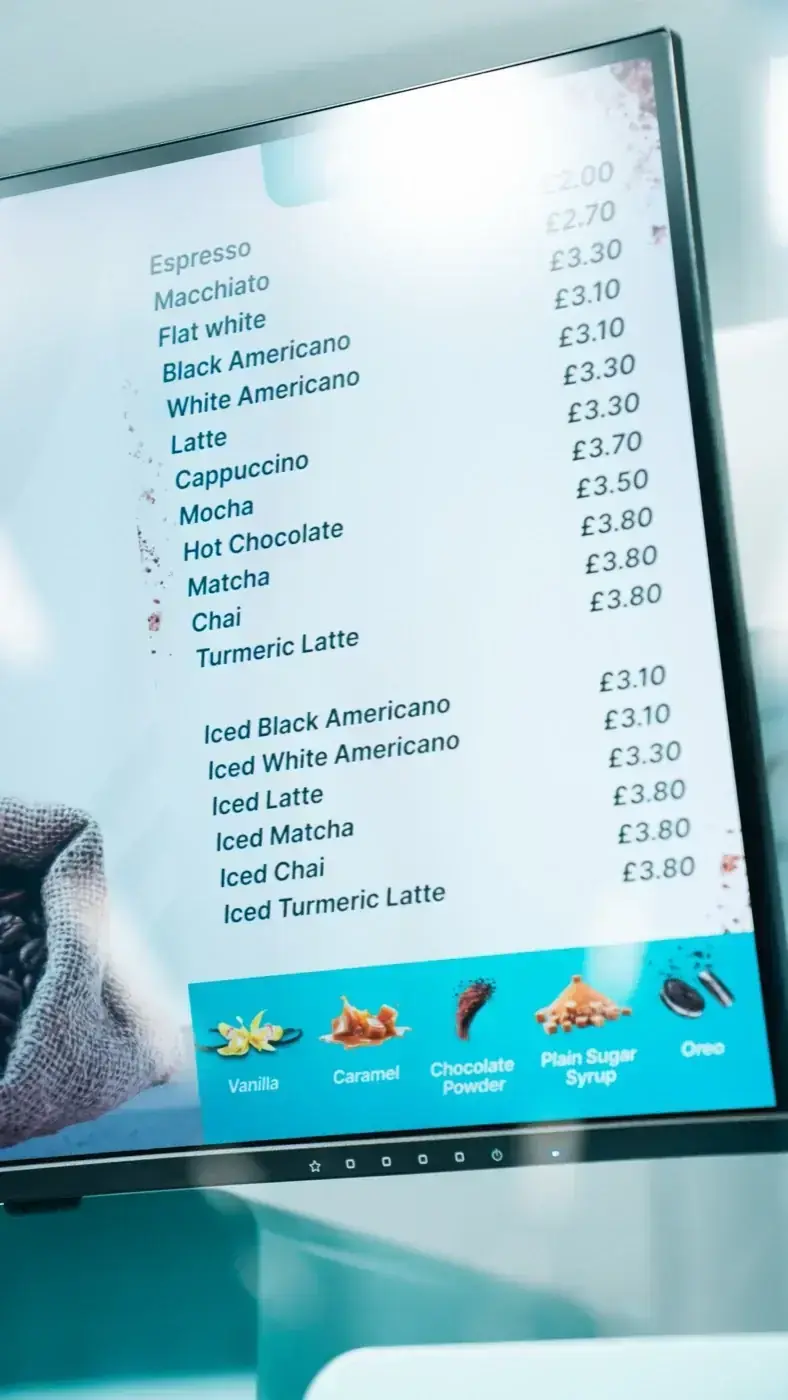
The STARBOT menu screen showing espresso, flat white, cappuccino and latte
The menu, on screen

Photographed at our live site in London. Real photography, no renders.

What gets signed

A site licence, not a lease.

What is signed on a station is a licence to occupy a defined position, not a lease of a retail unit. That distinction is the point of the whole proposition here: a full unit means a letting, a fit-out and a multi-year commitment, and a kiosk this size on a licence can go in the spaces that were never going to be let at all.

The commercial terms are site commission on every cup, agreed per station, with no capital cost to the station facility owner. A suburban ticket hall and a city terminus are wildly different offers, and quoting them the same way would be quoting one of them wrongly — so the share is agreed against the position and its actual trading hours.

Exit is by notice on either side, and because nothing is fixed, plumbed or built, removal is a visit rather than a strip-out. Stations reconfigure constantly — gatelines move, entrances close for works, a concourse is rebuilt — and a machine that can be relocated in a single visit is far easier for a station manager to agree to than one that cannot.

It is worth repeating the honest position on timing. Rail is our third channel, behind venues that can grant a position quickly, and an operator is expected to show a track record of live sites before a coffee application is considered. If you are a station facility owner reading this, that is the context: we would rather build the operating record first and come to you with it than take up your process without one.

The commercial shape — a share of every cup, or a fixed monthly fee for the space — is set out before anything is installed. See how hosting works.

Versus the alternatives

Every other option, including where we lose.

If one of the rows above ours fits your building better, take it. We would rather not install a kiosk than install one into a position that cannot carry it.

The optionHow it plays out hereWhere it falls down
The staffed concession on the concourse

A full offer with food, seating on some stations, and a brand passengers recognise. Through the middle of the day it is comfortably the better proposition.

It cannot open at 05:00 for the first train and it has cashed up before the late services run. Those two windows contain the most certain coffee purchases on the railway, and no amount of goodwill makes a wage bill work across them.

A branded self-serve machine in the ticket hall

Already common on the network, works at any hour, needs no staff and the brand does the reassurance.

It is a dispenser. The milk is not textured per cup and the drink is a compromise everybody recognises as one, which is fine at 05:30 when there is no alternative and unnecessary now there is.

Drinks and snack vending on the platform

Cheap, weatherproofed, and it has been the default answer to unstaffed hours for decades.

Nobody has ever changed their travel habits because of a vending machine, and it does nothing for a station trying to make a shabby concourse feel looked after. It also sells nothing at a price point that justifies its space.

Nothing — passengers buy on the train or at the other end

No letting, no process, no equipment on the concourse and no risk.

It gives the sale away to whoever is at the other end of the journey, and on the growing number of services with no trolley there is no other end until the passenger arrives. It also leaves the 05:40 commuter with nothing at all, which is what they remember about your station.

A STARBOT kiosk

Specialty drinks without a wait, trading the pre-06:00 and post-22:00 windows, that footprint on a licence rather than a unit on a lease, no cash on the concourse.

It is one machine against a ninety-second dwell — a full 08:00 peak will queue past the point where a rushing commuter gives up, and we would rather say that than claim a kiosk replaces a concession. It sells no food. And the process to get one onto a station is genuinely slow, which is why rail sits behind our other channels rather than in front of them.

The last row is ours, with its real downside written in. Revenue share and unit pricing are agreed per site and are not published.

When to say no

Where this is the wrong answer.

Four cases in this venue type where we would tell you not to bother. They cost us installs; printing them costs less than a kiosk that never earns.

Siting mistakes

Four ways to put it in the wrong place.

Each of these has happened somewhere, and each shows up as the same thing on the report: a position that takes half of what the footfall said it would.

Siting it inside the gateline

Past the gates the audience shrinks to ticket holders in the last minutes before departure, and everyone who is meeting, dropping off, working at the station or has not touched in yet is excluded. The unpaid side almost always outsells the paid side, and it is the cheaper permission as well.

Putting it on the flow line at peak

It looks like the best position on a quiet survey visit and becomes an obstruction at 08:00. Once a machine has been identified as a congestion point it will be moved, and the argument will be about crowd safety rather than about coffee, which is not an argument anybody wins.

Choosing a station on annual footfall alone

Rail footfall figures flatter stations that people pass through and punish the ones where they wait. A suburban ticket hall with a fifteen-minute morning dwell converts better than a terminus where a hundred thousand people cross a concourse at pace, and the published numbers say the opposite.

Agreeing the position with the station manager alone

The station manager can tell you where a machine can safely stand and cannot grant the commercial right for it to be there. Without the property or retail team and the station facility owner, that agreement evaporates the week before installation.

Where these cluster

The cities this venue type is thickest in.

Density matters to us as much as footfall: several sites inside one servicing round is what keeps a kiosk free to host.

Manchester

The Northern Rail station cluster is dense enough to service several positions in one round, and the business has already been introduced to the operators there through JLL.

Newcastle

Newcastle Central sits within a mile of the university and the Royal Victoria Infirmary, so a station position shares a servicing round with two other venue types.

Glasgow

Central Station carries a heavy commuter peak into dark winter mornings, when the first departures leave long before anything on the concourse opens.

Edinburgh

Waverley and Haymarket run a normal commuter year with an August festival peak layered on top, which no staffed unit can hire for.

Questions from this kind of building

The ones worth asking before you sign.

Concourse space is let commercially and the process is slow. Why would this be different?

It is not different, and we would rather say so. What changes the arithmetic is scale: a licence on a footprint that size is a much smaller decision than a retail letting, and it can go in spaces that were never lettable as a unit. But rail is our third channel for exactly this reason, and our understanding is that an operator is expected to show a track record of live sites before a coffee application is considered at all.

Who do we need to talk to — Network Rail or the train operator?

Whoever is the station facility owner. At the largest managed termini that is Network Rail; at most other stations it is a train operator. That is the first thing to establish, because everything else — the position, the licence, the commercial terms — follows from who actually controls the concourse.

Can it survive on an unstaffed station overnight?

The mechanism is behind glass and there is no cash inside it, which removes the main reason machines are attacked. What decides it in practice is position: under cover, in view of existing CCTV, and not on an open platform. We would rather turn down an exposed platform position than install one and lose the machine.

How does it get serviced without disrupting the station?

It is a trolley visit through a normal entrance, scheduled around the peaks rather than through them. There is no work to the station fabric, nothing requires a possession and nothing touches the operational railway. The one thing we need from the station is a clear access arrangement, including who admits an engineer outside staffed hours.

What does the station earn?

Site commission on every cup, with no capital cost and no fit-out contribution. What it is worth depends far more on dwell than on footfall — a ticket hall where people wait ten minutes for a train will outsell a concourse people cross at speed, and we survey for that rather than quoting from passenger numbers.

Will it cope with the 08:00 peak?

Each drink is served without a wait and there is no conversation slowing the queue, but it is one machine and a full peak will form a queue that some rushing commuters will not join. The honest read is that a kiosk owns the hours before and after the peak completely, and takes a share of the peak itself rather than all of it.

Does it need power or water supplies bringing to the position?

Only a standard socket. There is nothing to plumb in and nothing to drain, because it runs from a refillable supply, and that is precisely why it can stand in a ticket hall or a waiting room rather than only where a retail unit was built with services.

What about suburban stations with no staff at all?

Those are often the best sites on the network for this. A large, concentrated morning peak, no retail whatsoever, and a ticket hall with space that could never be let as a shop. Because the kiosk reports its own faults and takes no cash, an unstaffed station is an operating model rather than a problem.

Do you serve rail replacement and disruption events?

The machine does, simply by being open. Weekend engineering works and evening disruption put crowds on a concourse for long periods at times no concession has chosen to open, and those are the days a station kiosk earns most. Nothing about it needs to be rostered in advance for that to happen.
Not what you were after? All sixteen venue types · Host a kiosk at your site · Own a STARBOT franchise · Lease a unit · Own one · £1,790/mo

Tell us about your building.

Postcode, venue type and rough daily footfall is enough to start. We come back with a footfall-based model for your site — usually within a day.

Or go direct — WhatsApp hello@starbot.co.uk

Tell us about your site.
We reply the same day.

No obligation, no credit search, no spam — one reply from the team with the exact numbers for your venue.

Prefer to talk? WhatsApp us — or ask Richard, bottom right.