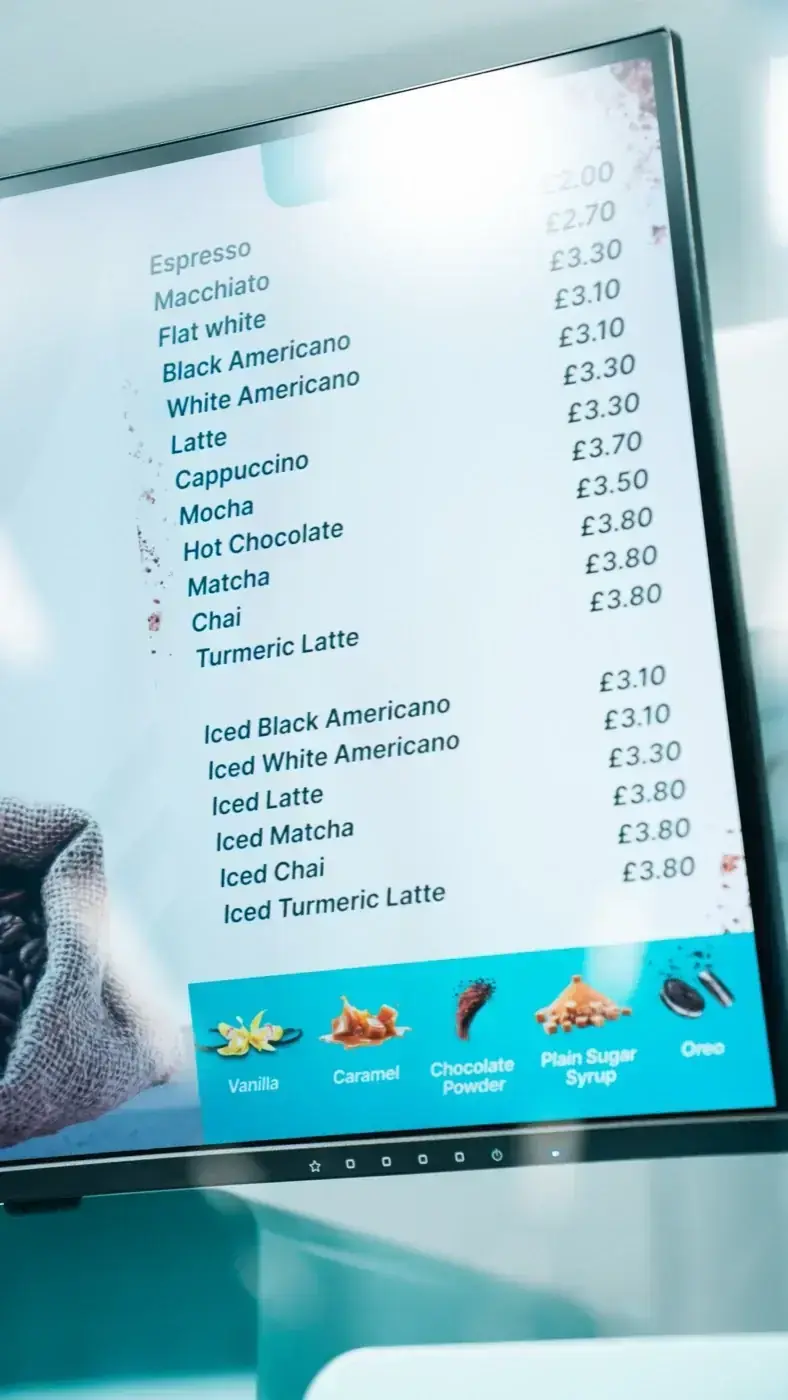
Coffee airside at 04:00 for the first wave, in a footprint that fits where a full unit will not. Free to host — we install, stock and service it; your site takes a
Runs on the flight schedule, not the clock — the 04:00 wave is a real trading peak.
An airport does not run on a clock, it runs on a schedule, and the schedule starts hours before anything with a member of staff behind it opens. Check-in for the first departures bank is working in the dark, security is open, and the passengers who cleared it are sitting in a departure lounge where every unit is shuttered. That gap is not a small one and it is not occasional — it happens every single morning, and it is the entire argument for a machine that does not need anyone to open it.
The honest position on airports is that they are our third channel rather than our first. Airside retail is let under concession agreements that frequently grant exclusivity over hot drinks, the process for placing anything in a terminal is long, and the people who decide are commercial teams with a full pipeline. We say that plainly because a page that pretends a terminal is as easy as an office is a page that wastes both our time.
What is genuinely available, and what most operators overlook, is everything the passenger never sees. Crew rooms, ground handler mess rooms, baggage halls, staff canteens outside catering hours, and landside offices in the terminal building are staffed around the clock by people whose breaks fall at 02:00 and who currently have a kettle. That is a real trading population, it is not covered by a retail concession, and it is the fastest route into an airport by a wide margin.
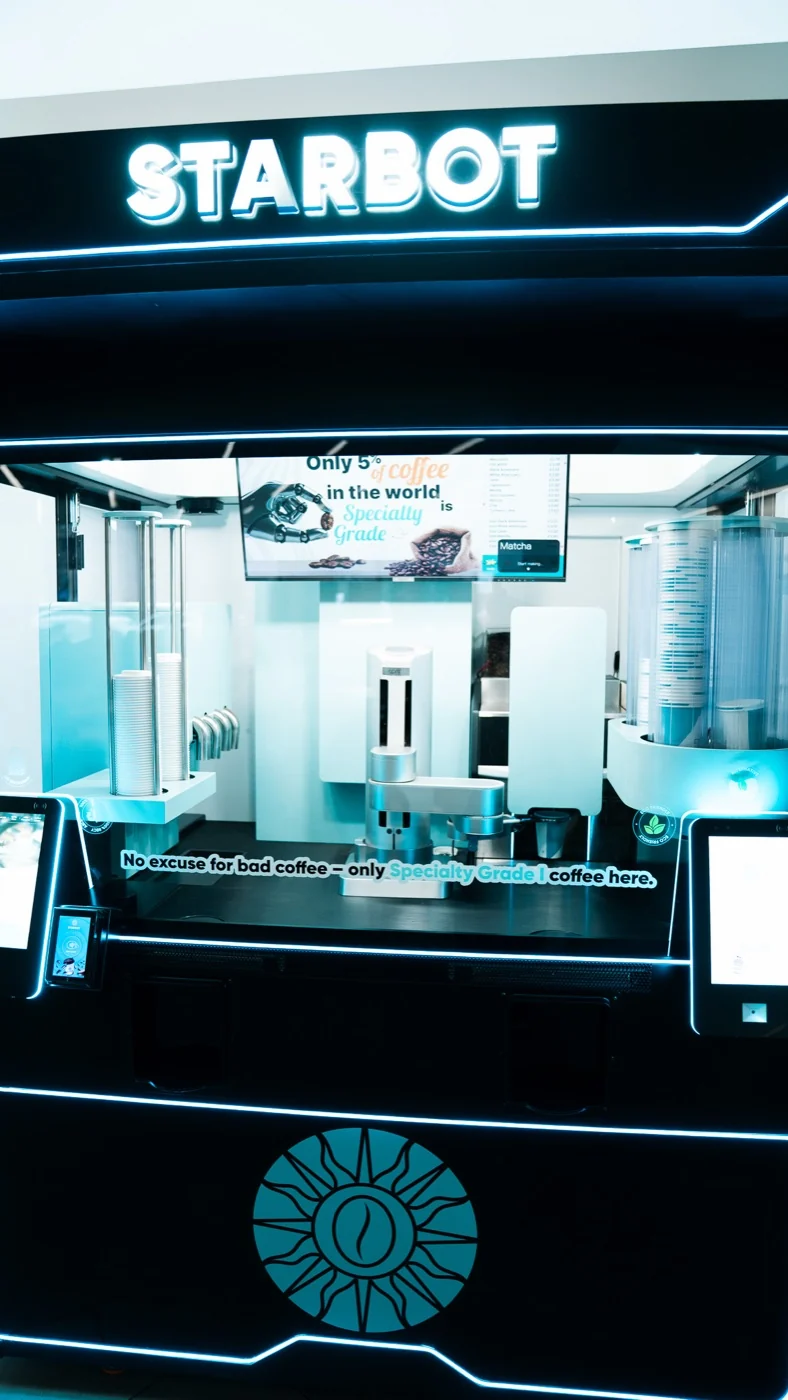
Photographed at City St George’s, University of London — our live site. Real photography, no renders.
Staffed units open at 05:00; the first departures wave is already through security by then.
This is the part nobody puts in the business case, because it is nobody’s job to write it down.
Landside, staff areas and crew rooms are not, and they are where the unstaffed hours actually hurt.
Same drink at 06:00 and at 22:00, in under 60 seconds, from 2.5 m² of floor.
Not a generic day. This is how the demand actually arrives in this kind of building — including the hours a staffed counter is paid for and nobody comes.
The first departures bank. Check-in and security are working, passengers are through, and almost nothing airside is open. This is the most reliably uncontested trading hour in any building on this site.
The morning wave proper. Staffed units are open by now and the kiosk is competing rather than substituting, which is why the position matters more here than the hours do.
A gap in the bank structure at most regional airports. Quiet on the concourse, but crew rooms and ground handling are on shift regardless of whether an aircraft is boarding.
Rolling banks through the day, driven by the schedule rather than the hour. A gate area that is empty for forty minutes is then full for twenty, repeatedly.
Evening departures, and the point at which units start closing behind the last flight they were staffed for. Passengers on a delayed later departure are left with nothing.
Night shift. Baggage, cleaning, engineering, ground handling and a skeleton operations team, none of whom have anywhere open to go, plus stranded passengers on a disruption night.
Fog, snow or an air traffic restriction turns a terminal into a building full of people going nowhere, for as long as it lasts. Nothing about staffing plans for that; a machine simply keeps trading.
Two spots forty metres apart in the same building can differ by half the sales. These are the positions that work in airports — and the one that does not.
The fastest route into an airport and the one nobody competes for. These are shift populations working through the night with a kettle and a vending machine, they are outside the retail concession entirely, and the decision usually sits with the handler or the airline rather than with the airport's commercial team.
Meeters, greeters, drop-offs and the early check-in queue, plus terminal staff who are landside all shift. Landside space is generally under less restrictive commercial terms than airside, and the trading window covers the pre-dawn hours when the landside offer is at its thinnest.
The far end of a pier is where a full concession cannot be justified and where a delayed passenger is furthest from anything. A corner of floor fits positions that were never lettable as retail, which is the argument that gets an airport commercial team to listen at all.
That is where the concession exclusivity lives and where a large operator is already paying for the pitch. Proposing a kiosk there is the quickest way to have the whole conversation refused rather than negotiated.
Airports have the longest approval chain of any venue on this site, and pretending otherwise helps nobody. Airside, the airport operator's commercial or retail team decides, and it decides against existing concession agreements that may grant a hot-drinks exclusivity to an incumbent. Add the terminal duty management for the physical position, and fire and security sign-off for anything standing in a public circulation area, and it is a process measured in meetings.
Staff areas are a different and much shorter route. A crew room belongs to an airline or a ground handler, a mess room belongs to the handler, and the person who decides is usually a station manager or an operations manager rather than a commercial director. The other difference is that servicing a restricted zone requires a pass and screening, so the practical question moves from whether the airport wants it to how consumables get through the security process reliably.
It might, and that is the first thing to check rather than the last. Hot-drinks exclusivity is common in airside retail agreements. Crew rooms, mess rooms, staff canteens and many landside positions sit outside those agreements entirely, which is why they are the sensible place to start.
Through your process, not around it. An airside position means our engineer holds a pass issued by your ID centre and consumables are screened like any other supply into a restricted zone. It is workable and it is slower than landside, which is one honest reason we recommend starting with staff areas.
A corner of floor, a standard 16A socket, and no plumbing at all because it runs from a refillable water supply. In a terminal that is decisive: it can go in positions that were never lettable as retail precisely because they have no drainage and no service run.
Yes. Nothing is plumbed and nothing is fixed to the building, so it relocates as a scheduled visit. Terminals reconfigure gates, close piers for works and re-let retail, and equipment that cannot move on operational notice does not belong in one.
No. Card and contactless only, so there is no float, no cash movement through a restricted zone and no reconciliation for anybody at the airport. It also means the sales record is per cup and per hour, which is the evidence a commercial team asks for at review.
We do. It is our equipment, tested and insured as ours, and it is not added to the airport's asset register or maintenance schedule. Nothing about it lands on the terminal's engineering team.
Nothing here needs plumbing, drainage or a fixing to the fabric of the building. The kiosk stands on the floor and plugs into a standard socket.
A vending contract creates work for your facilities team. This one does not: restocking, cleaning, faults and reporting are ours.
The kiosk reports what it has left, which matters more airside than anywhere else because a visit is not spontaneous — it involves a pass, a screening point and an access window. Knowing what a position needs before the trip is the difference between one visit and two.
Cashless payment means the sales record is per cup and per hour, so a position can be judged against the bank structure rather than against a guess. In a terminal that is the argument for keeping, moving or adding a unit, and it is the language the commercial team already uses.
The milk path, drip tray and interior are on our schedule. There is no open jug, no hot plate and no waste for a cleaning contractor to take on, which keeps the unit out of the terminal's cleaning specification and out of its engineering schedule.
The kiosk reports its own fault state. On a night shift with no retail open, a machine that is down and unreported is worse than no machine, so the reporting is the operational point rather than a feature — we know before the duty manager is told by a passenger.
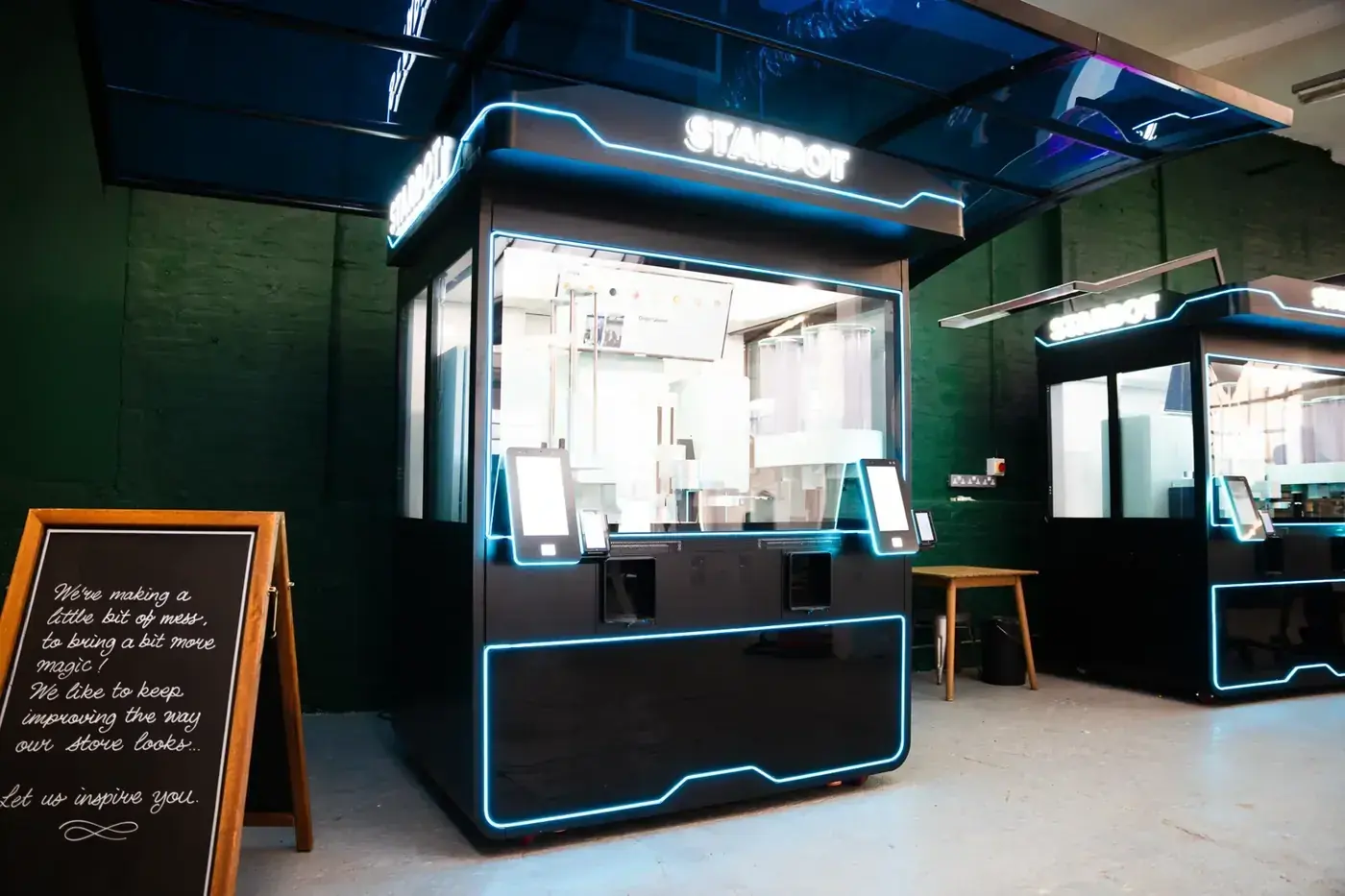
Photographed at our live site in London. Real photography, no renders.
What an airport or a handler signs is a site licence: permission to place and operate the kiosk in an agreed position, with no exclusive possession and no tenancy. That is deliberately a much lighter instrument than the concession agreements a terminal is used to, and it is the reason a position can be agreed for a pier extremity or a crew room without a retail letting process.
The commercial terms are the same shape as everywhere else — an agreed share of every cup on revenue share, with no capital cost to the airport or the handler. What differs is that in staff areas the buyer is often purchasing a welfare improvement rather than a revenue line, and in that case the arrangement can be structured so the drinks are covered rather than sold.
Exclusivity has to be dealt with explicitly rather than assumed away. If an existing concession holds the hot-drinks right in a terminal, we would rather establish that in writing at the outset and site accordingly than install into a dispute between an airport and an incumbent that we would inevitably lose.
Exit terms are short by design because terminals change faster than their leases suggest. Notice on either side, we collect the kiosk, no reinstatement because nothing was altered, and a relocation is a visit rather than a project when a pier closes for works or a gate area is reconfigured.
The commercial shape — a share of every cup, or a fixed monthly fee for the space — is set out before anything is installed. See how hosting works.
If one of the rows above ours fits your building better, take it. We would rather not install a kiosk than install one into a position that cannot carry it.
A real brand, a real barista, and it is already there with a queue in front of it.
It opens for the hours it is staffed for, which is not 03:30 and not after the last flight it was rostered for. It is also one position in a terminal that may be half a kilometre end to end, so a delayed passenger at the far gate is not a customer.
Trades 24 hours, costs the airport nothing, and is already in most staff areas and gate lounges.
It sells the drink people accept because there is no alternative. For a crew or a night shift on a twelve-hour rotation that is a welfare issue rather than a preference, and for a passenger it is the thing they photograph to complain about.
Free, familiar, and it is what almost every crew and mess room in the country has.
Someone has to fill it, clean it and replace the milk, and on a night shift that person is doing it instead of the job they are rostered for. It is also the first thing an airline hears about in a staff survey and the last thing anyone budgets to fix.
Costs the airport nothing at all and most passengers do arrive with a drink.
It hands the spend to the high street and the service station, and it does nothing whatever for the shift populations who are in the building for twelve hours. On a disruption night it is the difference between a terminal with an amenity and one without.
Barista-grade drinks without a wait, trading through the pre-dawn and overnight windows nothing else covers, in a corner of floor, with no capital cost on revenue share.
Airports are the slowest and most bureaucratic route in of anything we do, and airside exclusivity can make a passenger-facing position simply impossible. Restocking a restricted zone costs more time than any other venue, and it is one machine — it will not absorb an entire departure bank arriving at once. Start with a crew room and prove it there.
The last row is ours, with its real downside written in. Revenue share and unit pricing are agreed per site and are not published.
Four cases in this venue type where we would tell you not to bother. They cost us installs; printing them costs less than a kiosk that never earns.
Each of these has happened somewhere, and each shows up as the same thing on the report: a position that takes half of what the footfall said it would.
That is the pitch the concession holder is already paying for and the one the commercial team is contractually least able to say yes to. It turns a conversation that could have started in a crew room into a refusal that closes the whole airport for a year.
The position trades for twenty minutes and then sits dead for four hours, because gate allocation decides the footfall and gate allocation changes seasonally. A pier junction that several gates walk past is a completely different site from a gate that one airline uses in the mornings.
Arriving passengers walk straight out to a car or a train and almost nobody stops. It looks like a busy hall and it is the weakest trading position in a terminal, whereas the departures side of the same building has people with an hour to fill.
A unit airside with no pass arrangement and no screening window is a unit that runs out of milk during the morning bank and stays that way. In an airport the access plan is not administrative detail, it is the thing that determines whether the site works.
Density matters to us as much as footfall: several sites inside one servicing round is what keeps a kiosk free to host.
The densest cluster of terminals and crew bases in the country, and the city where the pre-dawn departures bank is largest and least served.
The biggest airport outside the South East, with a large ground handling and crew population on continuous shift patterns.
Scotland's busiest terminal, and a city where the August festival multiplies passenger numbers in the one month a staffed unit cannot hire for.
A major terminal sitting beside the M42 business-park corridor, so an airport staff-area position and commercial sites share a servicing round.
For the main retail run, often yes, and we would rather say so than waste a meeting. What is not locked in is everything behind the scenes: crew rooms, ground handler mess rooms, staff canteens and many landside positions sit outside the retail concession entirely. Those are where the unstaffed hours actually hurt, and they are where we would start.
Through the airport's own process. Our engineer holds a pass issued by your ID centre and consumables are screened like any other supply into a restricted zone. It works, and it is slower than a landside site, which is why the kiosk reporting its own stock levels matters more here than anywhere else — a visit is planned, not spontaneous.
It trades the hours they are not staffed for. The first departures bank is through security before 05:00 and the last delayed passengers are sitting in a terminal after 23:00, and on both sides of the day the shutters are down. A machine with no rota attached to it covers those windows at no extra operating cost.
It is the strongest starting point in an airport. A crew or handling population works twelve-hour rotations through the night with a kettle and a vending machine, they are in the building whether or not an aircraft is boarding, and the decision is a station or operations manager's rather than a commercial director's.
A corner of clear floor away from an escape route, and a standard socket. Nothing to plumb in and nothing to drain, because it runs from a refillable water supply — which is exactly why it fits positions in a pier or a gate area that were never lettable as retail.
Yes, and quickly, because nothing is plumbed or fixed. Terminals close piers for works, reallocate gates seasonally and re-let retail on their own cycle, so a relocation is a scheduled visit rather than a project. That flexibility is part of why a licence rather than a letting is the right instrument.
It keeps trading. Fog, snow or an air traffic restriction leaves a terminal full of people going nowhere at an hour when nothing is staffed, and that is the night an amenity is most visible. Nothing has to be called in, rostered or opened up for it to happen.
No — none at all. There is no float, no cash moving through a restricted zone and nothing for anyone at the airport to reconcile. It also means every sale is timestamped, so a position can be assessed against the bank structure at review rather than by impression.
Longer than any other venue we work with, and we would rather be blunt about it. A staff-area position can be a short conversation with a handler or an airline; a passenger-facing position involves the airport's commercial team, the concession position, terminal operations and security. That is the reason we treat airports as a third channel rather than a first.
Not what you were after? All sixteen venue types · Host a kiosk at your site · Own a STARBOT franchise · Lease a unit · Own one · £1,790/mo
Postcode, venue type and rough daily footfall is enough to start. We come back with a footfall-based model for your site — usually within a day.
No obligation, no credit search, no spam — one reply from the team with the exact numbers for your venue.
Prefer to talk? WhatsApp us — or ask Richard, bottom right.
Ask me anything on this page — the kiosk, the numbers, your site. Voice or chat, any hour.