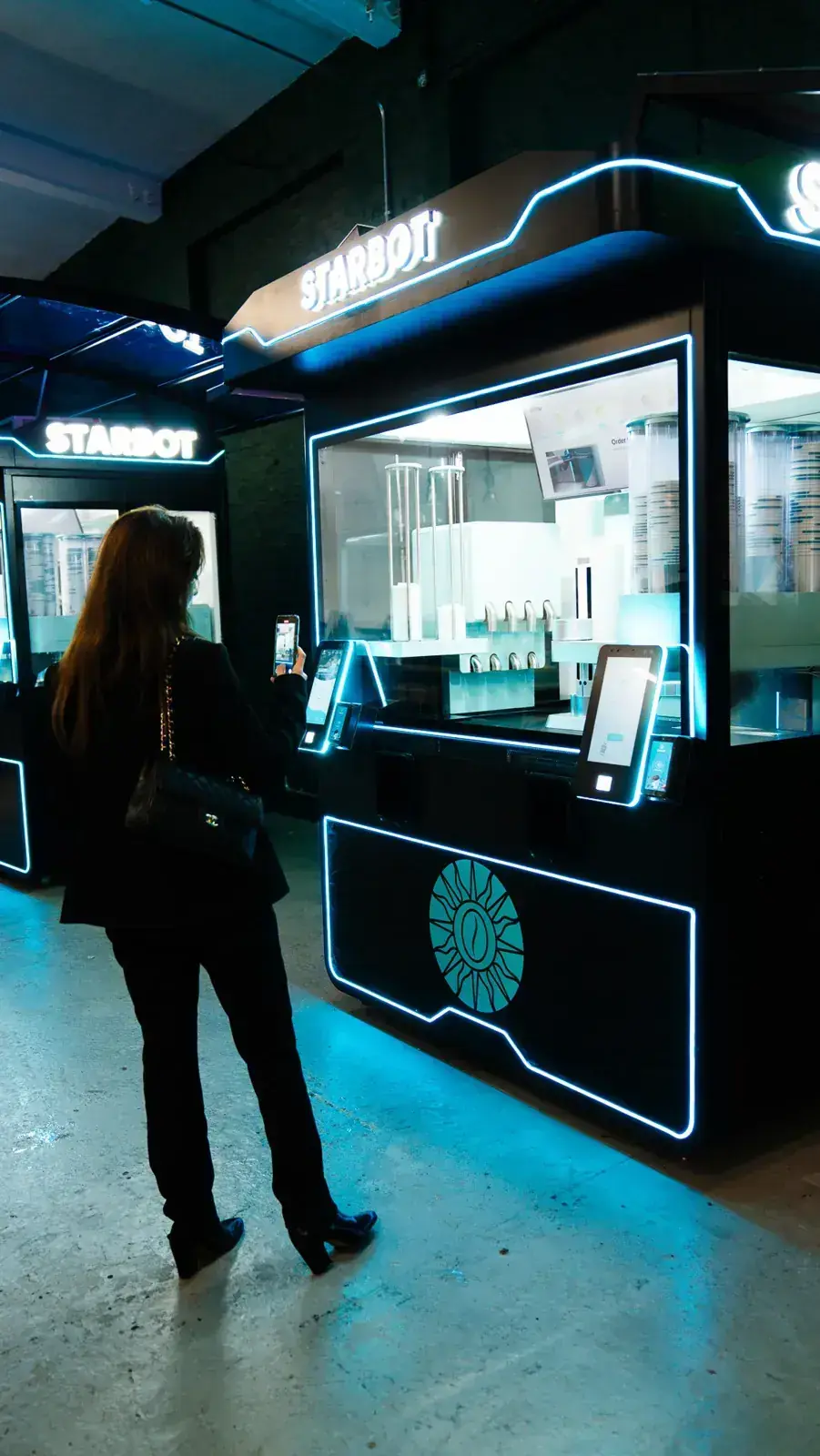
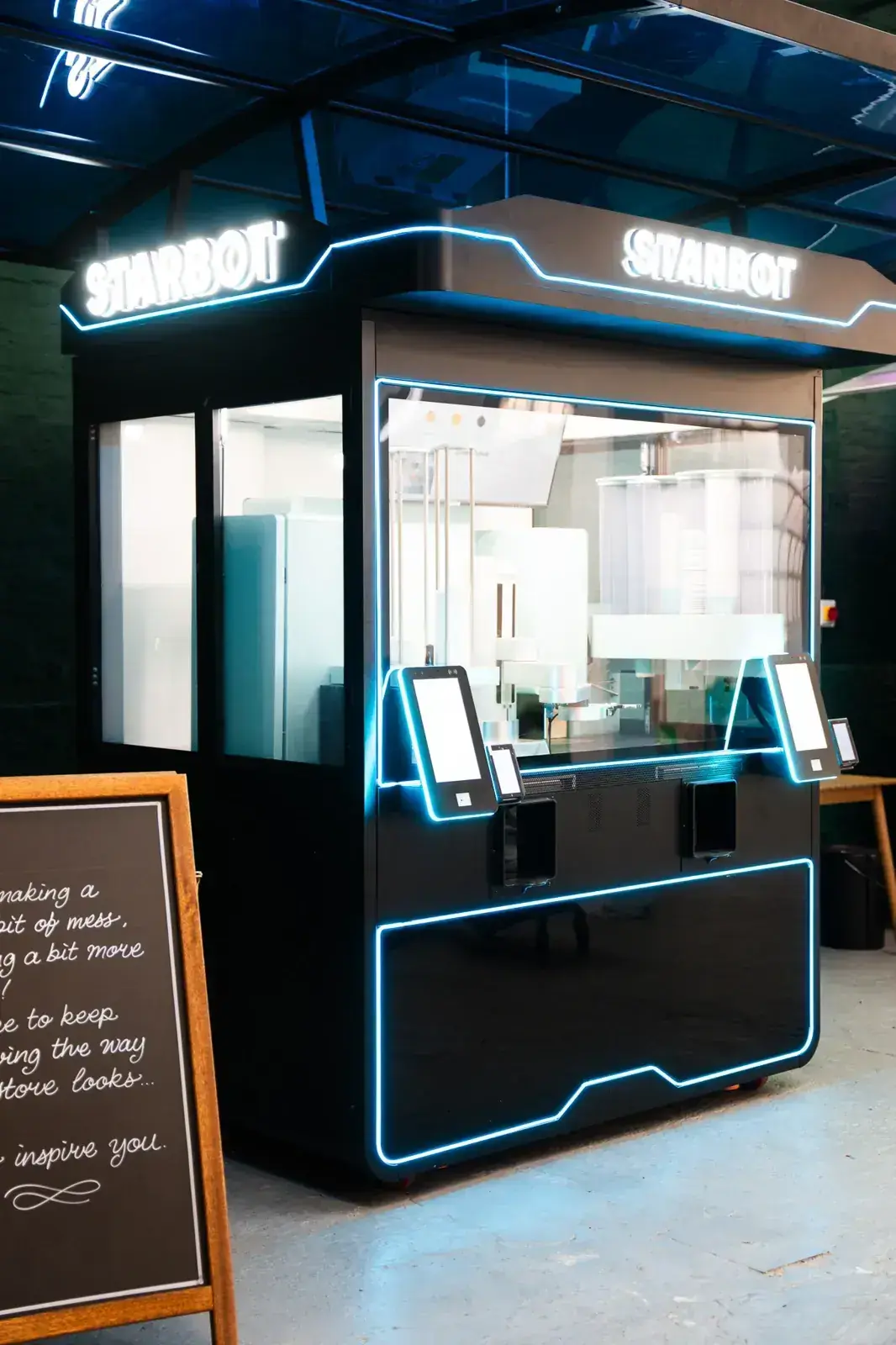
Coffee for night staff, visitors and waiting relatives at 03:00, when the hospital café has been shut for six hours. No capital cost to the trust.
Never stops. Shift changes at 07:00 and 19:00, plus a steady overnight trickle no café will ever open for.
A hospital is the only building on this site that never closes and almost never serves. The atrium café shuts in the afternoon, the League of Friends volunteers go home, and from then until the following morning a site with several thousand people on it has a corridor machine dispensing something brown into a plastic cup. That gap is not a small commercial opportunity; it is the majority of the hours the building is occupied.
The people in that gap are specific. Night staff on a twelve-hour shift who cannot leave the site. Relatives in an emergency department waiting area at 02:00 who have been there since ten. Porters, security and estates on nights. A drink served in under 60 seconds from a machine standing in 2.5 m² is not competing with the café for these people — the café has been shut for six hours.
The reason hospitals hesitate is never demand. It is infection prevention, estates approval and, on a managed or PFI site, a facilities provider with a contract that says who may put what in a corridor. Those are real, they are answerable, and the answers are the same every time: nothing is plumbed, nothing is fixed to the building, the cup path is sealed, and the equipment stays ours.
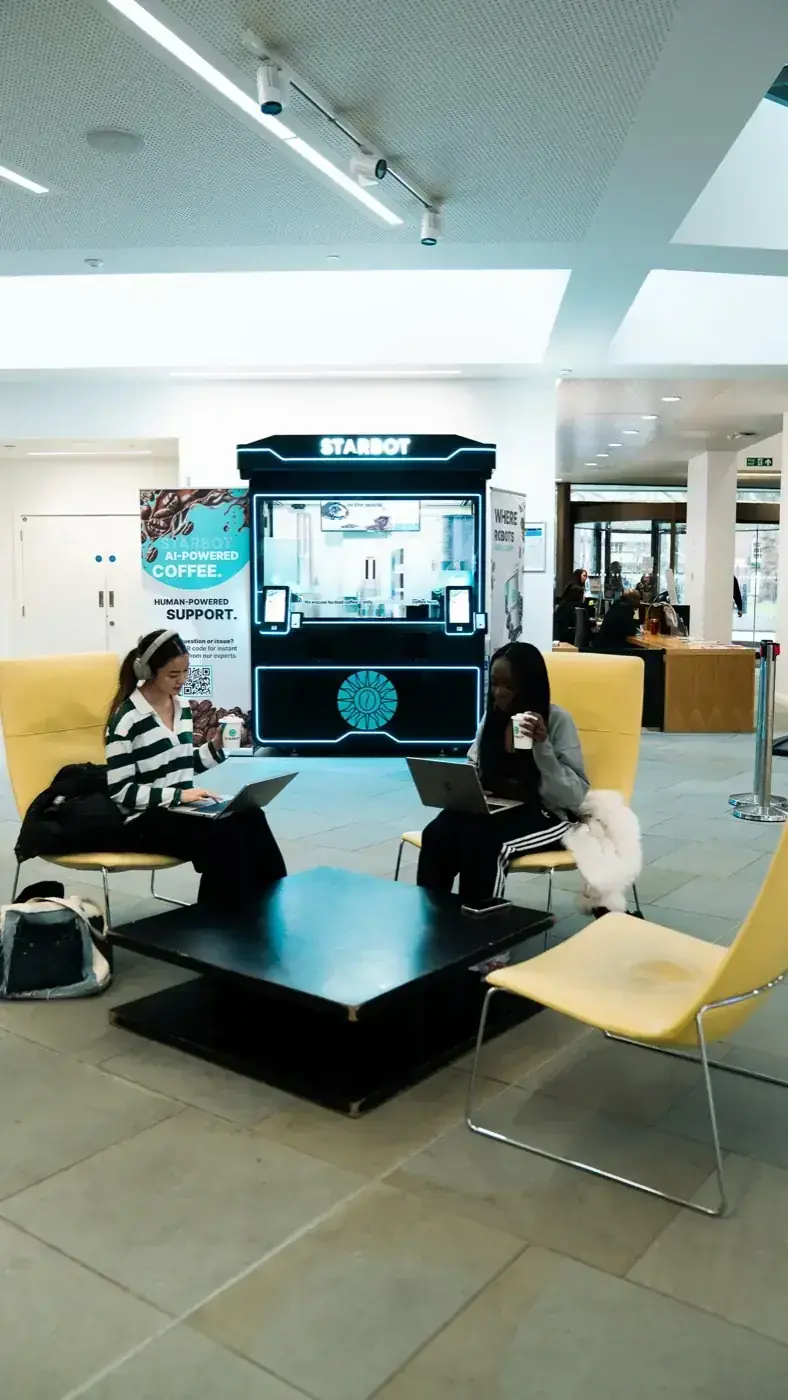
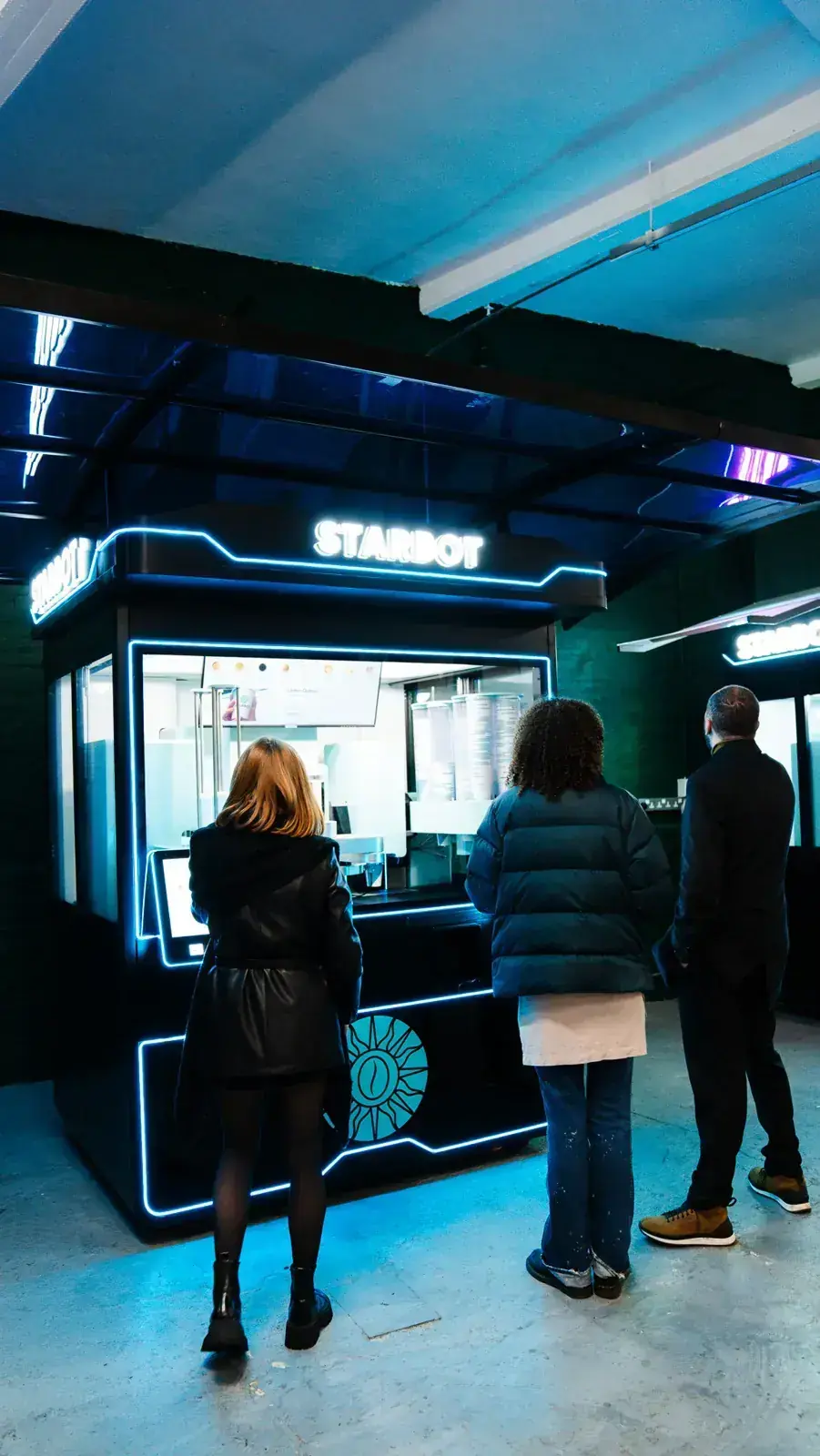
Photographed at City St George’s, University of London — our live site. Real photography, no renders.
The League of Friends café closes at 16:00. After that it is a machine dispensing something brown into a plastic cup.
This is the part nobody puts in the business case, because it is nobody’s job to write it down.
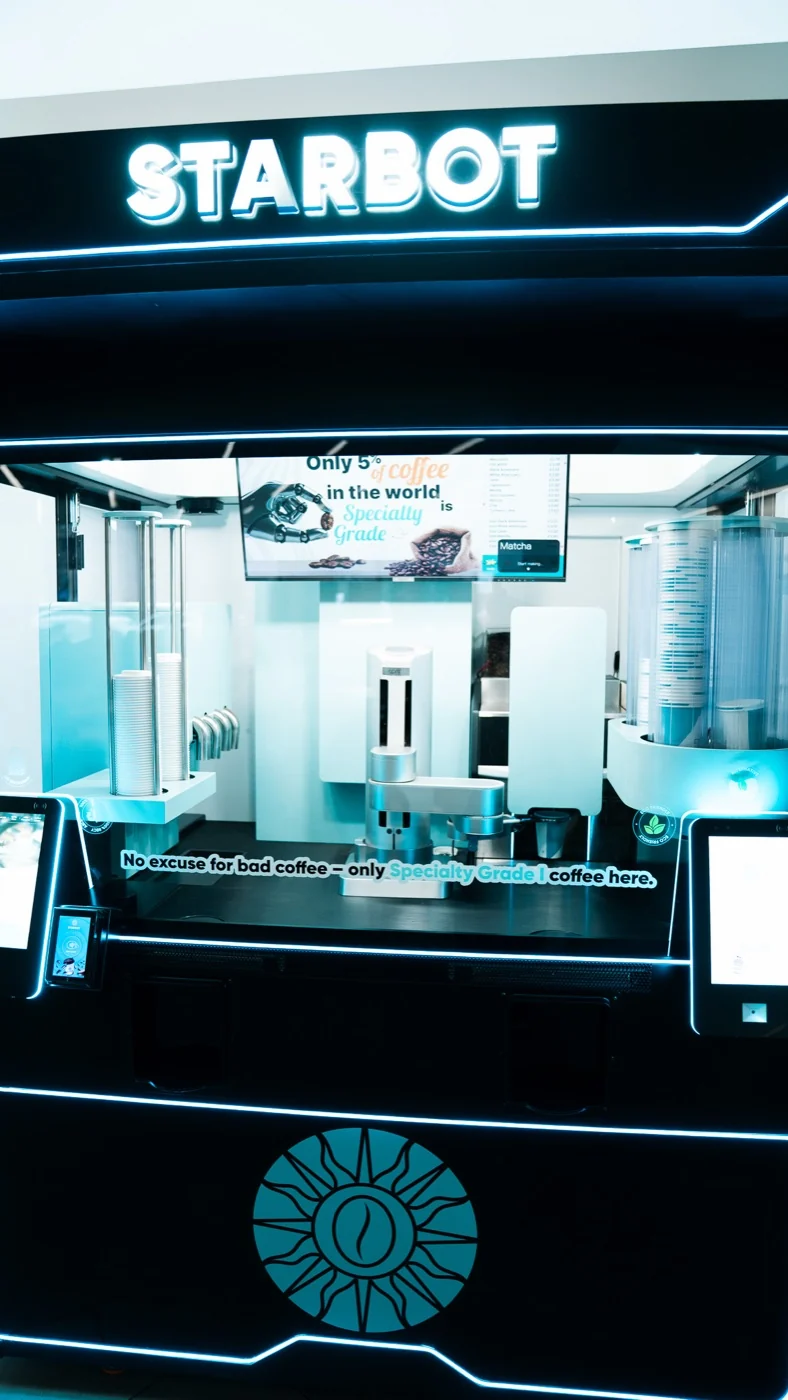
Sealed cup path, no open milk jug, no exposed grounds, and a wipe-down surface — the arm never touches the rim of the cup.
Same drink at 06:00 and at 22:00, without a wait, from a corner of floor.
Not a generic day. This is how the demand actually arrives in this kind of building — including the hours a staffed counter is paid for and nobody comes.
The shift handover. Two workforces are on site at once, one of them going home and one of them starting twelve hours, and the atrium café is not open yet for either.
Outpatient clinics start and the main entrance fills with people who arrived early because the letter told them to. Long waits, no idea how long, nothing to do.
Visiting and clinic churn. The steadiest daytime trade in the building, and the hours the atrium retail is genuinely good at.
Afternoon clinics and the start of visiting hours proper. The League of Friends café is heading towards closing time while the building is still full.
The evening handover and evening visiting, with almost nothing open. This is the first window where the kiosk has no competition at all on most sites.
Emergency department relatives, late admissions and the night shift settling in. The population is smaller and its options are zero, which is a better combination than it sounds.
Nights. Staff who cannot leave the site, relatives who will not, and a vending machine as the alternative. This is the whole argument for a hospital kiosk in one line.
Two spots forty metres apart in the same building can differ by half the sales. These are the positions that work in hospitals — and the one that does not.
The highest-volume position on any hospital site, and the one that serves visitors, outpatients and staff from a single point. It works best a sensible distance from the League of Friends counter — near enough to be found, far enough that it is trading the closed hours rather than the volunteers' takings.
The longest dwell in the building belongs to people who cannot leave and have no idea how long they will be there. It has to be outside the clinical area itself and clear of triage flow, but a position in the relatives' waiting space serves a need that is otherwise met by a vending machine and a bad night.
Where a trust wants the night workforce served rather than the public, a staff-only position takes the security question off the table entirely and puts the machine where a twelve-hour shift actually passes. Volumes are lower and the retention argument is stronger.
Anything that narrows a corridor used for bed transfers or a crash call is a non-starter, and rightly. In a space that size there is normally an alcove, a lobby or a lift landing that clears both the escape route and the bed route — which is why we ask to walk the floor rather than work off a plan.
In a hospital the sign-off chain is longer than anywhere else on this site and every link in it is asking a different question. Estates asks about power, fixings and fire. Infection prevention and control asks about surfaces, water and the cup path. On a PFI or managed estate the facilities provider asks whether it sits inside their contract at all. And where the atrium retail is run by the hospital charity, there is a commercial conversation that is not on anyone's form.
None of that is a reason to avoid hospitals; it is a reason to arrive with the answers. There is no plumbing and no drainage, so there is no new water system to add to the site's water safety plan. Nothing is fixed to the fabric, so there is no estates variation. The equipment remains ours, tested and insured by us, so nothing joins the trust asset register. That converts most of the chain from an assessment into a permission.
On the cup path and the surfaces. The mechanism sits behind glass, there is no open milk jug, no exposed grounds and no hot plate, and the arm does not touch the rim of the cup. The exterior is a wipe-down surface that a ward cleaning schedule can treat like any other item of equipment, and the interior is on our cleaning schedule, not yours.
It runs from a refillable supply rather than a mains connection, so no new pipework is added to the building and there is no dead leg created in your system. Filling, changeover and the cleaning of that supply are ours and are part of the service schedule. This is normally the question that decides whether infection control is comfortable, so it is worth putting first rather than last.
Only if it is sited badly, which is why the position is chosen on a walk-round with your estates team. It must not narrow an escape route, obstruct a fire door or sit on a bed route. In a space that size there is usually more than one compliant position in the same lobby.
Ours on revenue share. It does not join the trust asset register, it is not added to your PPM schedule, and it is inspected, tested and insured by us. Your estates team gains a machine on site and no maintenance liability, which is a different proposition from buying a coffee machine.
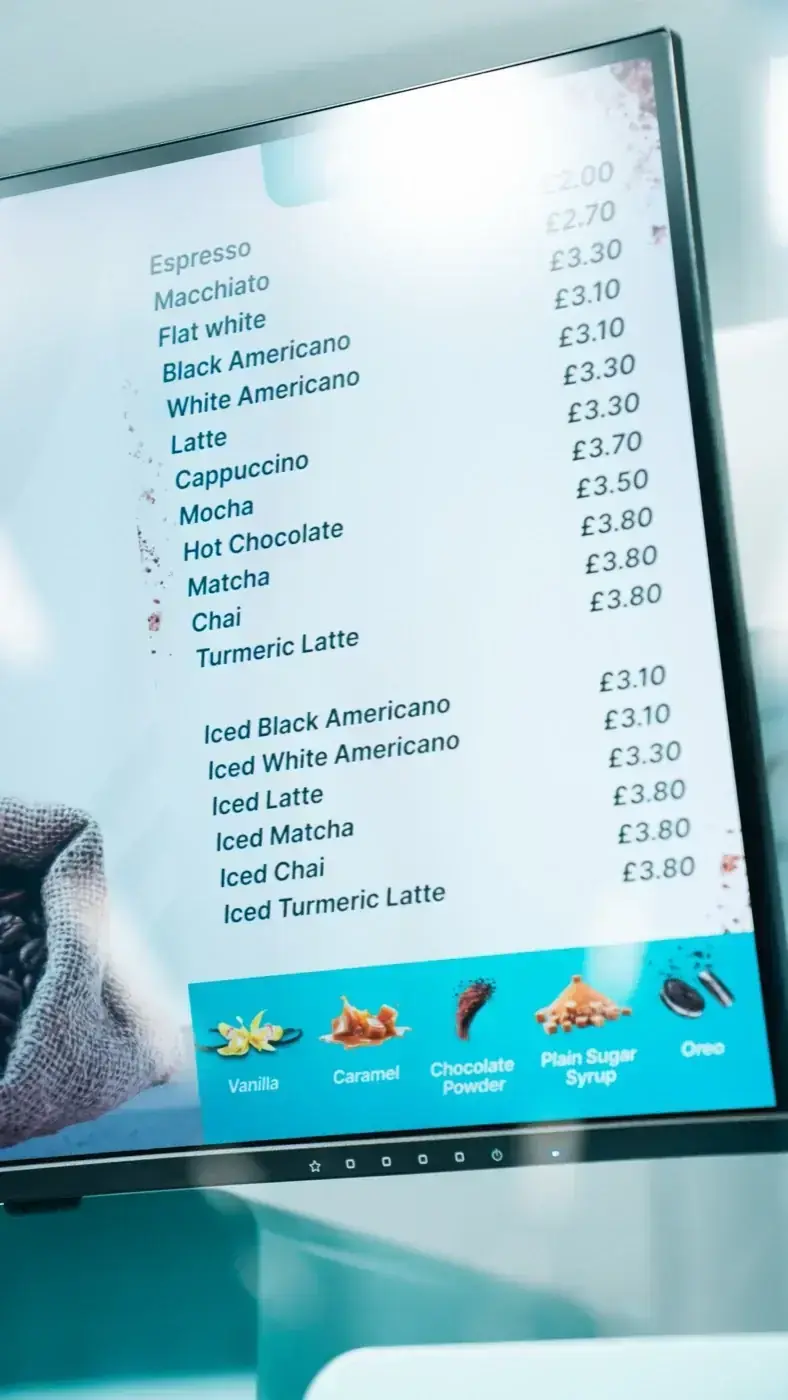
That is a fair challenge and the honest answer is that it depends what people buy. The menu is coffee-led — espresso, americano, flat white, cappuccino, latte — rather than confectionery and fizzy drinks, and everything is made per cup rather than poured from a syrup dispenser by default. If your trust has a specific position on sugar-sweetened drinks, that is a menu conversation we can have before installation.
Not usually. On a revenue-share placement the trust has no capital spend, no fixed fee and no purchase to compete, and there are existing framework routes for vending and coffee equipment that trusts already use. Your procurement team decides, but it rarely starts from a blank tender document.
Nothing here needs plumbing, drainage or a fixing to the fabric of the building. The kiosk stands on the floor and plugs into a 16A socket.
A vending contract creates work for your facilities team. This one does not: restocking, cleaning, faults and reporting are ours.
The kiosk reports what it has left, so replenishment follows consumption rather than a weekly round. A hospital position is the least seasonal site we run — it does not empty in August or on a Friday — which means stock levels are steadier and the visits are more predictable than on any campus or office site.
The interior, the milk path and the drip tray are ours and are documented as ours. The exterior is a wipe-down surface your domestic team can include in the ward or public-area schedule without a special procedure. The thing infection control most dislikes about ordinary coffee provision — open jugs, spilt milk, an uncleaned grounds bin — does not exist here.
The kiosk reports its own fault state, so the engineer is dispatched off the data rather than off a phone call. That matters more in a hospital than anywhere: there is no member of staff whose job it is to notice, and the alternative model relies on somebody who is already busy raising a ticket at four in the morning.
Payment is card and contactless, so there is no float, no collection round and nothing in the machine worth forcing at 02:00. It also gives the trust an hour-by-hour record of what the night actually buys, which is the evidence that gets the second position approved.
Photographed at our live site in London. Real photography, no renders.
A trust signs a site licence rather than a lease. It is permission to place and operate equipment in a defined position; it conveys no exclusive possession of any part of the hospital and creates no tenancy. That is the difference between a document estates can handle and one that goes to the trust's property advisers, and on a hospital site it is the single largest determinant of how long approval takes.
On a PFI or otherwise managed estate the counterparty may not be the trust at all. The facilities provider holds the corridor under its own contract, and the permission has to come from whoever controls that space. We would rather establish that in the first meeting than survey a position for a trust that turns out not to be able to grant it.
Commercially, the trust or the charity takes site commission on every cup and pays nothing up front — no capital cost, no fixed fee, no maintenance line. Where a trust would rather run the equipment itself, the same kiosk is available on a five-year lease at £1,790 a month, in which case it does go through procurement as a revenue line.
Exit is by notice on either side and there is nothing to reinstate: no pipework to cap, no fixings to make good, no alteration to the estate. Given how often hospital estates are reconfigured — a ward moves, an entrance closes for construction, a clinic relocates — the more common request is a move, and a machine that is not plumbed in can be moved in a single visit.
The commercial shape — a share of every cup, or a fixed monthly fee for the space — is set out before anything is installed. See how hosting works.
If one of the rows above ours fits your building better, take it. We would rather not install a kiosk than install one into a position that cannot carry it.
Volunteer-run, well loved, and it puts its surplus straight back into the trust. During its opening hours it is genuinely the best thing in the building.
It runs on volunteers, which means it closes in the afternoon and does not open at weekends on many sites. It cannot staff a night, and nights are when the hospital is at its least served and its most captive.
A recognisable brand, proper equipment, a seating area, and a rent line for the trust.
It needs a large unit, a long agreement and staff on a rota, so it opens to retail hours in a building that runs to none. It also cannot be placed near an emergency department waiting area, which is where the longest dwell in the hospital sits.
Already there, already procured, works at 03:00, and asks nothing of anybody.
It sells the drink people settle for because there is no alternative. On a site where staff retention is a board-level problem, the difference between a machine that dispenses and a machine that makes a flat white is not a small one.
Free, immediate, and the actual default for most of the night workforce.
It is not available to visitors, it is not available to relatives in a waiting area, and it depends on a member of clinical staff spending their break making drinks. It also puts kettles and open milk in areas where infection control would rather they were not.
Trades every hour the hospital is occupied, that footprint, no capital cost, no maintenance liability, sealed cup path with nothing exposed.
It is cashless, and on a hospital site that genuinely excludes some elderly visitors who came with cash in a purse — it is the strongest objection anyone raises here and we do not have a good answer to it. It sells no food to a relative who has been in a waiting room for nine hours. And approval is slower here than in any other venue we serve, because the chain of people who must agree is longer.
The last row is ours, with its real downside written in. Revenue share and unit pricing are agreed per site and are not published.
Four cases in this venue type where we would tell you not to bother. They cost us installs; printing them costs less than a kiosk that never earns.
Each of these has happened somewhere, and each shows up as the same thing on the report: a position that takes half of what the footfall said it would.
It narrows a route used for bed transfers and crash calls, it will be raised at the next fire safety walk-round, and it serves a population that has a kitchen twenty metres away. Every hospital position that has to be moved was originally chosen because a ward manager wanted it close, which is the opposite of what makes it work.
For the six hours the café is open you are taking money from the trust's own charity, and for the eighteen hours it is closed you would have had the trade anyway from a position fifty metres away. It converts a straightforward approval into a commercial argument with volunteers, which is not an argument worth having.
A staff corridor is easier to approve and much quieter to trade. If the case was built on visitor and outpatient demand, moving the machine behind a staff door to shorten the approval halves the sales and then gets used as evidence that hospitals do not work.
On a PFI or FM-managed site the corridor is controlled by the facilities provider, not by the trust department that asked for the machine. A position agreed with the wrong counterparty is not agreed at all, and it surfaces on the day the engineer arrives with a kiosk on a trolley.
Density matters to us as much as footfall: several sites inside one servicing round is what keeps a kiosk free to host.
Leeds General Infirmary is one of the largest teaching hospitals in Europe and runs around the clock, with office-hours retail wrapped around it.
The Queen Elizabeth University Hospital campus operates continuously, and Glasgow winters make walking off site for a coffee a decision rather than a habit.
The Queen's Medical Centre spans long internal distances, so a single central outlet is useless to anyone with a fifteen-minute break.
The Royal Victoria Infirmary sits within a mile of the university and the station, so several sites fall inside one servicing round.
They approve it on the same three points every time. The mechanism is behind glass with no open milk jug, no exposed grounds and no contact between the arm and the rim of the cup. There is nothing to plumb in, so nothing is added to the site water system. And it stays our equipment, tested and insured by us, so estates take on no maintenance liability. The remaining question is position, which is settled on a walk-round.
No. It runs from a refillable supply that we fill, change and clean as part of the service. That is deliberate: a machine with no mains connection does not create a new outlet or a dead leg in the building's water system, which is what turns a water safety question into a short one.
Nothing up front on revenue share. We install, stock, service and insure the kiosk, and the trust or the charity takes site commission on every cup sold. There is no capital request, no fixed monthly fee and nothing added to the estates maintenance budget. If a trust would rather run the equipment itself, a five-year lease at £1,790 a month is available.
In the relatives' waiting area, yes, and it is one of the strongest positions in the building because the dwell is long and the alternatives are none. It cannot sit inside the clinical area or across triage flow, so the exact spot is agreed with the department rather than assumed from a floor plan.
We do. The kiosk reports stock and faults, so restocking and engineer visits are scheduled from the machine rather than from a phone call. Your domestic team wipes down the outside as part of the area schedule. No clinical or estates staff are asked to open it, refill it or reset it.
No, but it changes who signs. The facilities provider controls the space under its contract, so the permission comes from them rather than from the trust department that wants the machine. It is worth identifying that at the first conversation, because a position agreed with the trust alone will not survive contact with the FM provider.
Usually. On revenue share there is no capital purchase to compete, and for trusts that do want to buy, existing framework routes for vending and coffee equipment are already in use across the NHS. Procurement will confirm which applies, but very few of these start life as a blank tender exercise.
They cannot use it. It is cashless, which removes cash handling and theft risk from an unstaffed corridor at 03:00 but genuinely excludes some visitors, particularly older ones. On sites where that matters, the kiosk works best alongside existing provision rather than as a replacement for it, and we would rather say that plainly.
Indirectly, and nobody should oversell it. A twelve-hour night shift with nothing but a vending machine is a small, repeated indignity, and a proper coffee at 03:00 without leaving the site is a cheap thing to fix. It is not a pay rise, but it is one of the few improvements to a night shift that can be delivered in a single visit.

Not what you were after? All sixteen venue types · Host a kiosk at your site · Own a STARBOT franchise · Lease a unit · Own one · £1,790/mo
Postcode, venue type and rough daily footfall is enough to start. We come back with a footfall-based model for your site — usually within a day.
No obligation, no credit search, no spam — one reply from the team with the exact numbers for your venue.
Prefer to talk? WhatsApp us — or ask Richard, bottom right.
Ask me anything on this page — the kiosk, the numbers, your site. Voice or chat, any hour.