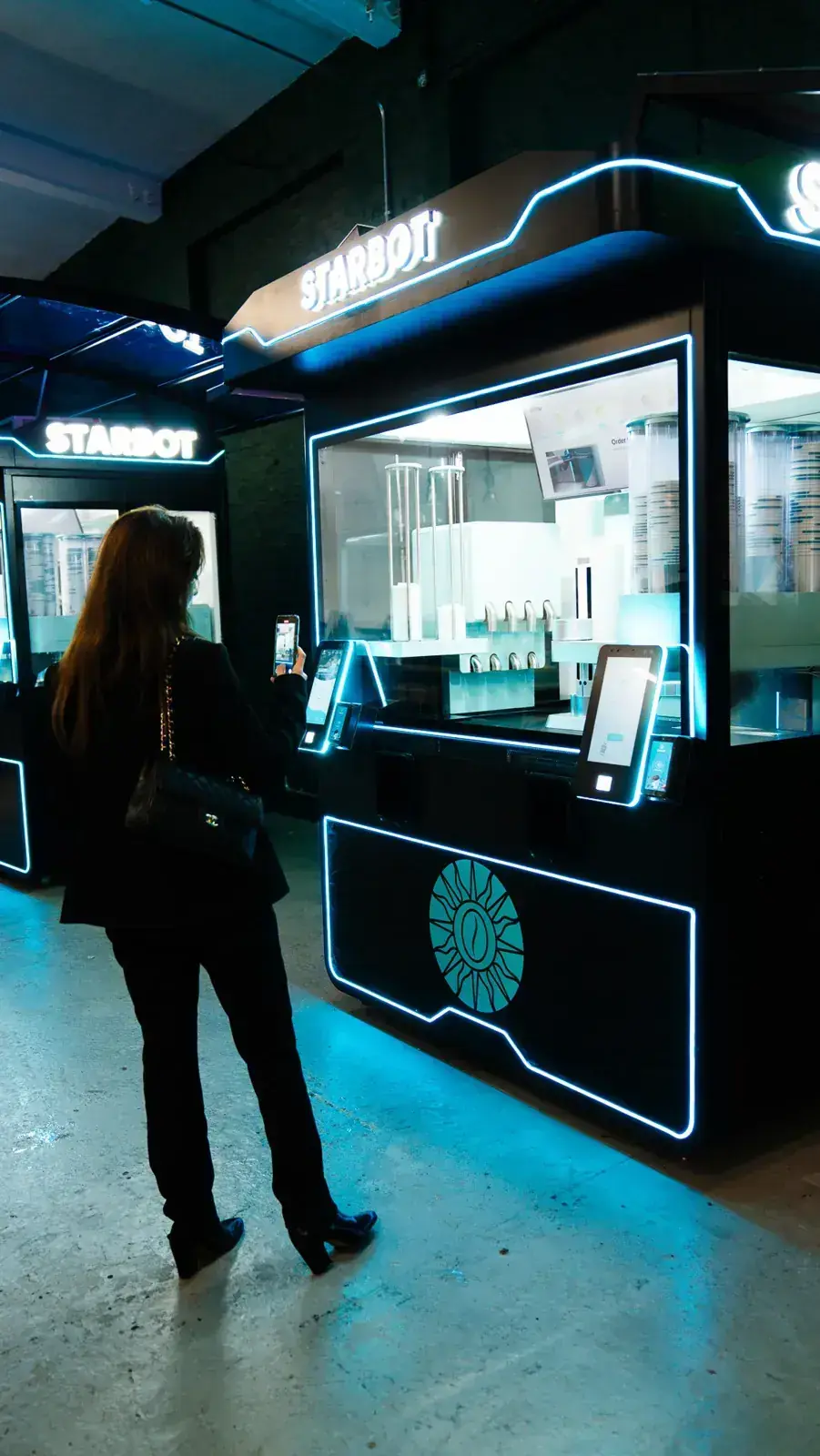
Coffee in the common room at 02:00 during exam season, with no staff and no capital cost to the operator. Free to host — we install, stock and service it; your site
Inverted — quiet in the morning, alive from late afternoon until well past midnight, and relentless through exams.
Purpose-built student accommodation runs the most inverted trading day of any building we place in. The morning is nearly dead, the block starts filling from mid-afternoon, and the busiest hours are the ones after the last member of staff has locked the office and gone home. Every conventional catering answer is built around the opposite pattern, which is why the evening trade in a student block currently walks to the shop and spends there.
The operator is buying two things at once, and they are not the same thing. One is a service residents use at 23:00. The other is a line on the brochure and a photograph in the common room for the viewing season, because a block is re-let every year and the amenity comparison against the scheme down the road is decided in October for the following September.
It is also the venue where the seasonal shape has to be said out loud rather than glossed over. The building is full from late September, hard-working through exam periods, and effectively empty at Christmas, Easter and across the summer unless the operator runs conference or summer lets. A machine that costs nothing to stand idle survives that year. A staffed offer never has.
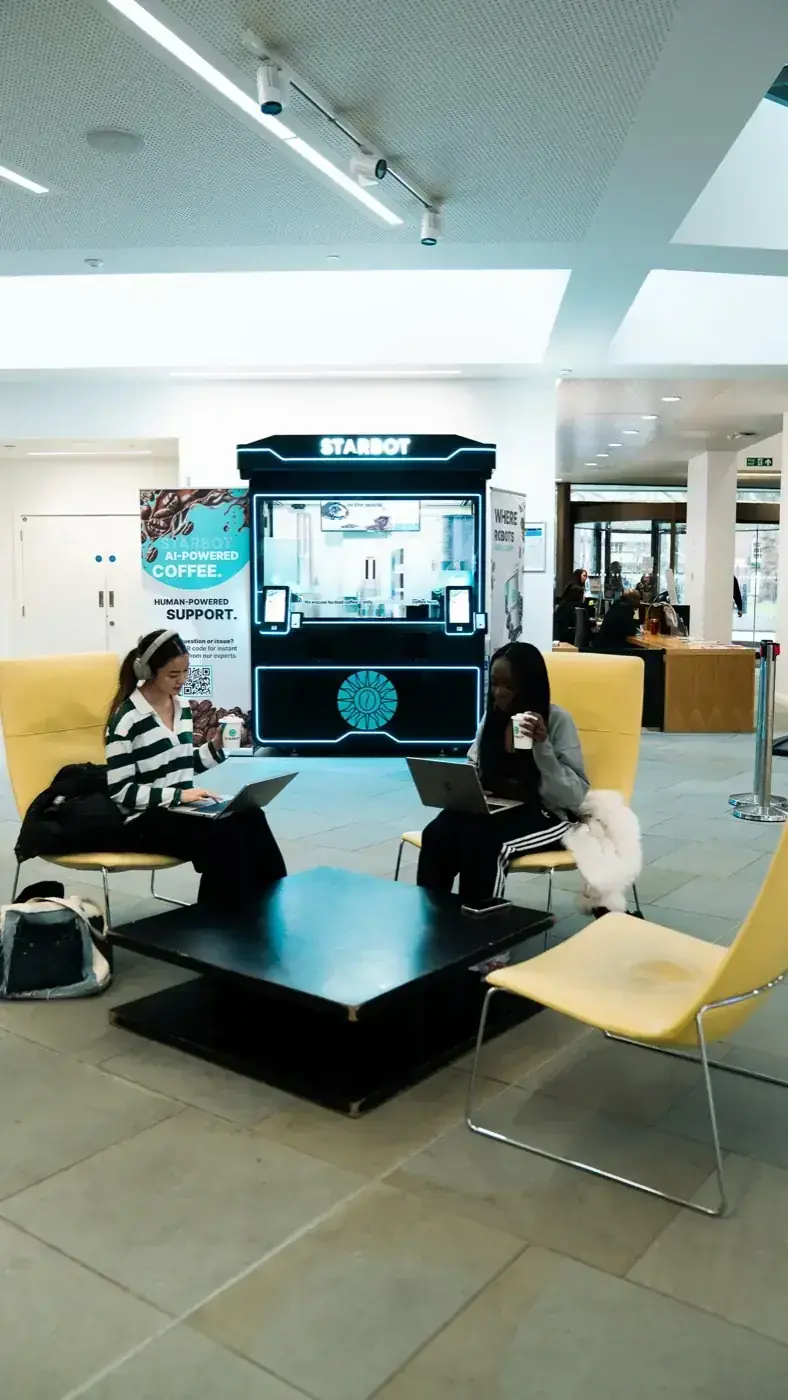
Photographed at City St George’s, University of London — our live site. Real photography, no renders.
Nothing in a student block is staffed after 17:00, so the entire evening trade currently walks to the shop.
This is the part nobody puts in the business case, because it is nobody’s job to write it down.
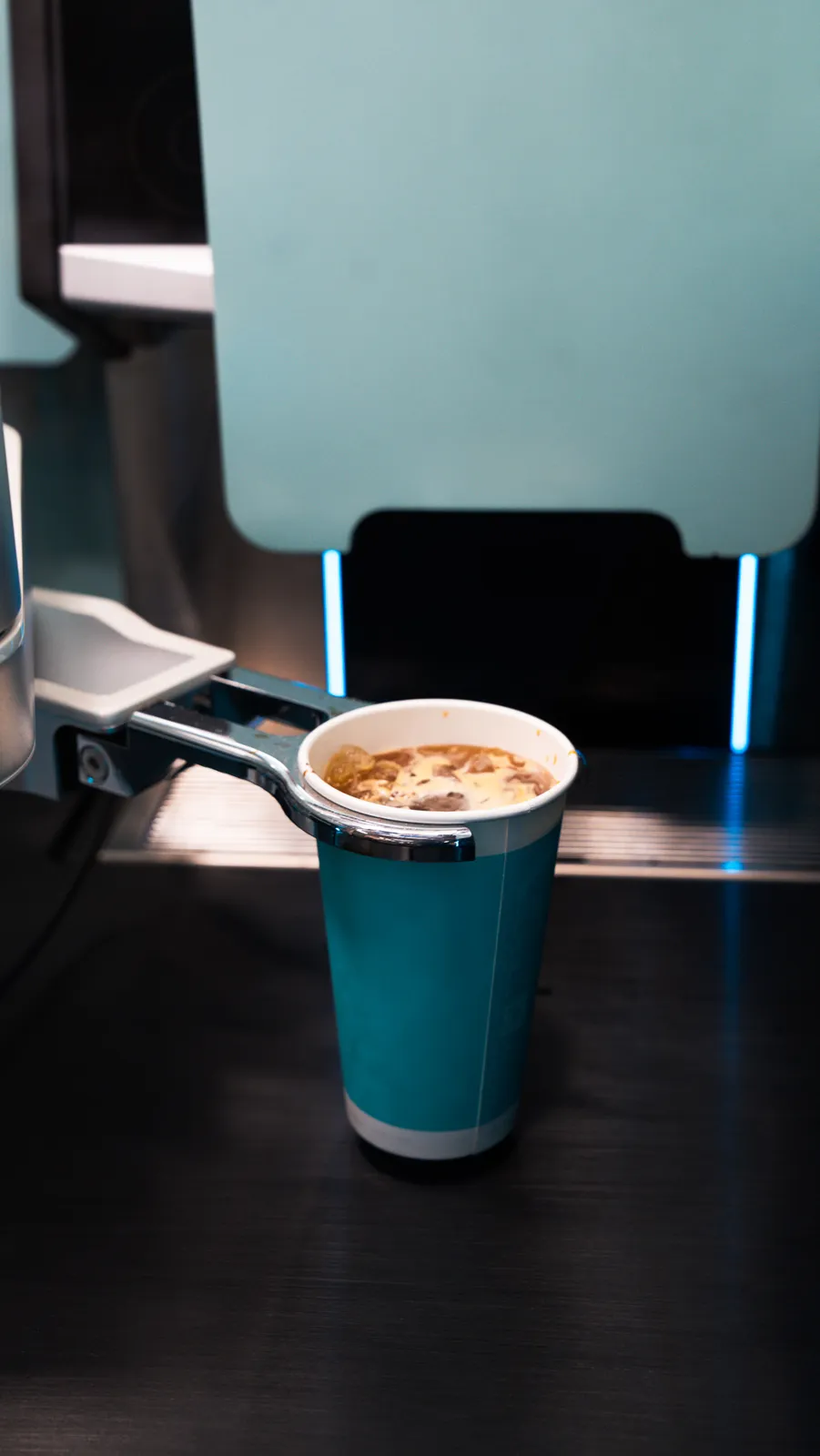
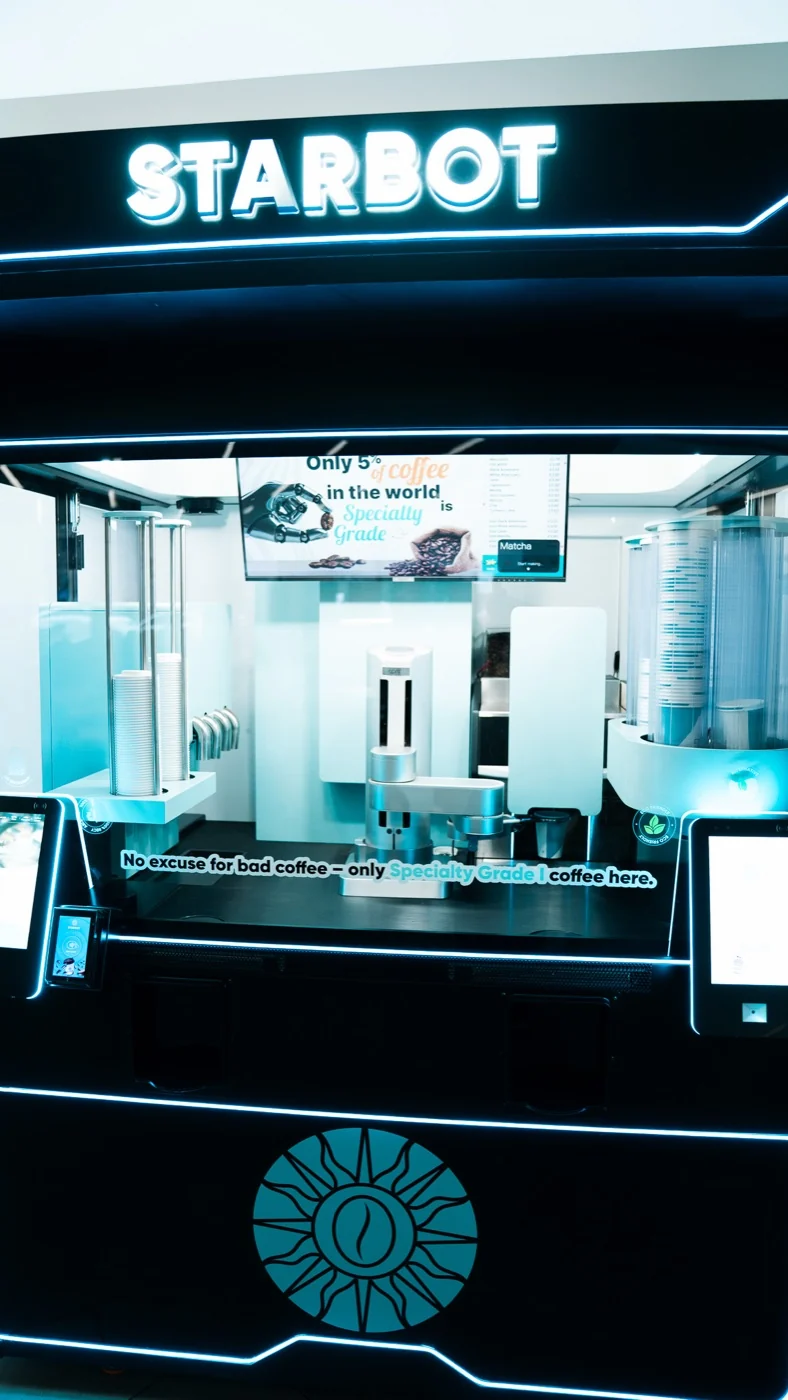
There is nothing exposed to damage — the mechanism sits behind glass and the payment is contactless.
Same drink at 06:00 and at 22:00, in under 60 seconds, from 2.5 m² of floor.
Not a generic day. This is how the demand actually arrives in this kind of building — including the hours a staffed counter is paid for and nobody comes.
Near silence. A handful of residents with nine o'clock lectures, most of whom leave the building without stopping for anything.
The emptiest part of the day. The block is on campus, and this is the window every conventional catering model is designed around.
Returns begin. Laundry gets loaded, parcels get collected, and the first sustained movement through the ground floor starts.
The first real peak. People come back, cook, sit in the common room, and the building becomes a social space rather than a place to sleep.
The main trading block, and it is entirely unstaffed. Study, group work, socialising, and nobody willing to walk to the shop for a coffee in the rain.
Exam-period trade. Genuinely busy in May and June, thin the rest of the year, and completely uncontested — nothing else in the building or nearby is open.
Arrivals week is the loudest week of the year, terms are dense, and the block empties over Christmas, Easter and summer unless it goes to conference or short lets.
Two spots forty metres apart in the same building can differ by half the sales. These are the positions that work in student accommodation — and the one that does not.
This is the position that matches how the building is actually used after 18:00, and access control means the audience is residents rather than passers-by. It is also the room the marketing photographs are taken in, which is a large part of why an operator says yes.
The two places every resident visits whether they want to or not. A wash cycle is a fixed wait with nothing to do, which is the most reliable non-social reason anybody in the building buys a coffee at 21:00.
In schemes with a bookable study space, the corridor outside it trades hard through assessment periods. The corridor, not the room — a grinder inside a silent study space is a complaint waiting to be logged.
This is the single most important siting rule in a student block. Sound transmits through a floor slab far better than operators expect, and a machine used at 02:00 under someone's bed generates the one complaint that is impossible to argue with.
In purpose-built accommodation the decision belongs to the operating company, not the university, unless the block runs on a nominations agreement — in which case the university accommodation office has a view worth having early. The block general manager sponsors it, the regional operations manager signs, and the lettings and marketing side is normally the strongest internal ally because the amenity is a competitive line for them.
The practical questions are always the same three: noise into the flats above, what happens when something is damaged, and who is expected to deal with it when the office is closed. All three are siting and service answers rather than commercial ones, which is why the walk-round matters more here than the terms — a position that is right on all three sells itself to the operations manager without a meeting.
They can if it is sited badly, and we treat that as a hard constraint rather than a preference. Away from the slab directly under bedrooms it is a non-issue; underneath them at 02:00 it is the complaint you cannot defend. It is decided on the walk-round, not afterwards.
The mechanism sits behind glass, payment is contactless and there is no cash box to attack, so the usual targets are not there. It is our equipment and our insurance, so a damaged machine is our repair and our cost, not a charge to the block or to a resident deposit fund.
It should be, and that is a genuine difference from every other venue on this site. Inside the fob line the audience is residents and their guests; outside it, an operator is running a public coffee machine in a residential lobby at 01:00, which is not what anybody signed up for.
Your housekeeping team already cleans the common room, and a spilt latte is the same job as a spilt anything else. What we would say is that a hard floor is a better position than a carpeted one, and that is worth ten minutes of thought at survey rather than a year of stains.
On revenue share, an empty building sells nothing and costs the operator nothing — there is no standing charge for a quiet summer. If the block runs conference or summer lets, the kiosk simply trades to a different population, and we would rather know which of those two it is before we site it.
No. Restocking, cleaning, servicing and repair are ours, and the machine reports its own faults. The one thing we ask for is access that does not depend on a resident letting somebody in.
Nothing here needs plumbing, drainage or a fixing to the fabric of the building. The kiosk stands on the floor and plugs into a 16A socket.
A vending contract creates work for your facilities team. This one does not: restocking, cleaning, faults and reporting are ours.
The kiosk reports what it has sold, which in student accommodation matters more than anywhere else: arrivals week and exam fortnight consume at a completely different rate from a wet Tuesday in February, and the empty months consume nothing. Visits are scheduled off that signal rather than a fixed weekly round through an empty building.
Payment is card and contactless only. There is no float in a building with no staff after early evening, no cash box in a common room and nobody being asked to reconcile takings at 01:00 — which was always the reason operators refused to put anything transactional in an unstaffed social space.
The machine reports its own fault state, so an engineer is scheduled without a resident having to report anything and without the on-call number being used for a coffee machine. For an operator running a lean out-of-hours rota, that is most of the objection dealt with.
The drip tray, milk path and interior are on our schedule. Your housekeeping keeps doing the common room as specified, and there is no open jug, hot plate or grounds bin sitting in a shared residential space between service visits.
Photographed at our live site in London. Real photography, no renders.
The agreement is a site licence with the operating company — permission to place and operate equipment in an agreed position inside the building. It is not a lease, gives no exclusive possession and creates no tenancy, which matters in a sector where the building itself is frequently held by an investor and run by an operator under a management agreement.
On revenue share there is no capital cost to the operator and no fixed charge, so the empty months are genuinely neutral: no sales, no income, no invoice. Where a block would rather include coffee for residents as part of the offer, the same kiosk runs in host mode with the operator covering the cups, which some schemes use as a re-let incentive in the viewing season.
Because blocks change operator and refurbish between academic years, the licence names a position and provides for moving it. Nothing is plumbed or fixed, so relocation is a visit — and a summer refurbishment is the natural window for it, since the building is empty anyway.
Exit is notice on either side, with no reinstatement to argue about. If a group would rather run the machines across a portfolio itself, the same kiosk is available on a five-year lease at £1,790 a month.
The commercial shape — a share of every cup, or a fixed monthly fee for the space — is set out before anything is installed. See how hosting works.
If one of the rows above ours fits your building better, take it. We would rather not install a kiosk than install one into a position that cannot carry it.
The status quo in most blocks, it costs the operator nothing, and there is usually a shop within a few minutes.
It moves every evening's spend out of the building and gives the scheme down the road an amenity you do not have. At 02:00 in exam season the shop is shut, and the resident is choosing between instant in a cluster kitchen and going without.
Cheap, unstaffed, cash-free if specified, and it fills the hours nobody is on site.
It is exactly the amenity a prospective resident's parent walks past without noticing, and the drink is one nobody would choose. In a sector where the September viewing decides the year, a vending bank in the photograph is worth nothing.
Already there, free, and every flat has one.
It is not coffee anyone gets excited about, and it does nothing for the common room, which is the space the operator is actually trying to make people use. It also gives the building no answer at all to the amenity question on a viewing.
A genuine amenity with seating and a brand name, and in the very largest schemes it works.
It needs the floor area, a tenant willing to take a unit whose customers vanish for four months of the year, and staff through the flat middle of the day. Below a scheme of real scale, no operator will take it, which is why almost nobody has one.
Specialty coffee in the common room at 23:00, no staff, no cash, no capital cost on revenue share, and a photograph the lettings team can use.
The building is empty for a large part of the year and we cannot pretend otherwise — the trade is concentrated into terms and especially into exam weeks. Residents are the most price-sensitive audience we serve. And it is not a shop: it makes drinks, not the snacks and essentials somebody at 02:00 might also want, so it does not stop the walk to the shop entirely.
The last row is ours, with its real downside written in. Revenue share and unit pricing are agreed per site and are not published.
Four cases in this venue type where we would tell you not to bother. They cost us installs; printing them costs less than a kiosk that never earns.
Each of these has happened somewhere, and each shows up as the same thing on the report: a position that takes half of what the footfall said it would.
Sound through the slab at 02:00 turns a popular amenity into a noise complaint, and noise complaints in a residential building escalate to the operator's regional team rather than staying with the block. This is the one mistake that has no fix except moving the machine.
A coffee machine in a publicly accessible lobby of a residential building at 01:00 attracts an audience the operator did not intend to serve. Inside access control it is an amenity; outside it, it becomes a security conversation within weeks.
The grinder is audible and the room exists specifically to be quiet. The corridor outside trades almost identically and generates none of the complaints, so the ten metres are free.
Students spill drinks. In a common room the difference between a hard floor and a carpet is the difference between a mop and a year of marks that show in every viewing photograph the lettings team takes.
Density matters to us as much as footfall: several sites inside one servicing round is what keeps a kiosk free to host.
One of the highest student-to-resident ratios in the country, concentrated in a walkable centre thick with purpose-built blocks that have no staff after early evening.
A student population in the hundreds of thousands, and a block estate large enough that one servicing round covers several schemes in a morning.
Three universities inside a compact centre, which puts accommodation blocks and campus buildings within a few minutes of each other.
Purpose-built accommodation across Zones 2 and 3, where residents are awake until 02:00 in exam season and the nearest open shop is not as near as it looks.
The mechanism is behind glass, payment is contactless and there is no cash box, so the two things normally attacked in a residential building are not present. It is our equipment on our insurance: if it is damaged, it is our repair and our cost, not a charge to the block or a claim against a deposit. Siting it inside access control removes most of the remaining risk.
On revenue share, nothing happens and nothing is charged. No sales means no income for either of us and no standing cost to the operator, so an empty July is neutral rather than expensive. If you run conference or summer lets, it simply trades to that population instead, which is worth telling us before we site it.
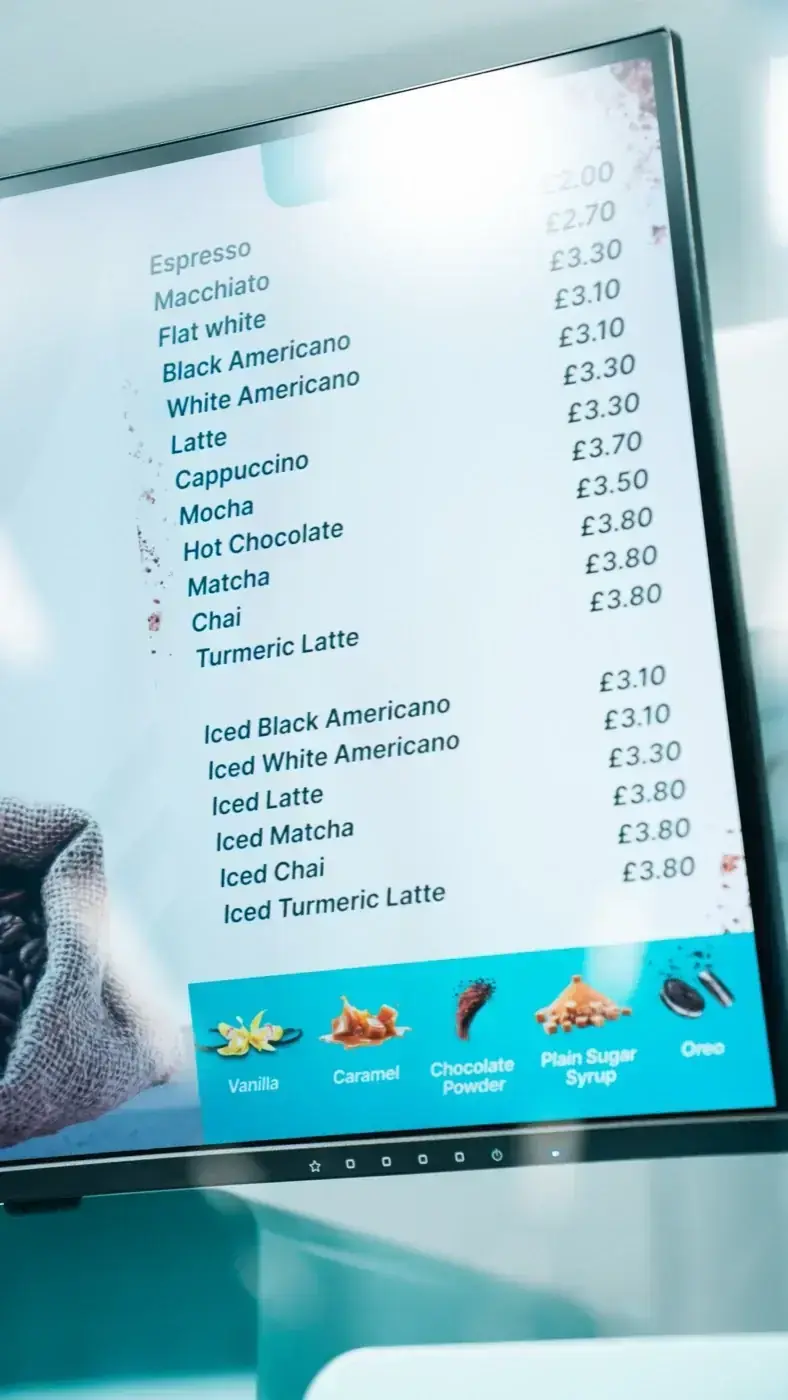
Usually residents, by card, with drinks starting at £2.00 and the operator taking an agreed share of every cup. Some schemes prefer to include it — that is host mode, where the operator covers the cups — and it tends to be used as a re-let incentive during the viewing season rather than all year.
Not if it is sited properly, and we treat that as a constraint we will not negotiate on. A position away from the slab directly under bedrooms is essentially silent to residents upstairs; directly underneath them, at 02:00, it is the one complaint an operator cannot defend. It is settled on the walk-round.
No. Restocking, cleaning, servicing and repairs are ours, and the kiosk reports its own faults so an engineer is normally scheduled before anyone in the building has reported anything. Your on-call number does not become a coffee machine helpline.
The operating company decides, but where a university nominates residents into the block its accommodation office usually wants to know, and it is a much easier conversation had at the start than after installation. In practice the university is interested in the same three things the operator is: noise, access control and who is responsible when it breaks.
It is a specialty coffee machine in the common room, which photographs as an amenity rather than as a vending bank in a corridor. Amenity comparison between neighbouring schemes is decided in the autumn viewing season for the following September, and coffee is one of the few differences a seventeen-year-old and their parent both notice on the same tour.
Your housekeeping handles it exactly as they handle any spill in that room today. The practical advice is to choose a hard floor position at survey stage rather than a carpeted corner — it is a five-minute decision that determines whether spills are a mop or a permanent mark in your marketing photographs.
It is about how many residents pass the position in the evening rather than how many beds the scheme has, which is why we survey the common room and the ground floor route rather than quote from bed numbers. A block where the laundry, the post room and the social space are on one route trades far better than a larger scheme where they are on three different floors.
Not what you were after? All sixteen venue types · Host a kiosk at your site · Own a STARBOT franchise · Lease a unit · Own one · £1,790/mo
Postcode, venue type and rough daily footfall is enough to start. We come back with a footfall-based model for your site — usually within a day.
No obligation, no credit search, no spam — one reply from the team with the exact numbers for your venue.
Prefer to talk? WhatsApp us — or ask Richard, bottom right.
Ask me anything on this page — the kiosk, the numbers, your site. Voice or chat, any hour.