Post-workout coffee without hiring a café team. Opens at 05:30 with the gym, closes at 22:00 with it, earns a share of every cup.
Early doors 05:30–08:00, then a long flat middle, then a 17:30–20:30 evening block. The two ends are exactly when staffing is hardest.
A gym has the most awkward staffing shape of any building we serve. It opens at 05:30 and closes at 22:00, but the two ends of that are where the members are and the middle is where the wages go. A juice bar needs somebody standing behind it from ten until four to catch a peak at seven in the morning and another at half past six in the evening, which is why so many leisure counters have quietly become a fridge and an honesty box.
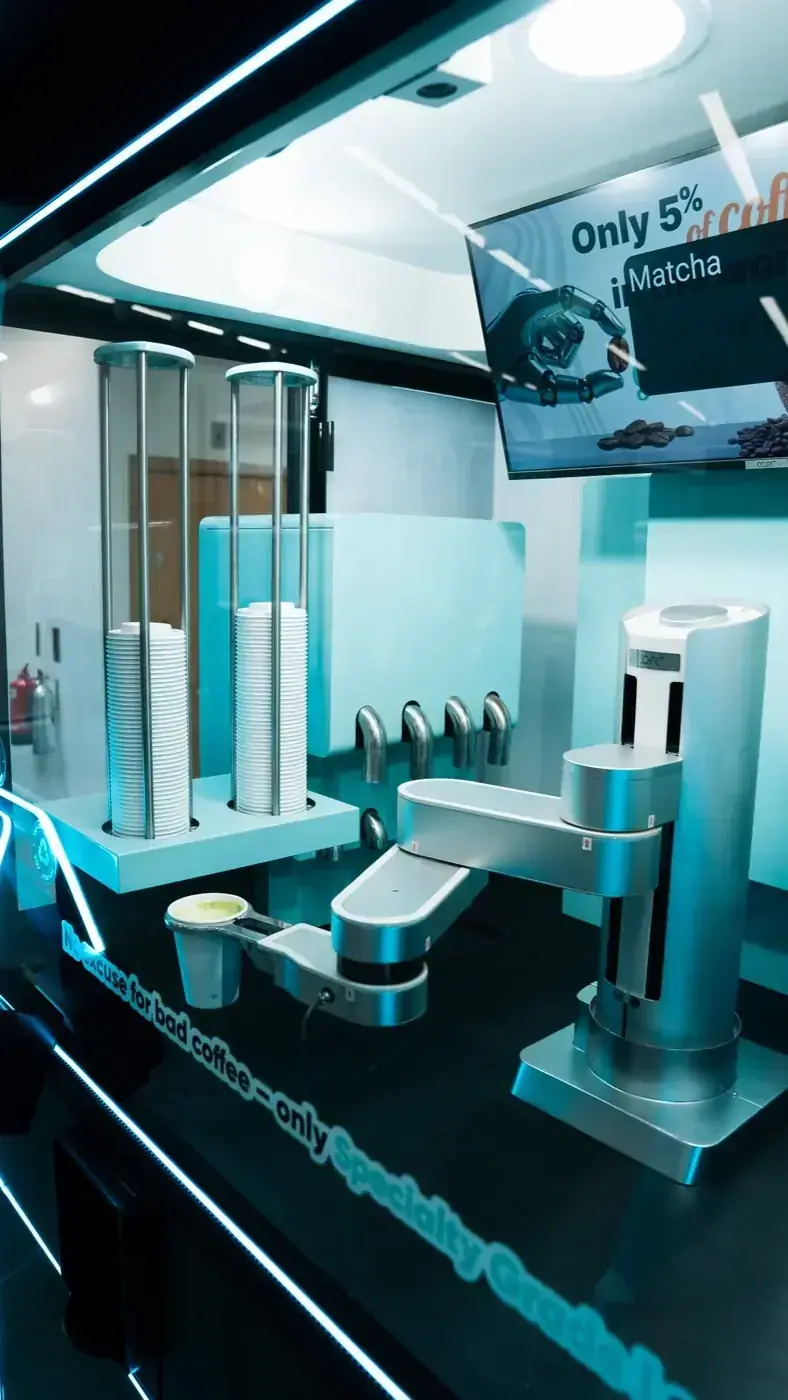
The trade is also less coffee-shaped than operators expect. Iced drinks and matcha are the summer earner in leisure, and a matcha latte at £3.80 after a class sells to the same person who would not have bought a cappuccino. The same arm pours both, so the menu does not have to be chosen against the season — it just moves.
Then there is the part of the day nobody is on site for at all. A 24-hour club with fob entry has no staff between the late shift and the early one, and a swimming lesson parent waiting forty minutes on a Saturday morning has no one to buy anything from. Both are hours a kiosk trades and a counter cannot, and neither of them costs anything when they are quiet.
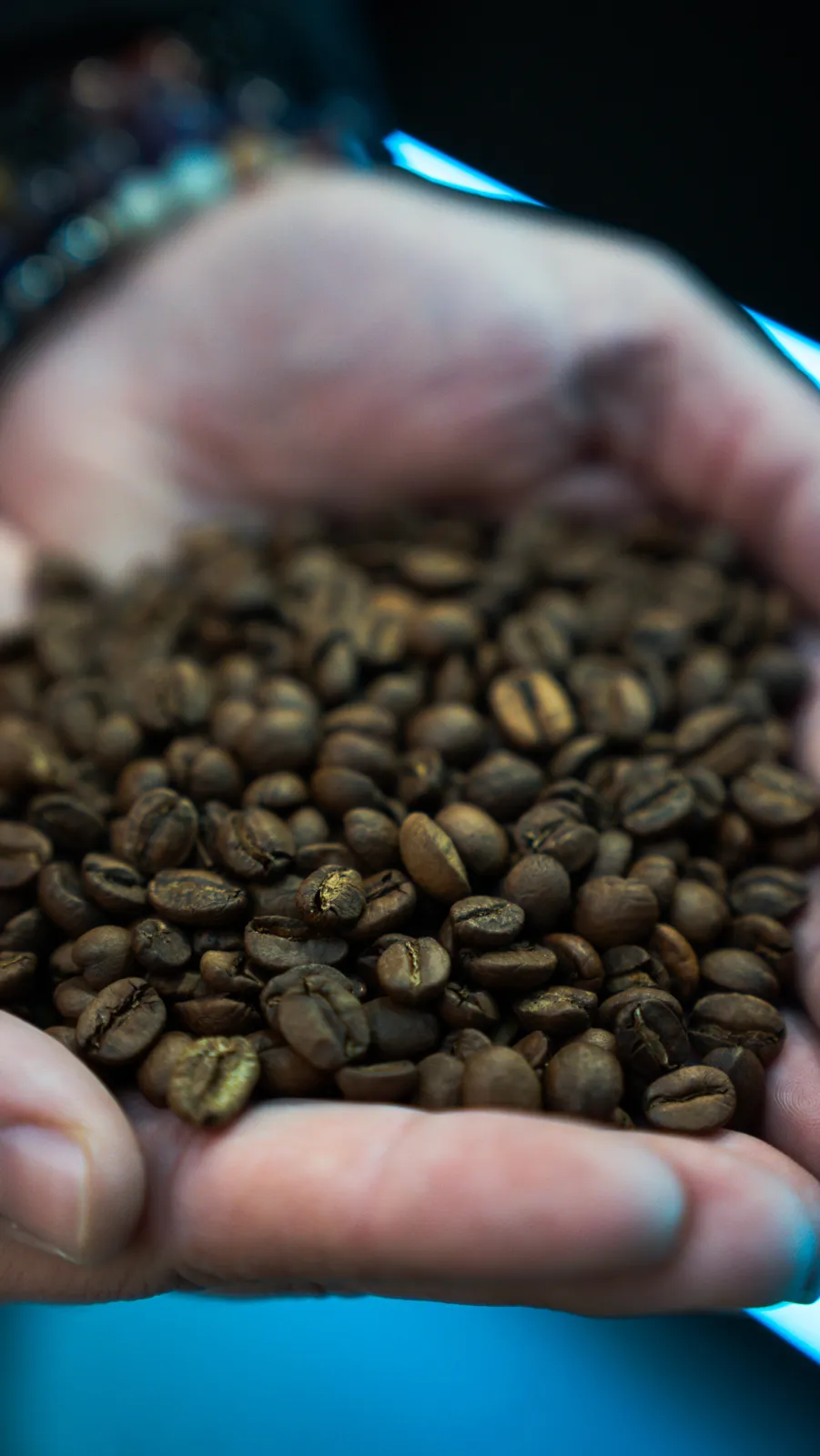
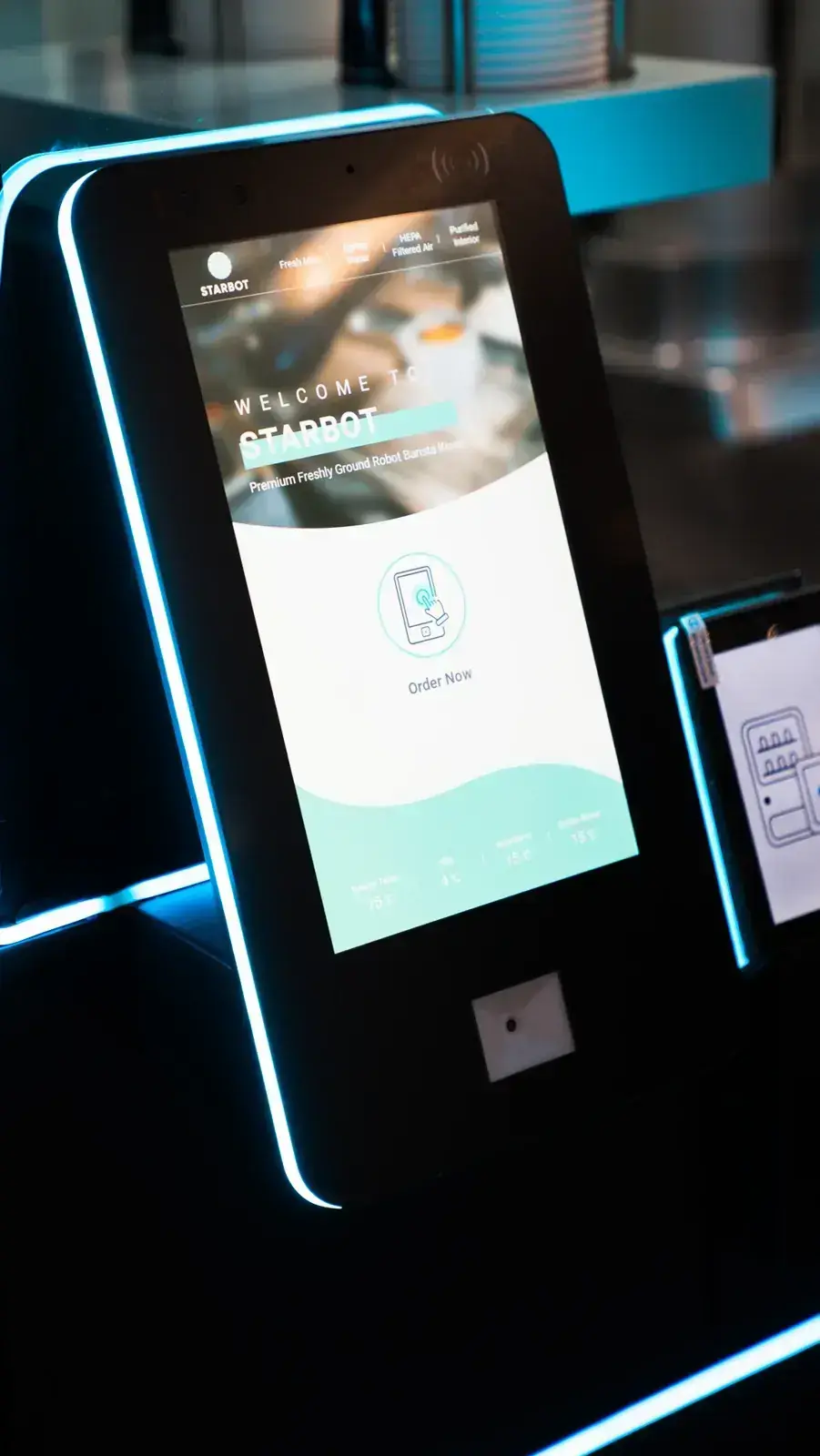
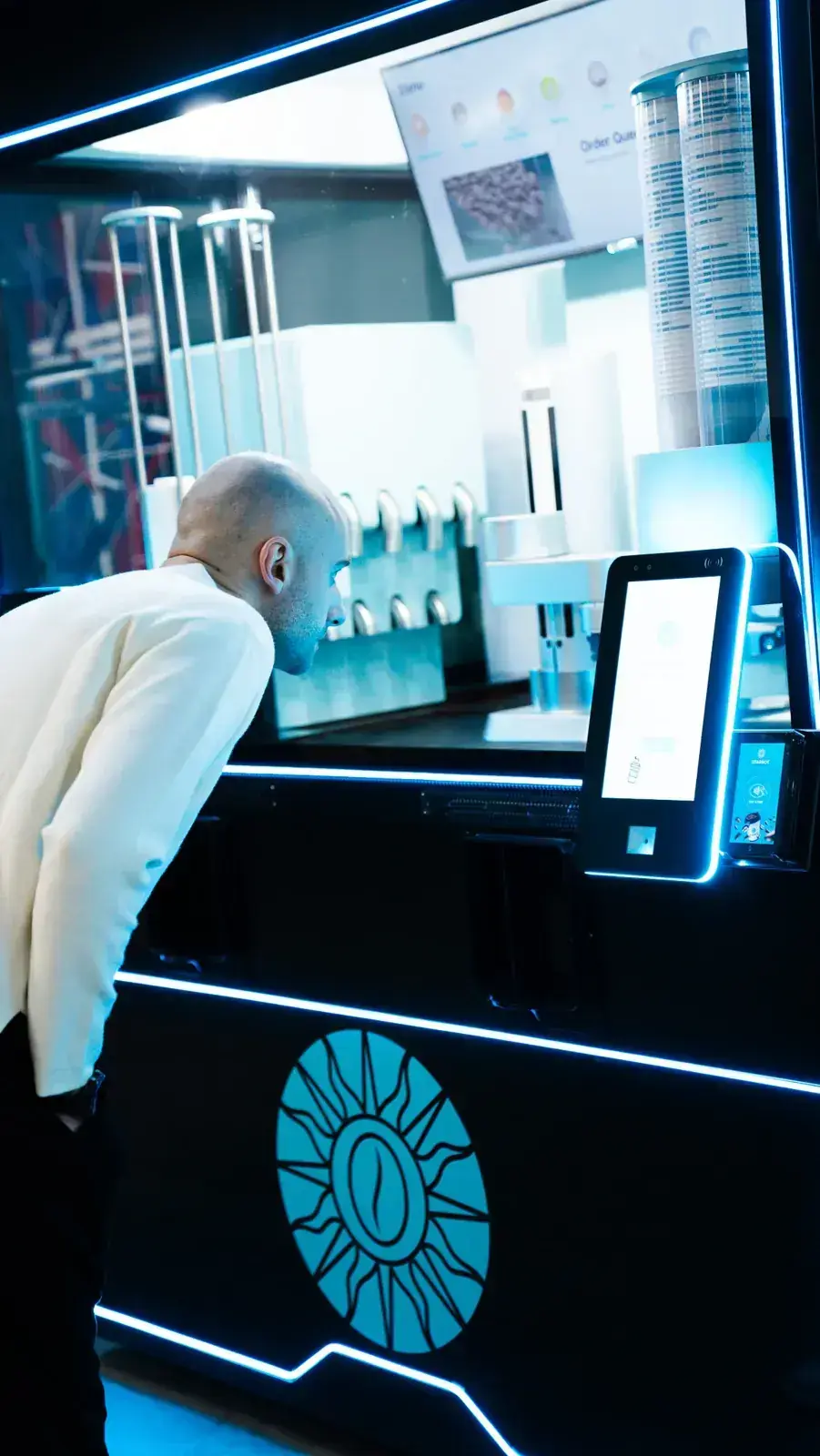
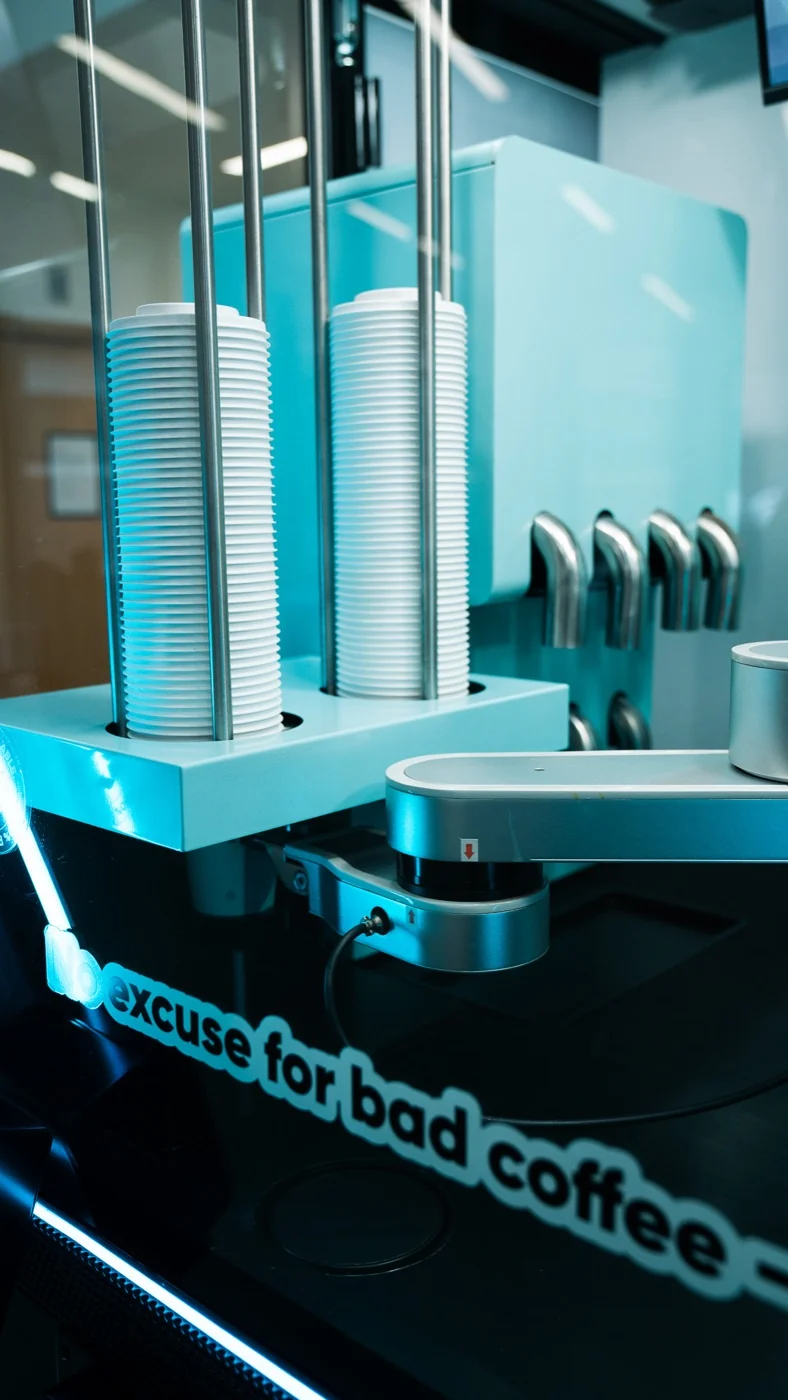
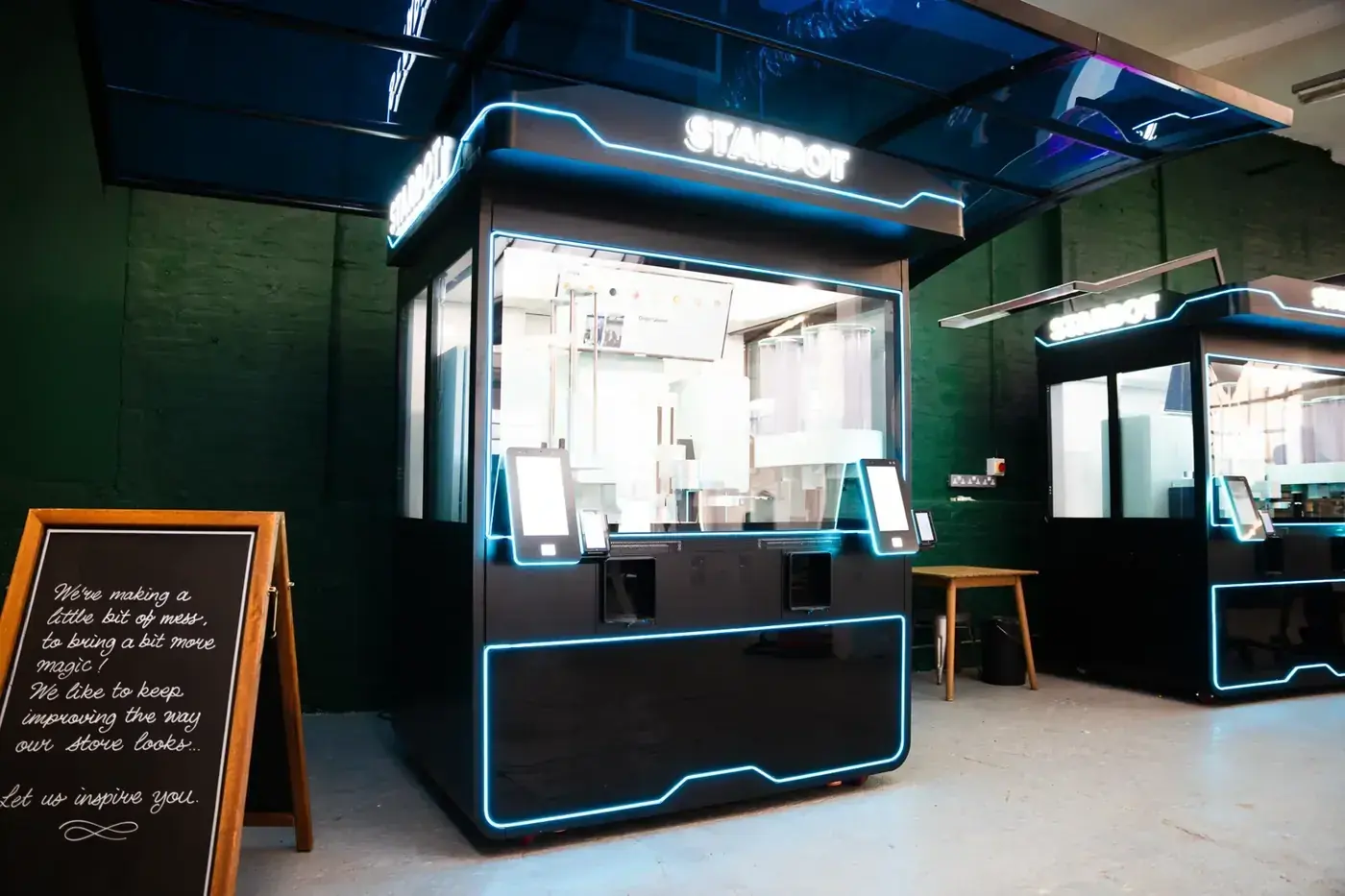
Photographed at City St George’s, University of London — our live site. Real photography, no renders.
A juice bar needs a person on minimum wage standing through the flat middle of the day to catch two peaks.
This is the part nobody puts in the business case, because it is nobody’s job to write it down.
They want both, and the same arm pours both. Iced drinks and matcha outsell hot coffee in a gym through summer.
Same drink at 06:00 and at 22:00, in under 60 seconds, from 2.5 m² of floor.
Not a generic day. This is how the demand actually arrives in this kind of building — including the hours a staffed counter is paid for and nobody comes.
Early doors. Small numbers, high loyalty, and a group who train before work and go straight on to it — the most reliable coffee purchase in the building.
The school-run overlap and the pre-work rush. Reception is scanning people in continuously, which is exactly where a kiosk needs to be to catch them on the way out.
Classes, older members and parent-and-baby sessions. Long dwell, sociable, and the part of the day a leisure centre coffee actually gets drunk sitting down.
The flat middle. A staffed counter is being paid in full for it; the kiosk earns whatever walks past and costs nothing when nobody does.
Junior sessions and swimming lessons. The buyers here are waiting parents, not members, and they are on site for thirty to forty-five minutes with nothing to do.
The evening block, the busiest hours of the day, and the point at which a single member of staff cannot both run reception and pour drinks.
Fob entry, no staff on site, and a population that still turns up. Every drink sold in this window is one nobody was rostered to sell.
Two spots forty metres apart in the same building can differ by half the sales. These are the positions that work in gyms — and the one that does not.
Members already stop at reception to scan in, and they pass it again on the way out when they actually want a drink. It keeps the machine out of the humid air, in view of the desk for security, and in front of the one audience that visits three or four times a week.
Swimming lesson parents are a captive audience with a fixed thirty to forty-five minute wait and no membership card. A position they can reach without going through the barrier turns that wait into the most predictable trade in a leisure centre — but it has to be on the viewing side, not the pool side.
A class of thirty leaves at once and wants something immediately. Close to the studio is right; directly outside the door is not, because the queue and the exiting class occupy the same two metres of corridor at the same moment.
Chlorine atmosphere and constant humidity are hard on electronics, wet floors and mains equipment are a combination nobody wants to defend, and members arrive at it barefoot. The dry side is not a preference here, it is the only workable answer.
Who signs depends entirely on who runs the building. A private club is usually the general manager plus a regional or operations director, and if it is part of a national brand there may be a partnerships team that decides centrally what is allowed at the front of house. That chain is short and commercial, and it moves at the speed of one person deciding they want it.
A council leisure centre is different. The building belongs to the local authority, the operation is often run by a leisure trust or a contractor under a leisure management contract, and that contract usually has something to say about catering, vending and concessions. The trust can want it and still need the authority's contract manager to agree, and the public health team may have a view on what a council building is allowed to sell.
That is the first thing to check on a council site, because leisure management contracts frequently bundle vending rights. A private club rarely has the same constraint. Where a vending agreement covers cold drinks and snacks it often does not cover made-to-order coffee, but the wording decides it, not us.
On the dry side, yes. In the pool hall, no, and we will not site one there. Chlorine and permanent humidity are corrosive to electronics, so the position is chosen on the dry side of the building, which in practice is where the members and the waiting parents are anyway.
It removes the reason to have somebody behind a counter through the flat middle of the day. Reception is not asked to serve it, restock it or clean inside it. On a 24-hour club it trades a block of hours in which you have no staff at all and currently take nothing.
The menu is coffee-led and made per cup rather than dispensed from a pre-sweetened mix, and the range runs from a £2.00 espresso to matcha and hot chocolate. If your authority has a specific position on sugar-sweetened drinks, that is a menu conversation before installation rather than a surprise afterwards.
It is our equipment, inspected, tested and insured by us, and there are no exposed hot surfaces or open jugs for a member to reach. Siting handles the rest: clear of wet flooring, clear of class exits, and out of the route people take at speed with a kit bag on one shoulder.
That is a siting decision and it is worth making deliberately. Outside the barrier it serves swimming lesson parents, spectators and casual users; inside it serves members only. In a leisure centre the outside position is usually worth more, because the waiting parent has nothing else to do for forty minutes.
Nothing here needs plumbing, drainage or a fixing to the fabric of the building. The kiosk stands on the floor and plugs into a 16A socket.
A vending contract creates work for your facilities team. This one does not: restocking, cleaning, faults and reporting are ours.
The kiosk reports its own stock, which matters here because the mix swings hard. Iced drinks and matcha rise through the summer while hot coffee falls, and January adds a month of new members who all arrive at once. Replenishment scheduled off actual sales handles that; a fixed weekly round does not.
The milk path, the drip tray and the interior are on our schedule. Your team is not asked to open it, wipe inside it or empty a grounds bin between check-ins, which is the difference between this and the bean-to-cup machine that ends up being nobody's job behind the desk.
On a 24-hour club the machine reports faults itself, so a problem at 02:00 is logged by the kiosk rather than by a member sending a message to the club's social account. Nothing about the overnight block depends on somebody being there to notice.
Payment is card and contactless — the way members already pay for everything when they are carrying a phone, a towel and nothing else. There is no float behind reception, no cash to reconcile at the end of a late shift and nothing worth breaking into overnight.
Photographed at our live site in London. Real photography, no renders.
A club or centre signs a site licence rather than a lease. It is permission to place and operate the kiosk in an agreed position, with no exclusive possession of any part of the building and no tenancy created. For a leisure operator running a building under contract from a local authority, that distinction matters: a licence usually sits within what an operator may grant, where anything resembling a lease does not.
The commercial arrangement is site commission on every cup, agreed per site, with no capital cost and no fixed fee. A single-site independent gym and a leisure centre with a swimming pool and a spectator gallery are not the same offer, which is why the share is agreed against the position rather than published as one number.
For operators who would rather run the machine themselves — chains that treat front-of-house as part of the brand tend to — the same kiosk is available on a five-year lease at £1,790 a month. That changes who takes the revenue, and it is a different conversation from a placement.
Exit is by notice on either side, with nothing to reinstate: no plumbing to cap, no fixings, nothing altered. Leisure centres refurbish reception areas more often than almost any venue type, and relocating a machine that plugs into a socket is a scheduled visit rather than a line in a refurbishment budget.
The commercial shape — a share of every cup, or a fixed monthly fee for the space — is set out before anything is installed. See how hosting works.
If one of the rows above ours fits your building better, take it. We would rather not install a kiosk than install one into a position that cannot carry it.
Sells protein shakes, food and coffee, gives the club a social space, and in a large site with a genuine spectator gallery it can work well.
It needs a person from open to close to catch two peaks, which means paying full wages through the flat middle of the day. Most leisure counters solve this by reducing hours, at which point they are shut at 06:00 and at 21:00 — the two windows the members actually wanted.
No labour, no waste, works at any hour, and it is what most clubs already have next to reception.
It sells nothing anybody looks forward to, and it gives the club no reason to be the place a member stays for ten minutes after a session. A vending machine has never retained a membership.
Cheap, familiar, and reception can hand a member a coffee while they scan in.
It makes serving drinks a receptionist's job at exactly the moment thirty people are trying to get through the barrier. It is also descaled by whoever remembers, which in a building with a shift rota is nobody.
No cost, no contract, no space given up, and there is usually a coffee shop in the same retail park.
The ten minutes after a workout is the only part of the visit a club can extend, and handing it to the coffee shop next door hands over the social habit too. It also does nothing at all for the 06:00 member, because nothing else is open then either.
Coffee, iced drinks and matcha without a wait, trading from 05:30 to 22:00 and through the unstaffed hours of a 24-hour club, in a corner of floor with no capital cost.
It does not make protein shakes and it sells no food, so it is not a replacement for a juice bar in a club whose members genuinely want one. It cannot go anywhere near the pool hall. And it is a machine rather than a seating area — if your members' loyalty is built on sitting in the café talking after a class, a kiosk serves the drink but not the room.
The last row is ours, with its real downside written in. Revenue share and unit pricing are agreed per site and are not published.
Four cases in this venue type where we would tell you not to bother. They cost us installs; printing them costs less than a kiosk that never earns.
Each of these has happened somewhere, and each shows up as the same thing on the report: a position that takes half of what the footfall said it would.
The waiting parent is the single most predictable buyer in a leisure centre — thirty to forty-five minutes, every week, with nothing to do — and they do not have a membership card. A position past the barrier removes that entire audience and leaves the machine to members who are on their way out at speed.
Chlorine and humidity are corrosive, wet floor and electrics is an argument you do not want to have with your insurer, and members approach it barefoot with wet hands. It is the one venue type where a whole half of the building is simply out of bounds.
A class of thirty leaves in one movement, and if the queue for the machine forms in the same corridor the class is exiting through, the complaint is not about coffee. A few metres further along the corridor keeps the trade and loses the crush.
The evening block is the busiest but it is also the most rushed. A spot that only works at peak misses the 09:30 class crowd and the waiting parents, who between them are the members with the time to actually stand and drink something.
Density matters to us as much as footfall: several sites inside one servicing round is what keeps a kiosk free to host.
Dark winter mornings push the first peak earlier, which makes a 05:30 opening with no staffed counter a genuine amenity rather than a nicety.
Out-of-town leisure sites around the Filton and Aztec West parks have nothing within walking distance, so the post-workout coffee is bought on site or not at all.
A very high student population concentrated in a walkable centre, and university sport facilities that open early and close late.
A compact centre where several leisure sites sit within one servicing round, alongside an event calendar that fills spectator areas.
They want both, at different moments. The post-class drink and the pre-work drink are two different purchases, and iced coffee and matcha outsell hot coffee here through the summer — the same arm pours all of it without a wait. What a kiosk does not do is replace a protein bar: if shakes are the core of your offer, this sits alongside it rather than instead of it.
That is one of the better cases for it. Fob-entry hours currently generate no ancillary revenue at all because there is nobody to sell anything, and the kiosk trades them with no rota attached. It reports faults itself, so nothing about the overnight block depends on a member telling you in the morning.
On the dry side of the building, yes. In the pool hall it will not, and we will not put one there — chlorine atmosphere is corrosive and the floor is wet. In practice the best commercial positions, reception and the spectator area, are on the dry side anyway.
No. The milk path, the interior and the drip tray are on our schedule, and the kiosk reports its own stock so refills follow what it has actually sold. Your team does not open it, refill it or reset it, which is the main practical difference from the bean-to-cup machine behind the desk.
Usually more than one party. The trust or operator running the building sponsors it, the local authority's contract manager confirms it does not cut across the leisure management contract, and if that contract bundles vending rights, those have to be checked before anything else. Private clubs are a much shorter chain — the general manager and their regional director.
Site commission on every cup, agreed per site, with no capital outlay and no fixed fee. What it is actually worth depends on how many people pass the position and stop, which is why we survey the reception layout rather than quoting from a member count — a club with two thousand members who leave at a run sells less than one with six hundred who linger.
If you site it outside the barrier, yes, and in a leisure centre that is normally the right decision because spectators and swimming lesson parents are a captive audience with nothing else to do. Inside the barrier it becomes a members-only benefit, which is a legitimate choice but a smaller market.
Neither. It stands on a corner of floor and plugs into a standard socket, with a refillable water supply rather than a mains connection. That is why it can go in a reception area that was never designed to have catering in it, and why removing it later leaves no trace.
Volume rises sharply and the machine reports it, so restocking follows the surge rather than a fixed round. It is worth flagging in advance if your club runs a big January intake, because that month and the summer iced-drink season are the two points in the leisure year where the mix moves most.
Not what you were after? All sixteen venue types · Host a kiosk at your site · Own a STARBOT franchise · Lease a unit · Own one · £1,790/mo
Postcode, venue type and rough daily footfall is enough to start. We come back with a footfall-based model for your site — usually within a day.
No obligation, no credit search, no spam — one reply from the team with the exact numbers for your venue.
Prefer to talk? WhatsApp us — or ask Richard, bottom right.
Ask me anything on this page — the kiosk, the numbers, your site. Voice or chat, any hour.