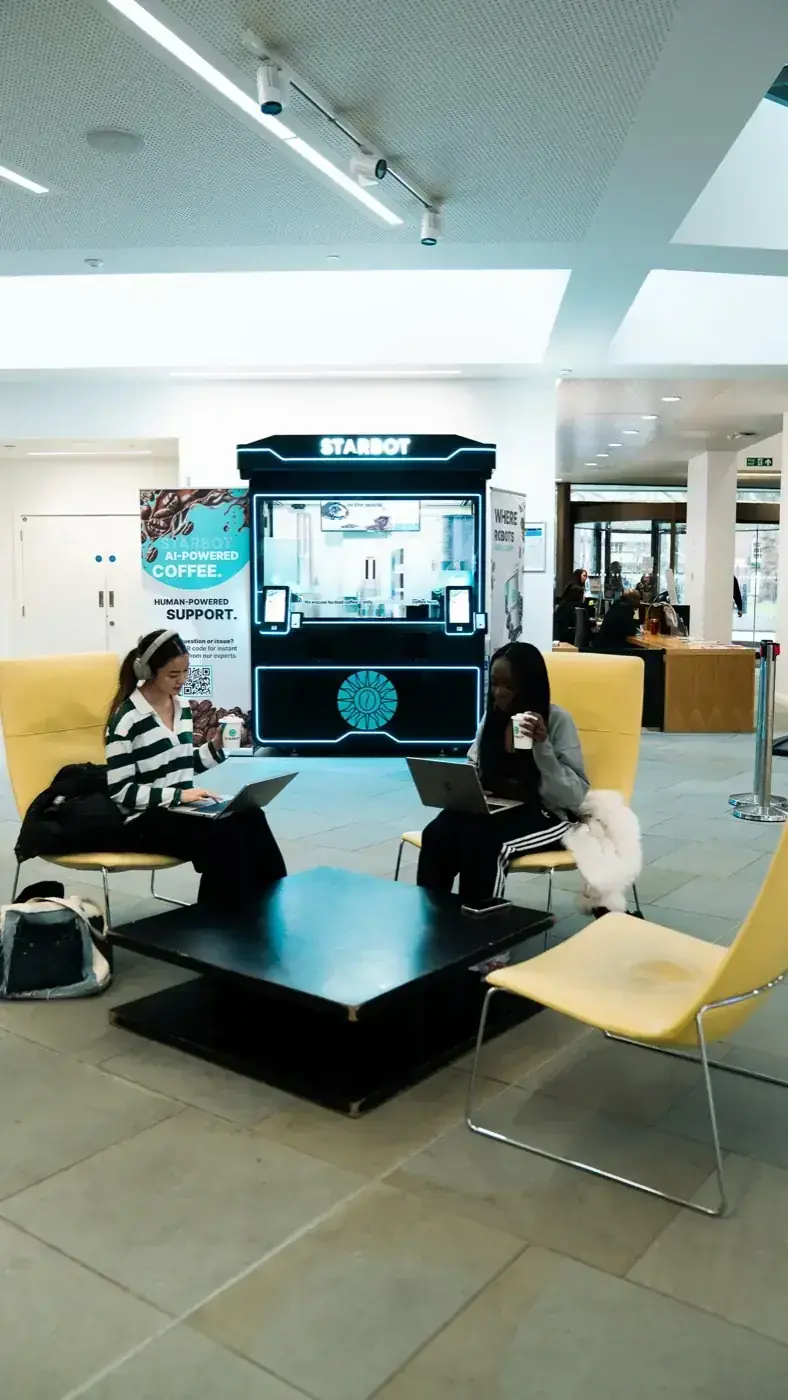
Interval coffee served in the ten minutes that actually matter, without a second person on the counter. Free to host — we install, stock and service it; your site
Everything happens in three ten-minute windows around screenings; the rest of the evening is dead.
A cinema foyer is the most compressed trading pattern of any venue we serve. Nothing happens for forty minutes and then two hundred people want something in the same ten, because that is how screening times work. Front of house is sized for the average and then judged on the peak, and the sale that gets dropped in the crush is always the one that takes longest to make, which is the coffee.
That is a staffing problem with no good staffing answer. Nobody rosters a second person for three ten-minute windows an evening, and a member of front-of-house texturing milk is a member of front-of-house not selling a large sweet popcorn. A kiosk runs in parallel with the counter, takes the drink orders out of the queue entirely, and costs nothing during the forty minutes when the foyer is empty.
The second thing a venue gets is the late screening. A 21:00 start means people arriving after every coffee shop in the area has closed, and leaving at a time when the concession is already cashing up. Those are hours the kiosk trades without an extra shift attached, which is the only way they were ever going to be traded.
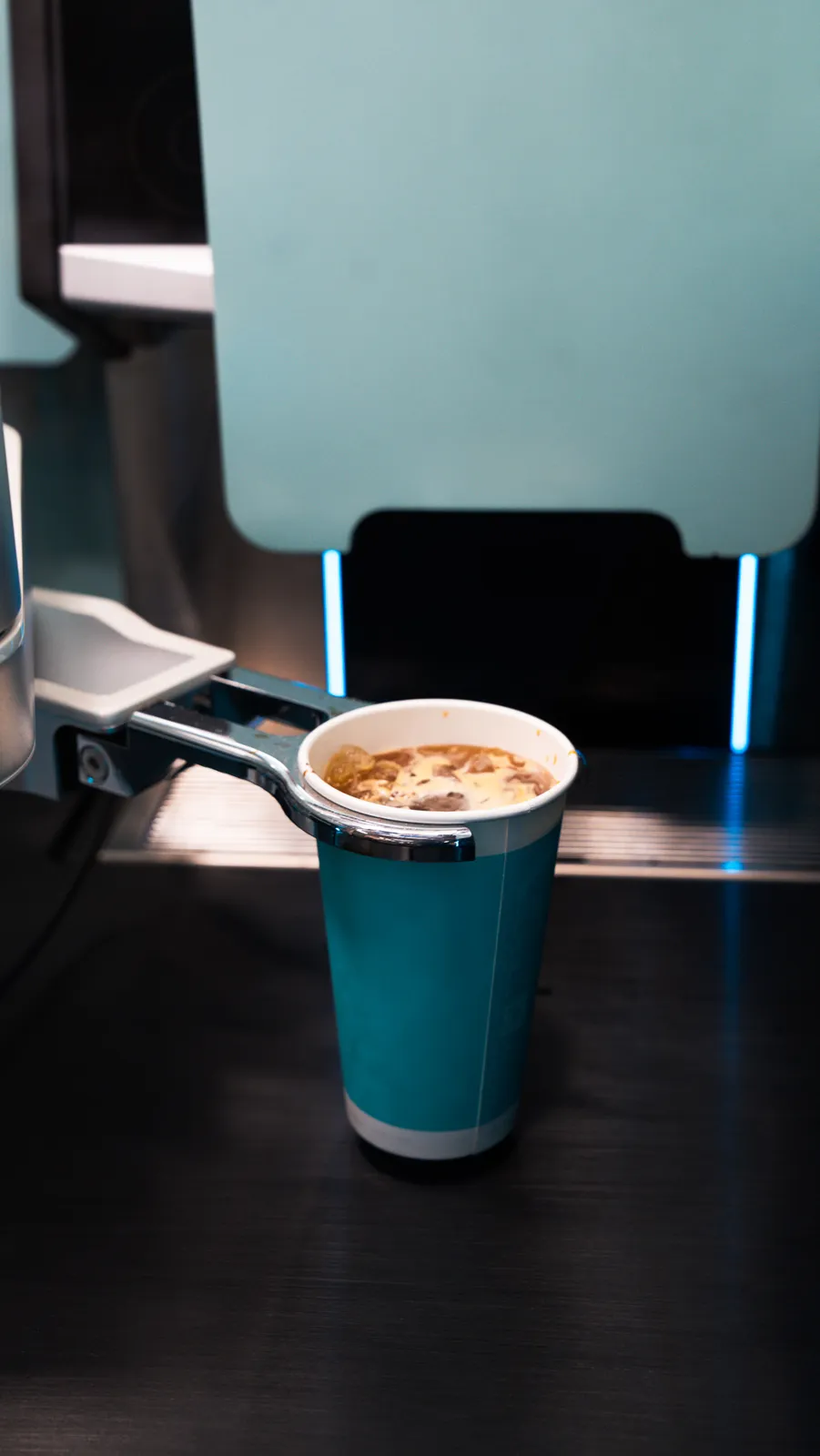
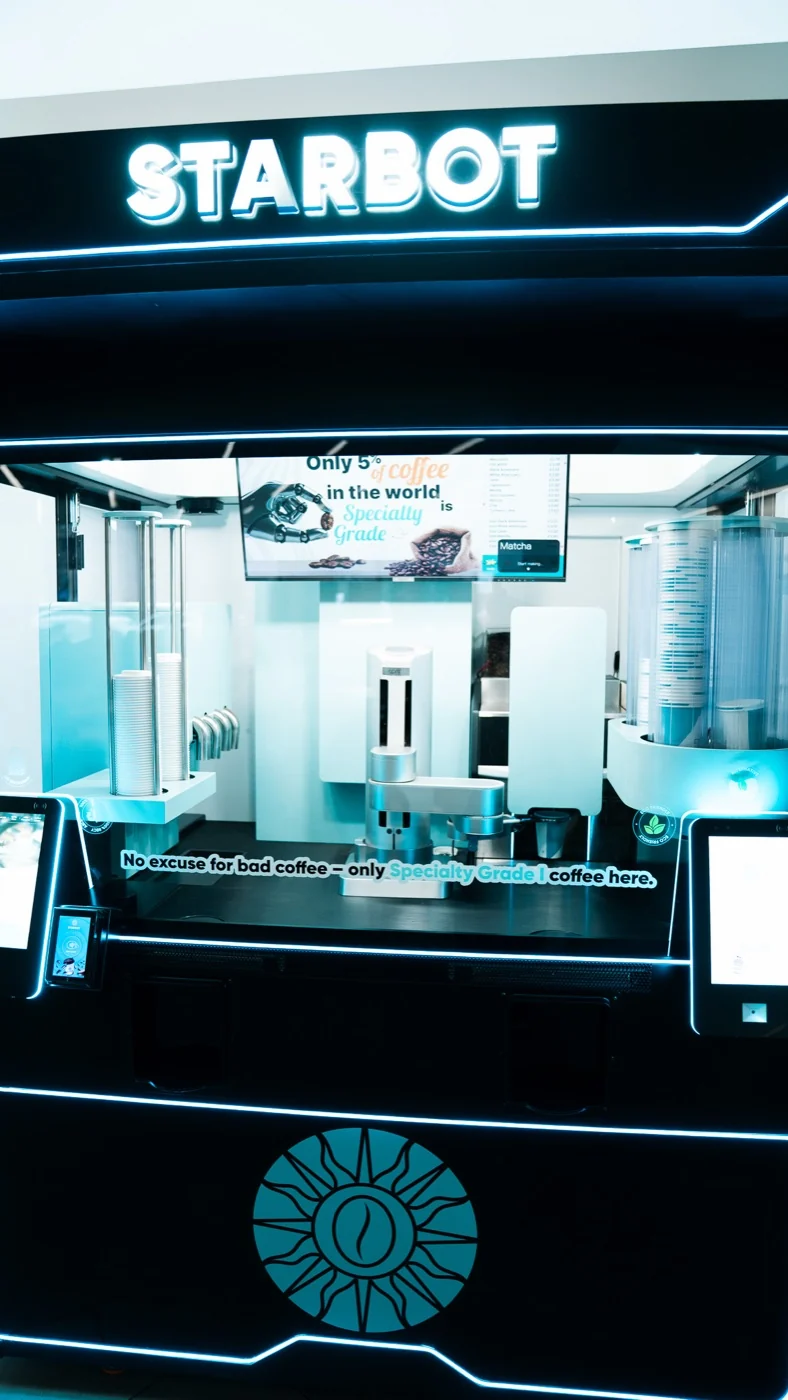
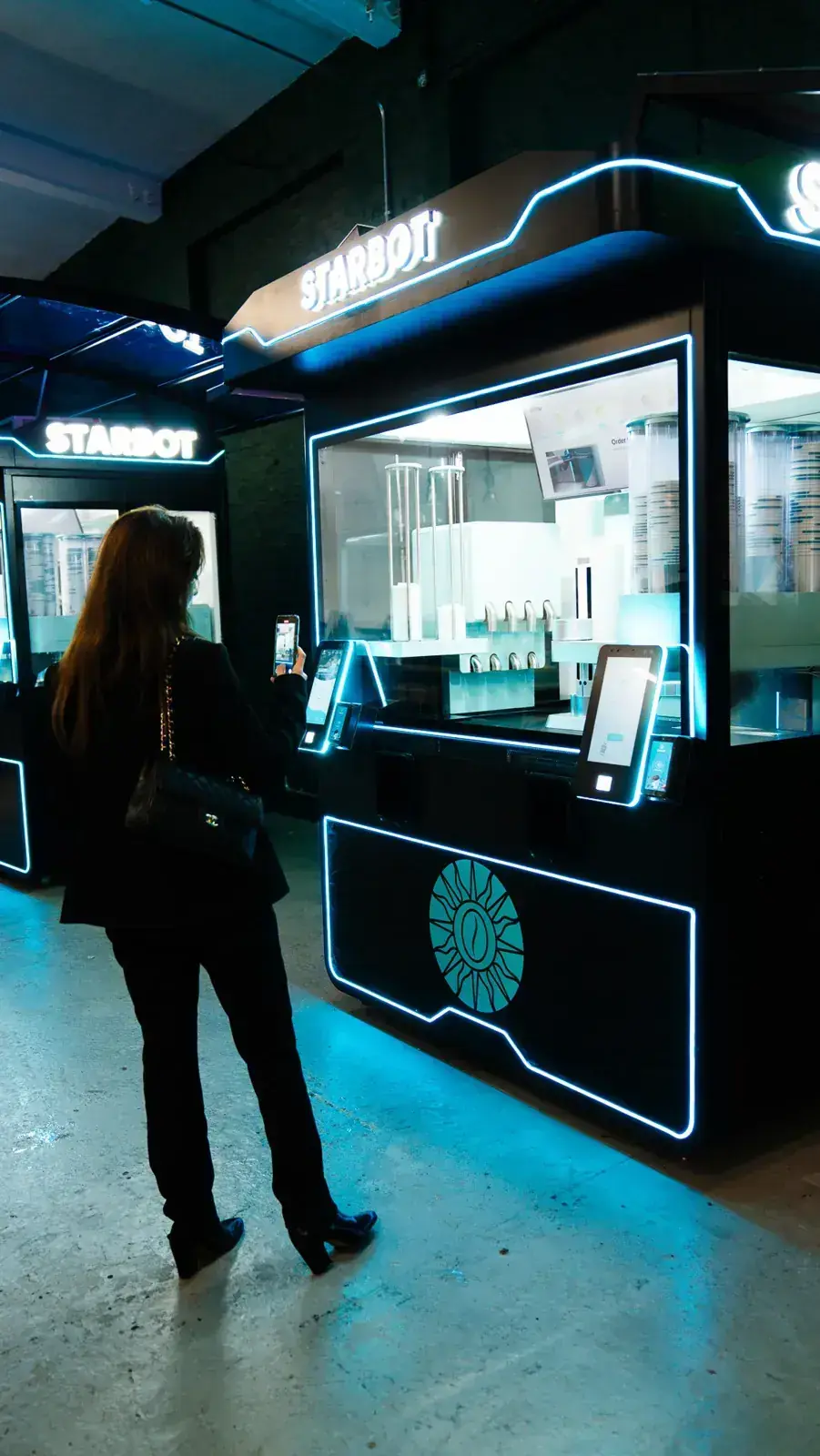
Photographed at City St George’s, University of London — our live site. Real photography, no renders.
One counter cannot serve popcorn and pour milk at the same time, so coffee is the sale that gets dropped.
This is the part nobody puts in the business case, because it is nobody’s job to write it down.
Not while also selling tickets and popcorn to the same queue in the same ten minutes.
Same drink at 06:00 and at 22:00, in under 60 seconds, from 2.5 m² of floor.
Not a generic day. This is how the demand actually arrives in this kind of building — including the hours a staffed counter is paid for and nobody comes.
Dead in most venues, and profitably so — a kiosk costs nothing to stand idle, which is why the shape of a cinema day is a problem for staffing rather than for a machine.
Parent and baby screenings and senior clubs. Small audiences, long dwell in the foyer before and after, and a real coffee habit rather than a popcorn one.
Matinees and school holidays. The foyer fills in bursts tied to start times, and the counter is dealing with tickets and food rather than drinks.
The heaviest block of the evening: two or three screens starting inside the same half hour, one counter, and a queue where every coffee order costs the till a popcorn sale.
Ten minutes, everybody at once, and a hard deadline because the film restarts. Nothing else in the building is asked to serve a whole audience against a clock.
Late screenings arriving after every coffee shop nearby has shut, and leaving when the concession is cashing up. Thin volume, zero competition, no extra shift to pay for.
Theatre, opera relays, comedy and hires produce a different audience with a longer pre-show dwell, and they are the nights the foyer earns most per head.
Two spots forty metres apart in the same building can differ by half the sales. These are the positions that work in cinemas and venues — and the one that does not.
The position has to be visible from the ticket line so people peel off, without adding a second queue to the same floor space. Beside the counter run rather than opposite it usually works, because the flow is already moving in that direction.
Ten minutes is not long enough to cross a foyer, buy and get back. A position near the doors people come out of is the difference between an interval trade and an interval intention, and it is the single highest-value ten minutes in the building.
Venues with a licensed bar have a pre-show dwell that the concession counter is not set up to serve. A kiosk there takes the drinks the bar makes badly and slowly, and it keeps serving after the bar's own staffing has been cut back.
Half the foyer population on any given evening has not gone through yet, and some are meeting someone or waiting for a later screening. Siting past the tear point removes the audience with the longest dwell time in the building.
In an independent venue the general manager decides and can decide quickly, which makes single-site cinemas and arts venues one of the faster conversations on this site. What they need is confidence that it does not compete with their own concession margin and that it does not create a second thing for front of house to look after on a busy evening.
In a circuit the shape changes: the general manager sponsors it, but operations and commercial at head office own concession standards, supplier arrangements and anything that appears in the foyer. That is a longer route, and the honest way to run it is a single site as a proof rather than a proposal for an estate — a working position in one foyer answers questions a document cannot.
The opposite is the usual outcome: it takes the slowest order type out of the counter queue, which frees the till for food in the ten minutes when food is what the queue is buying. Coffee is the sale most often abandoned in a crush, so most of what the kiosk sells was not being sold at all.
No. Stocking, cleaning and faults are ours, and the kiosk reports its own state rather than depending on a duty manager noticing. What front of house does is exactly what they did before, minus the coffee orders.
It must not, and in a foyer that is a serious question rather than a formality because of how the space empties at the end of a screening. In a space that size there is usually more than one workable spot, which is why we ask to see the foyer during a changeover rather than when it is empty.
It sells hot drinks, so it does not touch a licence for alcohol. Where a circuit has an exclusive supply arrangement for coffee, that is a genuine constraint and one to establish at the start — it is a commercial question rather than an operational one, and we would rather know before a survey than after.
A corner of clear floor and a standard 16A socket. There is no plumbing, no drainage and nothing fixed to the fabric, which in a listed or converted venue is usually the difference between a decision and a planning conversation.
Yes, by notice, and there is nothing to reinstate because nothing was altered. Foyers get refitted more often than most venues, so an agreement that made a refurbishment awkward would be one your operations team was right to decline.
Nothing here needs plumbing, drainage or a fixing to the fabric of the building. The kiosk stands on the floor and plugs into a standard socket.
A vending contract creates work for your facilities team. This one does not: restocking, cleaning, faults and reporting are ours.
A cinema's week is set by what is on release, and a big opening weekend is not like a wet Tuesday. Because the kiosk reports what it has sold, replenishment follows the programme rather than a fixed round, and visits are booked outside performance times rather than through a changeover.
There is no jug to fill, no machine to purge and nothing for a duty manager to do before the doors open. The one moment in the evening when front of house has no spare hands is the moment the kiosk is most useful, and it needs nothing from them to be ready for it.
The milk path, drip tray and interior are ours. What the venue sees is a wipe-down exterior with no open milk and no grounds bin, which matters in a foyer where the cleaning window is short and happens after the last screening rather than during the day.
The kiosk reports its own fault state, so a failure during a late screening does not depend on a duty manager finding a supplier number at the end of a shift. On a site where the trade is concentrated into a few windows, being out of service for an evening is the whole day.
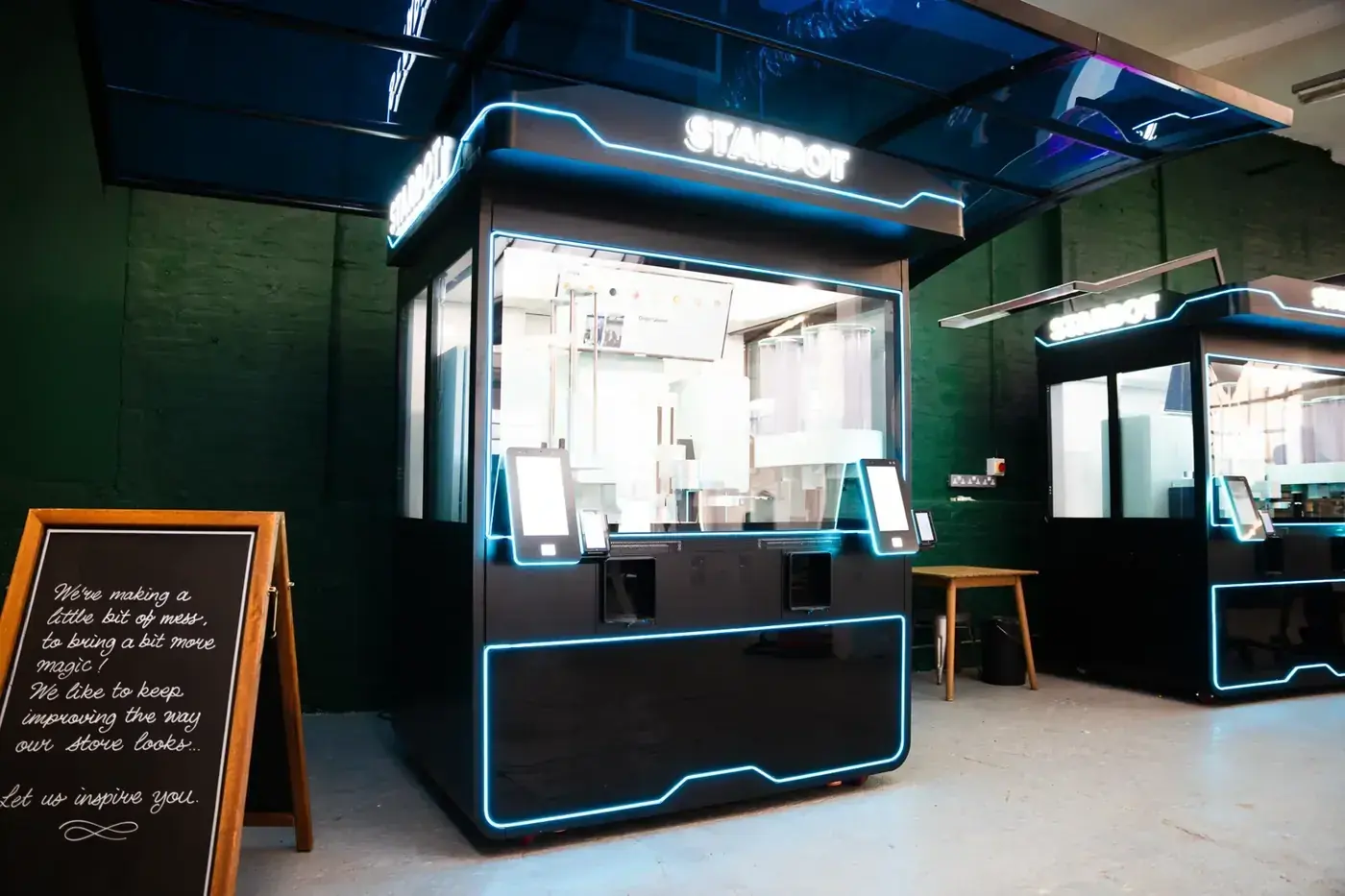
Photographed at our live site in London. Real photography, no renders.
A venue signs a site licence rather than a lease — permission for us to place and operate a machine in a defined spot in the foyer. It gives no exclusive possession of any part of the building and creates no tenancy, which matters in venues that are frequently themselves tenants of a landlord, a council or a trust.
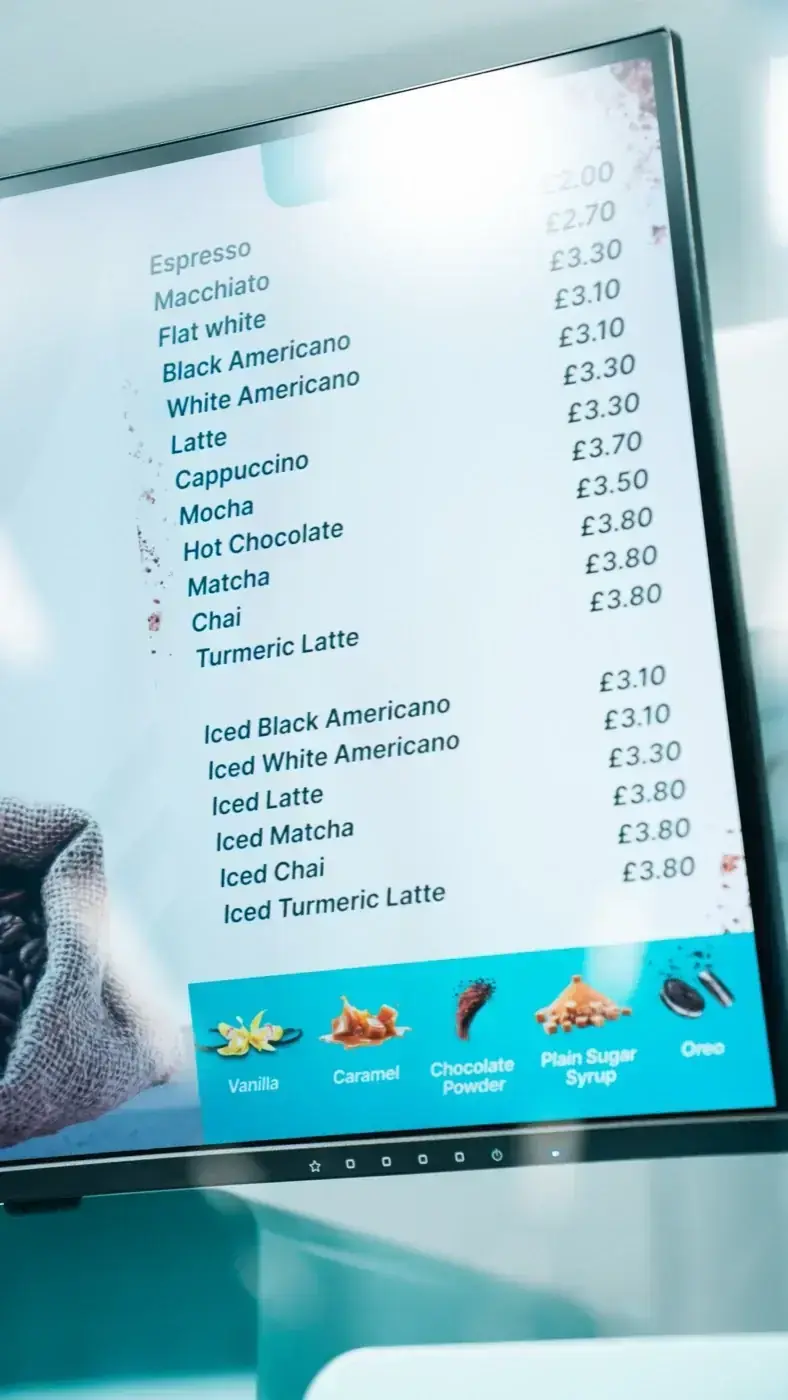
The commercial term is an agreed share of every cup sold, agreed per site rather than published. A single-screen independent and a multiplex in a retail park are not the same offer, and quoting one rate for both would mean quoting one of them wrongly. Drinks start at £2.00 and the full price list is public, which is unusual in a foyer and tends to be the part audiences notice.
Exit is by notice on either side, and because nothing is plumbed or fixed there is nothing to reinstate. Foyers are refurbished, re-tendered and reprogrammed constantly, and the agreement is written so that none of those events becomes a negotiation.
Venues that would rather run the machine themselves — some circuits prefer to hold the full margin — can take it on a five-year lease at £1,790 a month. Same kiosk, same servicing, different commercial footing.
The commercial shape — a share of every cup, or a fixed monthly fee for the space — is set out before anything is installed. See how hosting works.
If one of the rows above ours fits your building better, take it. We would rather not install a kiosk than install one into a position that cannot carry it.
No capital cost, uses the machine already behind the counter, and on a quiet afternoon it works perfectly well.
It fails at exactly the moment it matters. In a ten-minute interval one person cannot texture milk and sell popcorn to the same queue, so either the queue stalls or the coffee order is quietly discouraged. Every venue knows which of those actually happens.
The direct fix, and it does solve the throughput problem on the busiest nights.
You are paying a shift to cover three ten-minute windows. The economics only work on the biggest nights of the week, which means the rota is wrong on the other four, and cover for sickness and holidays makes it worse.
Cheap, self-service, and it removes the drink from the counter queue.
It makes a hot drink rather than a flat white, and in a foyer where people have just paid a premium for a ticket and a large drink, the gap between expectation and cup is visible. It is also the venue's problem to clean, refill and descale, on top of everything else the foyer needs before doors.
Zero cost, zero admin, and the coffee shop in the same retail park is happy to oblige.
The margin walks in through the door in somebody else's cup. It is also the one option that gets worse with the programme: late screenings and event nights are when nothing nearby is open, so the audience with the most money to spend has the least to spend it on.
Barista-grade drinks without a wait, running the interval in parallel with the counter, that footprint of foyer, no capital cost on revenue share and nothing for front of house to do.
It trades in bursts, so a small venue with a handful of screenings a week may simply not produce enough windows to justify the floor space. It is also one machine against an interval — a two-hundred-seat auditorium emptying at once will still queue, just faster and without taking the counter down with it.
The last row is ours, with its real downside written in. Revenue share and unit pricing are agreed per site and are not published.
Four cases in this venue type where we would tell you not to bother. They cost us installs; printing them costs less than a kiosk that never earns.
Each of these has happened somewhere, and each shows up as the same thing on the report: a position that takes half of what the footfall said it would.
An interval is ten minutes with a hard deadline, and people will not cross a foyer and come back. A position that works beautifully for the arrival queue can take almost nothing during the interval, which is the highest-value window the building has.
It cuts out everyone who has not gone through yet — people meeting friends, waiting for a later start, or in the foyer for the bar rather than a screening. In a mixed venue that is a large share of the people with the longest dwell time.
A screen emptying at once is a different volume of people than the foyer sees at any other moment, and a machine that is fine at 18:00 can be an obstruction at 22:40. This is the one siting error in a venue that ends the arrangement rather than merely underperforming.
Siting it directly opposite the till creates two queues fighting for the same floor and a duty manager directing traffic. Alongside the counter run, in the direction people are already walking, it takes the drinks load off without adding a second bottleneck.
Density matters to us as much as footfall: several sites inside one servicing round is what keeps a kiosk free to host.
A capital where the stadium and the event calendar turn ordinary evenings into full houses, and where nothing nearby is open by the time an event crowd leaves.
August multiplies the venue population several times over — precisely the month a venue cannot hire front-of-house staff for.
A heavy evening trade across a dense cluster of cinemas and venues, on a night-time economy that campus and city-centre catering does not cover.
An event and cruise calendar that produces sharp irregular peaks no front-of-house rota can predict, layered on a steady student audience.
They can, but not in the ten minutes when it matters. During an interval or a 17:45 changeover one person cannot texture milk and serve popcorn to the same queue, so coffee is either slowed to a stop or gently discouraged, and both of those are lost sales. The kiosk takes the slowest order type out of the counter queue entirely, which usually increases what the till takes rather than reducing it.
Most of what it sells was not being sold before. Coffee is the order people abandon in a crush and the one front of house has least time for, so the volume comes mainly from the interval and the late screenings rather than out of the counter's existing takings. It also frees the till for the high-margin food it is actually there to sell.
It serves each drink without a wait with nobody to talk to, so it moves far faster than a person, but one machine against a two-hundred-seat interval will still form a queue. The honest position is that it clears that queue quickly and, crucially, without stopping the counter from selling anything else at the same time.
Visible from the arrival queue but off it, and near the screen doors if the interval matters to you. What it must not do is narrow the exit route when an auditorium empties — that is the one position we will refuse, because a machine that is fine at 18:00 can be an obstruction at 22:40.
The general manager sponsors it, but concession standards and anything appearing in the foyer usually belong to operations or commercial at head office. The route that actually works is one site as a proof rather than a proposal for the estate, because a working kiosk in one foyer answers questions no document does.
They are the strongest part of the argument. A 21:00 start puts an audience in the building after every coffee shop nearby has closed, and they leave when the concession is already cashing up. The kiosk trades those hours without an extra shift attached, which is the only way they were ever going to be traded.
No. It stands on the floor, plugs into a standard socket and runs from a refillable water supply, so there is no drilling, no drainage and nothing fixed to the fabric. In converted and listed venues the real constraint is almost never consent — it is whether there is a level route in, because a foyer up a half-landing is the one thing we cannot work around.
We do. Replenishment follows what it has actually sold, which on a cinema means it follows the programme rather than a fixed round, and visits are booked outside performance times. It reports its own faults, so an engineer is usually on the way before a duty manager has had time to ring anybody.
No. It is a site licence with notice on either side and nothing is fixed to the building, so it comes out in a visit and there is nothing to reinstate. Most venues simply have it moved and put back, which is a scheduled job rather than part of the works.
Not what you were after? All sixteen venue types · Host a kiosk at your site · Own a STARBOT franchise · Lease a unit · Own one · £1,790/mo
Postcode, venue type and rough daily footfall is enough to start. We come back with a footfall-based model for your site — usually within a day.
No obligation, no credit search, no spam — one reply from the team with the exact numbers for your venue.
Prefer to talk? WhatsApp us — or ask Richard, bottom right.
Ask me anything on this page — the kiosk, the numbers, your site. Voice or chat, any hour.