Staff-room coffee that does not eat a teacher's fifteen-minute break, and a sixth-form option that keeps spend on site. Free to host — we install, stock and service
Fifteen-minute break windows and a lunch hour, term time only — the most compressed peaks of any venue.
A school runs on a timetable, and the timetable is the whole brief. Break is fifteen minutes and it is not fifteen minutes of free time — it is a walk from a classroom, a queue, a conversation with the head of year, and a walk back. Anything that takes four minutes of that has taken a quarter of the break. A kiosk that pours in under 60 seconds is not a luxury in that window; it is the only format that fits inside it.
The second thing a school is deciding is who the machine is for. Almost every site we install in education is either a staff-room position or a sixth-form position, and they are genuinely different products: one is a retention and goodwill argument aimed at forty adults who currently share one kettle, the other is a spend-retention argument aimed at students who otherwise cross the road to the shop at lunch. Siting decides which, and siting is reversible.
The third thing is the calendar, and schools are the only venue on this site where the year is shorter than the year. Trade happens in term time, drops to nothing over half terms, and disappears entirely through August. That is priced in rather than argued with — an idle kiosk in a locked building has no wage bill and no standing cost to the school, which is precisely why the format survives a six-week summer that would bankrupt a staffed counter.
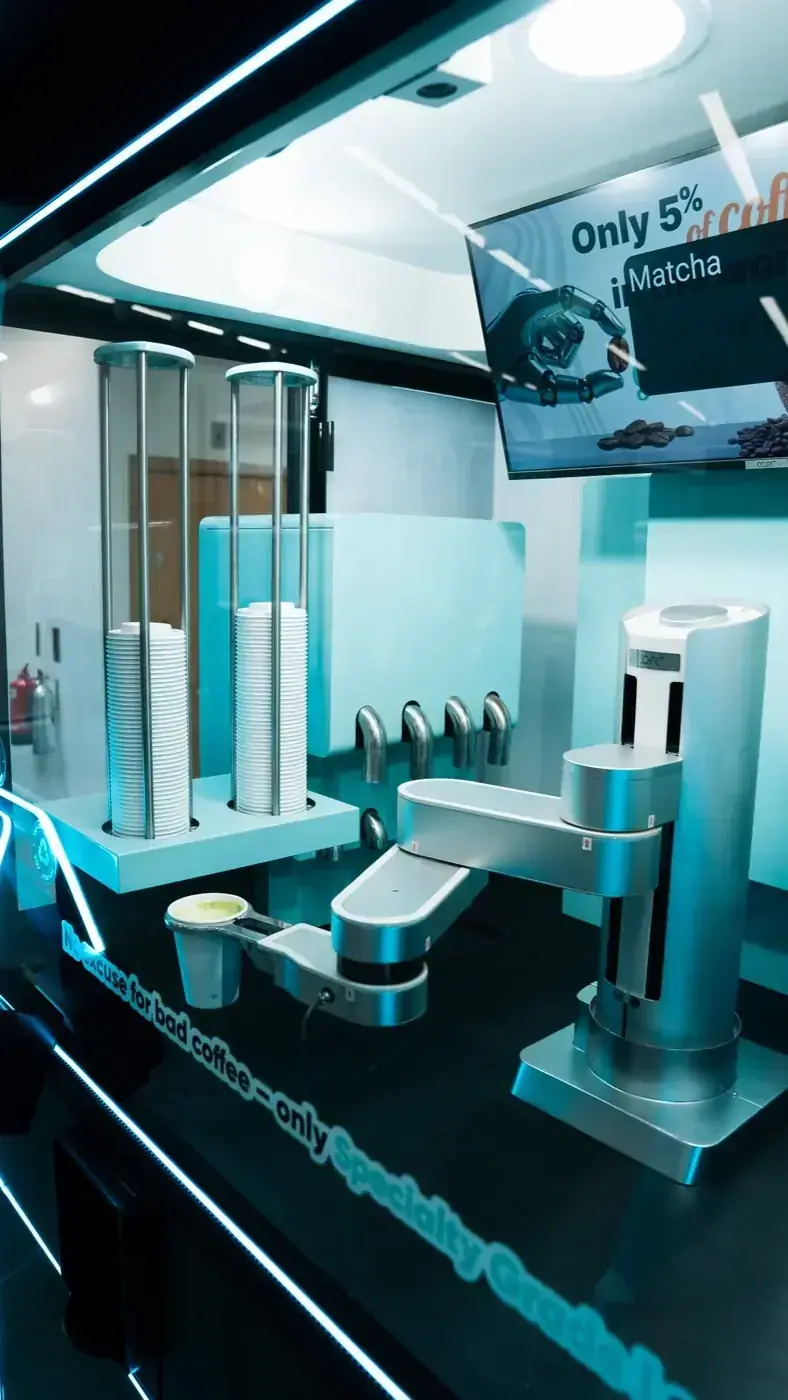
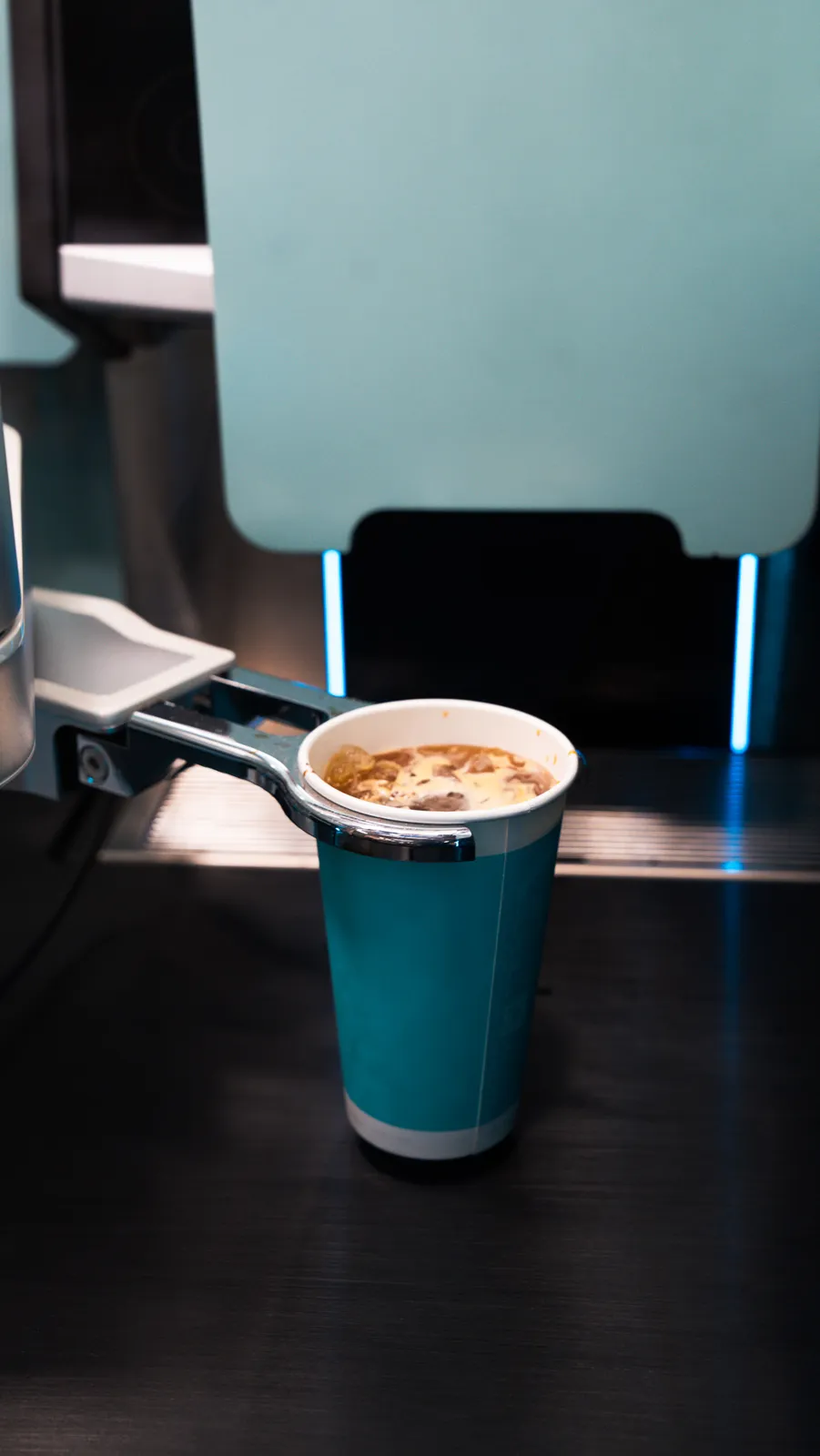
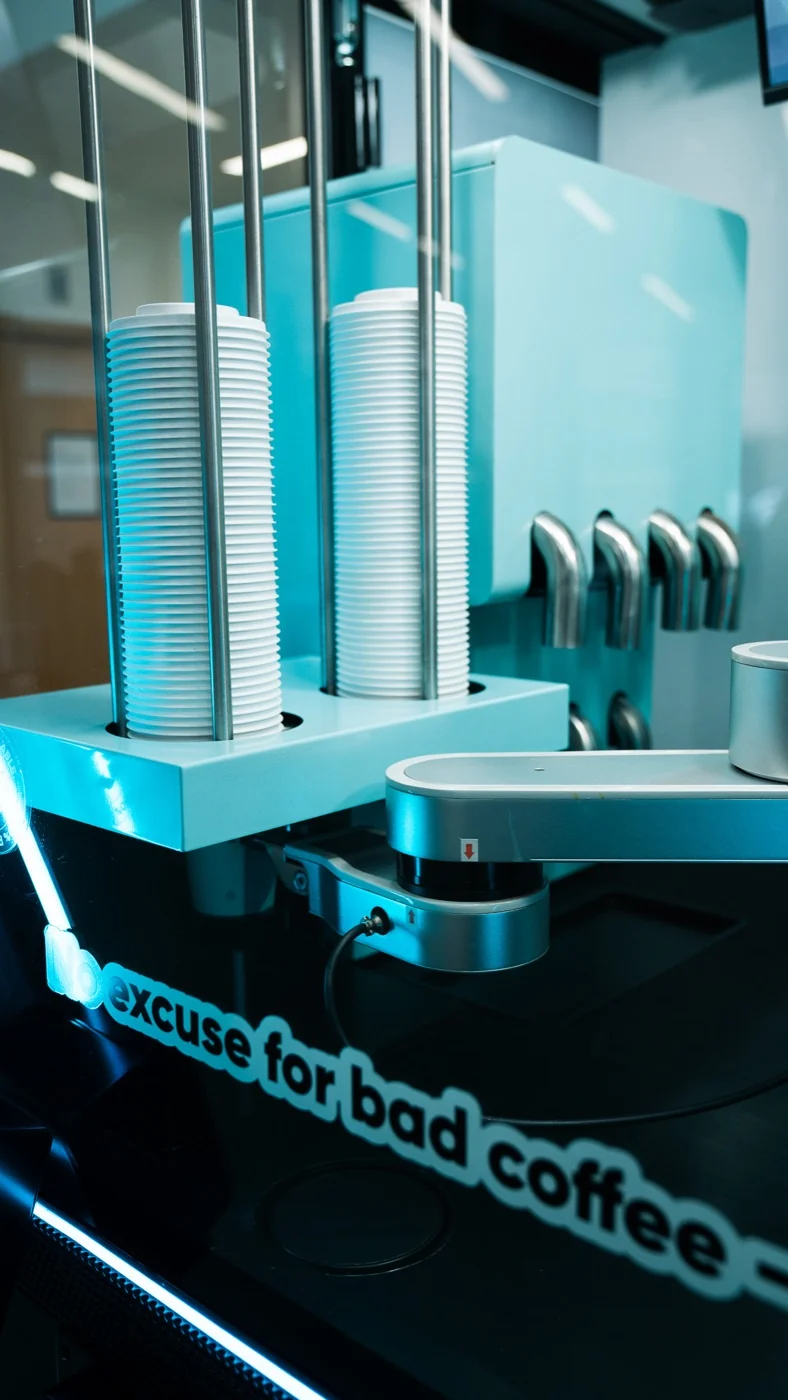
Photographed at City St George’s, University of London — our live site. Real photography, no renders.
A fifteen-minute break cannot absorb a kettle queue in a staff room of forty people.
This is the part nobody puts in the business case, because it is nobody’s job to write it down.
Access is controlled by where it sits — staff room only, or sixth-form block, with a card reader that can be time-limited.
Same drink at 06:00 and at 22:00, without a wait, from 2.5 m² of floor.
Not a generic day. This is how the demand actually arrives in this kind of building — including the hours a staffed counter is paid for and nobody comes.
Staff arrive before the students, and this is the calmest trade of the day. It is also the cup that decides whether the machine gets talked about in the staff room by 09:00.
Registration, then two teaching periods with nobody in a corridor at all. A staffed counter would be paid for this stretch; the kiosk is simply not earning, which costs the school nothing.
Break. The single most compressed peak of any venue on this site — a whole staff room arrives inside two minutes and every one of them is back on duty at the bell.
Lunch, and the only window long enough for a sixth-form queue to form and clear. In a school with an open-gate policy this is also the hour when the spend physically walks off site.
The end of the day, marking, and the start of the after-school clubs. Thin, but reliably staff-only, and it is the hour a kettle in a staff room is least likely to be filled.
Parents' evenings, open evenings, governor meetings, twilight INSET. A few nights a term, high volume, and always outside catering hours.
Zero trade for weeks at a time, with occasional bursts if the site is let for holiday clubs or exams. The pattern is understood in advance rather than discovered.
Two spots forty metres apart in the same building can differ by half the sales. These are the positions that work in schools and colleges — and the one that does not.
The default and the easiest to agree, because it sits entirely inside adult space and answers the safeguarding question by geography. It puts the kiosk where the fifteen-minute break actually happens, and it takes the kettle queue out of a room that was never designed for forty people to make drinks at once.
The commercial position rather than the goodwill one. It works where sixth formers already have their own entrance, common room and study space, because that boundary does the access control for you without a policy document. It also keeps lunchtime spend on the site instead of at the shop across the road.
On a split or multi-block site the staff room in the main building is useless to the department teaching in the annexe. A second position where staff actually spend their break — the workroom, the science prep room corridor — reaches people who would never cross the site in fifteen minutes.
In a school the front hall is the safeguarding boundary, the fire assembly route and the visitor sign-in point all at once. A queue there is an obstruction during exactly the minutes it would be busiest, and it puts a paid machine in front of every visiting parent and inspector as the first thing they see.
In a school the decision is almost never made by the person who first asks for it. A head of department or a member of the senior team sponsors it, the school business manager owns the commercial side, the site manager owns the practicalities, and the head teacher signs. In a multi-academy trust there is one more layer above that: an estates or procurement lead at trust level who may want the same arrangement offered to every school in the group.
What moves it quickly is answering the two questions a school always has before anyone mentions coffee. The first is safeguarding: who can reach it, and at what times. The second is whether it disturbs anything the school is already contractually committed to, usually a catering contract. Neither is a hard question, but both have to be answered by the position on the plan rather than by assurance, which is why we ask to walk the site.
That is decided by where it stands. In the staff room it is inside adult space and the question does not arise. In a sixth-form block it serves sixth formers because they are the only people who go there. Where a school wants a firmer boundary than geography, the payment side is card and contactless only, so a school card scheme can be the gate.
It can, and it is worth checking before we survey rather than after. Many catering contracts grant exclusivity over food and drink sold to students but say nothing about a staff room. That is one reason the staff-room position is the usual starting point in a school with a contract caterer.
We are. It is our equipment, tested and insured as our equipment, and it plugs into a standard 16A socket. Your premises officer is not adopting an asset, does not need to add it to the school's inspection schedule, and has nothing to service.
Nothing, and that is the point. It stands idle in a locked building at no cost to the school, because there is no rent, no standing charge and no wage to cover. If the site is let for holiday clubs or summer schools, it simply trades those weeks instead.
No. It stands on the floor, takes a refillable water supply and plugs into a standard socket, so there is no drainage and nothing fixed to the fabric. In a PFI or trust-owned building that distinction matters, because it keeps the request out of the process that governs alterations.
None. It is cashless, so there is no float, no cash box in a school building and nothing for the office to count or bank. Schools that went cashless years ago do not have to make an exception for it.
Nothing here needs plumbing, drainage or a fixing to the fabric of the building. The kiosk stands on the floor and plugs into a standard socket.
A vending contract creates work for your facilities team. This one does not: restocking, cleaning, faults and reporting are ours.
The kiosk reports what it has left, so replenishment is scheduled from consumption rather than a fixed round. In a school that matters twice over: a visit can be timed for a lesson period rather than break, and a term-time pattern means nobody is driving to a locked building in August.
Our engineer signs in as any contractor does and is escorted or badged to whatever standard the school sets. That is agreed at survey and written into the arrangement, because a school that has to improvise a visitor procedure for a coffee delivery will stop taking the deliveries.
The milk path, the drip tray and the interior are on our schedule. There is no open jug on a hot plate, no grounds bin for a member of staff to empty and no descaling rota pinned to a staff-room cupboard, which is the single most common thing the existing machine has already failed at.
The kiosk reports its own fault state, so in most cases we know before the school does. Nobody in the front office has to log a job, and there is no maintenance line in the premises budget for a machine the school does not own.
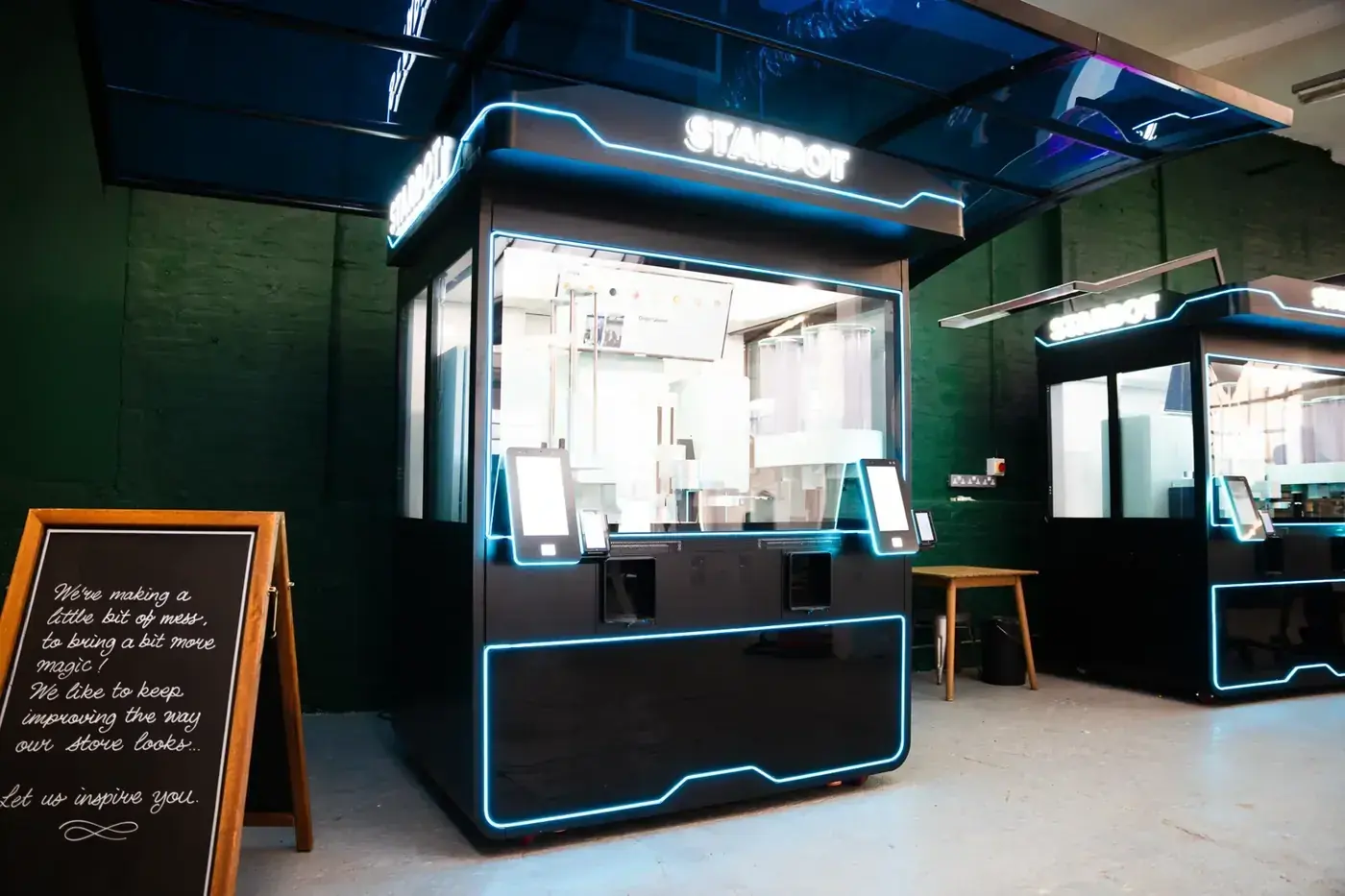
Photographed at our live site in London. Real photography, no renders.
A school signs a site licence rather than a lease. A licence is permission to place and operate a machine in an agreed spot; it does not hand over exclusive possession of any part of the building and it does not create a tenancy. For a school that is the difference between a decision the business manager can make and a property matter that has to go to the trust or the local authority.
The commercial terms sit on top of that. On revenue share there is no capital cost and the school takes an agreed share of every cup, which is site commission on the same principle as any vending agreement — the share is agreed per site rather than published, because a sixth-form college of two thousand and a primary staff room of twelve are not the same offer. Where a school would rather run the machine itself, it is available on a five-year lease at £1,790 a month.
Term dates are written into the arrangement rather than assumed. A school year is not a calendar year, and an agreement that ignores that would leave a school explaining every August why a machine that sold nothing still owed something. It does not.
Exit is deliberately plain. Notice on either side, we collect the kiosk, and because nothing was plumbed or fixed there is no reinstatement to argue about. Schools change caterers, change trusts and rebuild blocks, and an agreement that punished them for it would be one we spent our time enforcing rather than serving.
The commercial shape — a share of every cup, or a fixed monthly fee for the space — is set out before anything is installed. See how hosting works.
If one of the rows above ours fits your building better, take it. We would rather not install a kiosk than install one into a position that cannot carry it.
Free, already there, and defended by at least one member of staff who bought the tin.
Forty people cannot make forty drinks in a fifteen-minute break from one kettle, so the break is spent queueing and the last three people give up. Somebody is also washing up, and it is always the same somebody.
Already staffed, already serving students at lunch, and the coffee is on the same till as everything else.
It opens for service periods, not for break at 10:45 in the staff room and not at all for a parents' evening at 18:30. Staff also end up queueing behind three hundred students for a drink they have eleven minutes to consume.
Cheap, common in colleges, runs all day, and nobody has to look after it.
It sells the drink people settle for. In a sixth-form block that does not stop anyone crossing the road to the shop, which is the actual leak the school was trying to plug, and in a staff room it becomes the machine everyone complains about.
A real coffee, owned by the school, with a supplier on a service contract.
Descaling, milk, cleaning and refilling become the site manager's job or nobody's job, which in a school building means nobody's. The school also carries the capital cost and the service contract through August, when it sells nothing at all.
Barista-grade drinks without a wait, no staff, no rota, that footprint, and no capital cost on revenue share.
It trades for around thirty-nine weeks of the year and stands idle for the rest, so as a commercial site a school is one of the thinner ones we do. A staff room of a dozen people will not support it, and where safeguarding restricts it to adults only, the audience is smaller than the building suggests. We would rather say that at the survey than install and remove a term later.
The last row is ours, with its real downside written in. Revenue share and unit pricing are agreed per site and are not published.
Four cases in this venue type where we would tell you not to bother. They cost us installs; printing them costs less than a kiosk that never earns.
Each of these has happened somewhere, and each shows up as the same thing on the report: a position that takes half of what the footfall said it would.
It becomes an obstruction on the visitor route and the fire assembly path during the busiest four minutes of the day, and it is the first thing every parent and inspector sees. Schools that try this usually move it within a term, having already spent the goodwill.
The boundary stops being geography and starts being supervision, which means a member of staff is now policing a coffee machine at break. That is a job nobody agreed to take on, and the machine gets blamed for a decision the plan made.
Staff in the annexe cannot cross the site and get back inside fifteen minutes, so half the intended users never touch it. The site looks underused when the real problem is that the walk is longer than the break.
Holiday clubs, exam boards and community lettings are exactly the weeks a school site is occupied out of term, and a kiosk behind a locked internal door sells nothing to any of them while also being unreachable for restocking.
Density matters to us as much as footfall: several sites inside one servicing round is what keeps a kiosk free to host.
The largest schools estate outside London sits alongside the M42 business parks, so a servicing round can cover education and commercial sites in the same morning.
Split-site secondaries and sixth-form colleges are common here, and the walking distances between blocks are exactly what makes one central staff room useless at break.
A compact centre with heavy further-education provision, where sixth-form and college sites sit close enough together to make several positions viable at once.
A dense city with large secondary and college sites, and enough of them within a short drive that engineer routing stops being the constraint.
The position does most of the work: in a staff room it is inside adult space, and in a sixth-form block the only people who go there are sixth formers. Where a school wants a harder line than geography, payment is cashless, so a school card scheme can gate it, and the machine can simply sit in a room that is locked outside break and lunch.
That is a school policy question rather than a machine question, and the answer most schools reach is the one we recommend: adults and sixth formers only, decided by where the kiosk stands. The menu also carries drinks that are not coffee at all — hot chocolate at £3.50, chai and matcha at £3.80, and a babyccino at £1.50.
Each drink is served without a wait and nobody is waiting for a kettle to boil or washing a cup afterwards, so the queue moves at machine pace. The honest constraint is that it is one machine — a staff room of forty arriving in the same ninety seconds will still form a queue, but it clears inside the break rather than outlasting it.
Nothing up front on the revenue-share model. We install, stock, service and insure it, the school provides the corner and a socket, and takes an agreed share of every cup sold. If the school would rather run the machine itself, it is available on a five-year lease at £1,790 a month.
It stands idle and costs the school nothing, because there is no rent, no standing charge and no wage behind it. A staffed counter cannot survive a six-week August; a machine with no wage bill can. If the site is let over the summer, it trades those weeks instead.
Usually not, but it has to be checked. Contract caterers commonly hold exclusivity over what is sold to students and say nothing about the staff room, which is why the staff-room position is the normal starting point in a school with a caterer in place. We would rather read the clause before surveying than after installing.
Our engineer, and site access follows whatever procedure the school already applies to contractors — signing in, escorting, or a badged arrangement agreed at survey. Because the kiosk reports its own stock levels, visits can be timed for a lesson period rather than turning up mid-break.
None. There is nothing to bank, nothing to count and no cash box sitting in a school building overnight. For a school that went cashless years ago, it does not reintroduce the problem.
Yes, and on a split or multi-block site that is often the sensible answer, because staff in an annexe cannot reach the main staff room and get back inside fifteen minutes. The two positions are different arguments — goodwill in one, keeping lunchtime spend on site in the other — and they can be agreed separately.
Not what you were after? All sixteen venue types · Host a kiosk at your site · Own a STARBOT franchise · Lease a unit · Own one · £1,790/mo
Postcode, venue type and rough daily footfall is enough to start. We come back with a footfall-based model for your site — usually within a day.
No obligation, no credit search, no spam — one reply from the team with the exact numbers for your venue.
Prefer to talk? WhatsApp us — or ask Richard, bottom right.
Ask me anything on this page — the kiosk, the numbers, your site. Voice or chat, any hour.