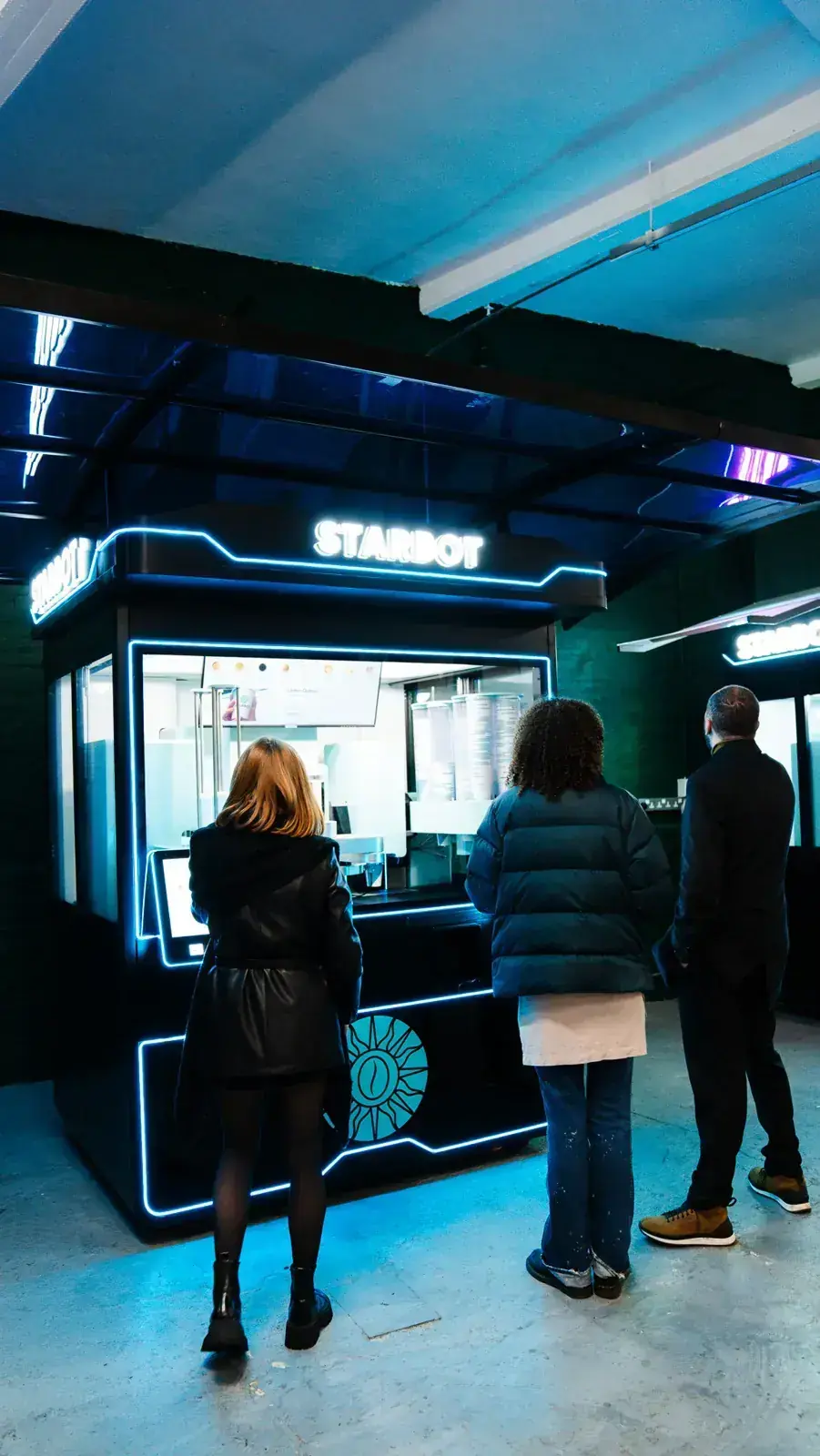
Live · City St George’s, University of London

Coffee machines for car dealerships

A showroom coffee that matches the price of the car. The robot arm is the demo customers film while they wait for a service.

150cups a day, first London site
2.5 m²and one 16A socket
£0to install and to run
STARBOT venue signage above the kiosk at the live London site
The case

Why a kiosk, in this kind of building.

Long dwell — a service wait is ninety minutes, and a sale negotiation is longer. Few people, high value each.

A dealership is the one venue on this site where the coffee is not really the product. Nobody walks into a showroom because of the drinks. What the coffee does is set a price expectation before a single figure is discussed, and a pod machine on a side table next to a £60,000 car quietly contradicts everything the lighting, the flooring and the brand standards manual were paid to say.

The second thing a dealership buys is the wait. A service customer who chose to stay is sitting in your customer lounge for the length of the job, and a sales negotiation runs longer than that. Those are the two longest dwell times of any venue we serve, and they are the hours when the difference between a decent flat white and a sachet of something brown is genuinely noticed, because there is nothing else happening.

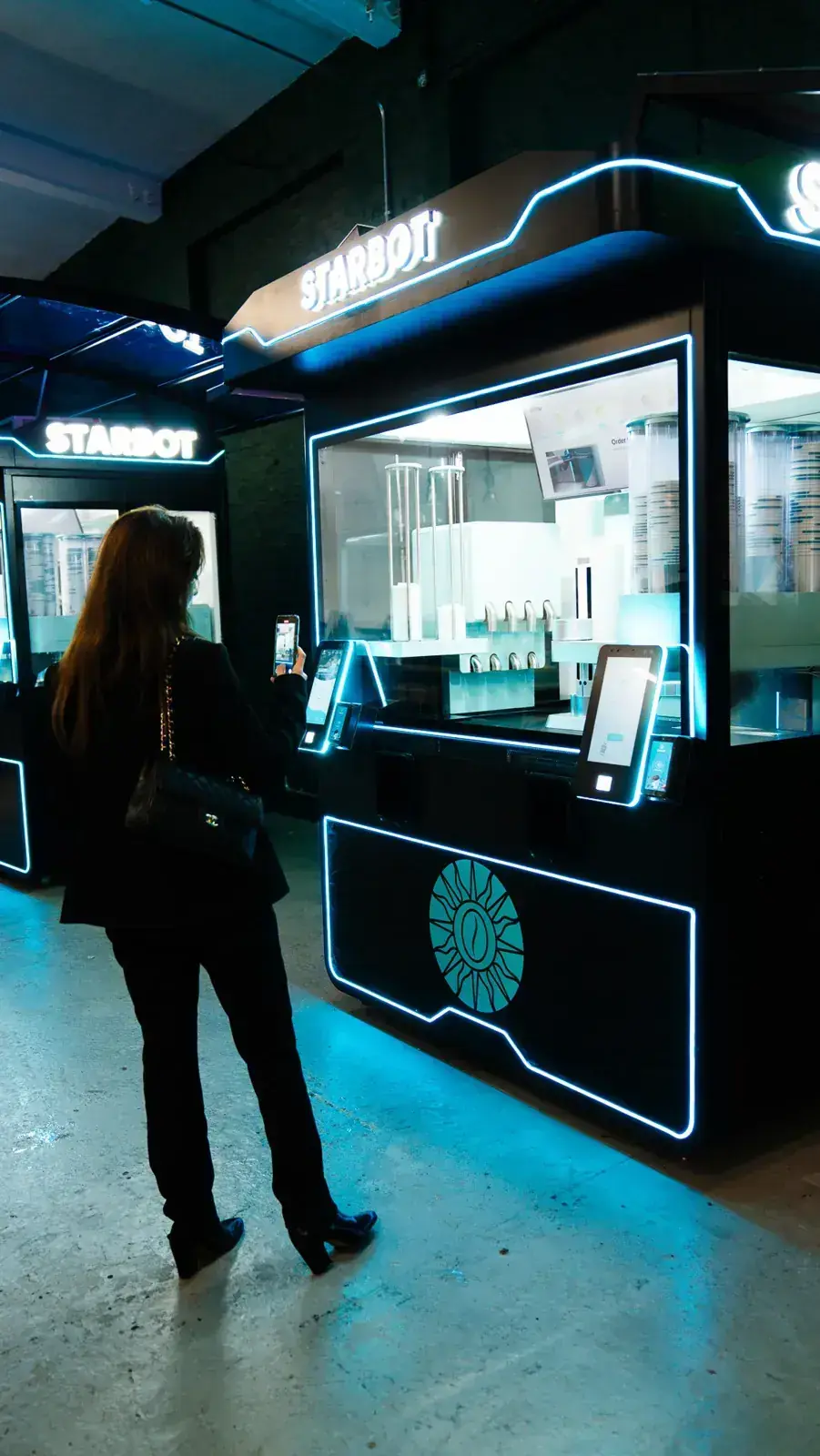
The third thing is that the arm gets filmed. A robot pouring a latte is the only thing in most showrooms that a customer will point a phone at, and it happens without anyone from the sales team asking. That is not why a dealer principal signs it off, but it is the part they mention afterwards, and it is why the position in the showroom matters more here than the tariff does.

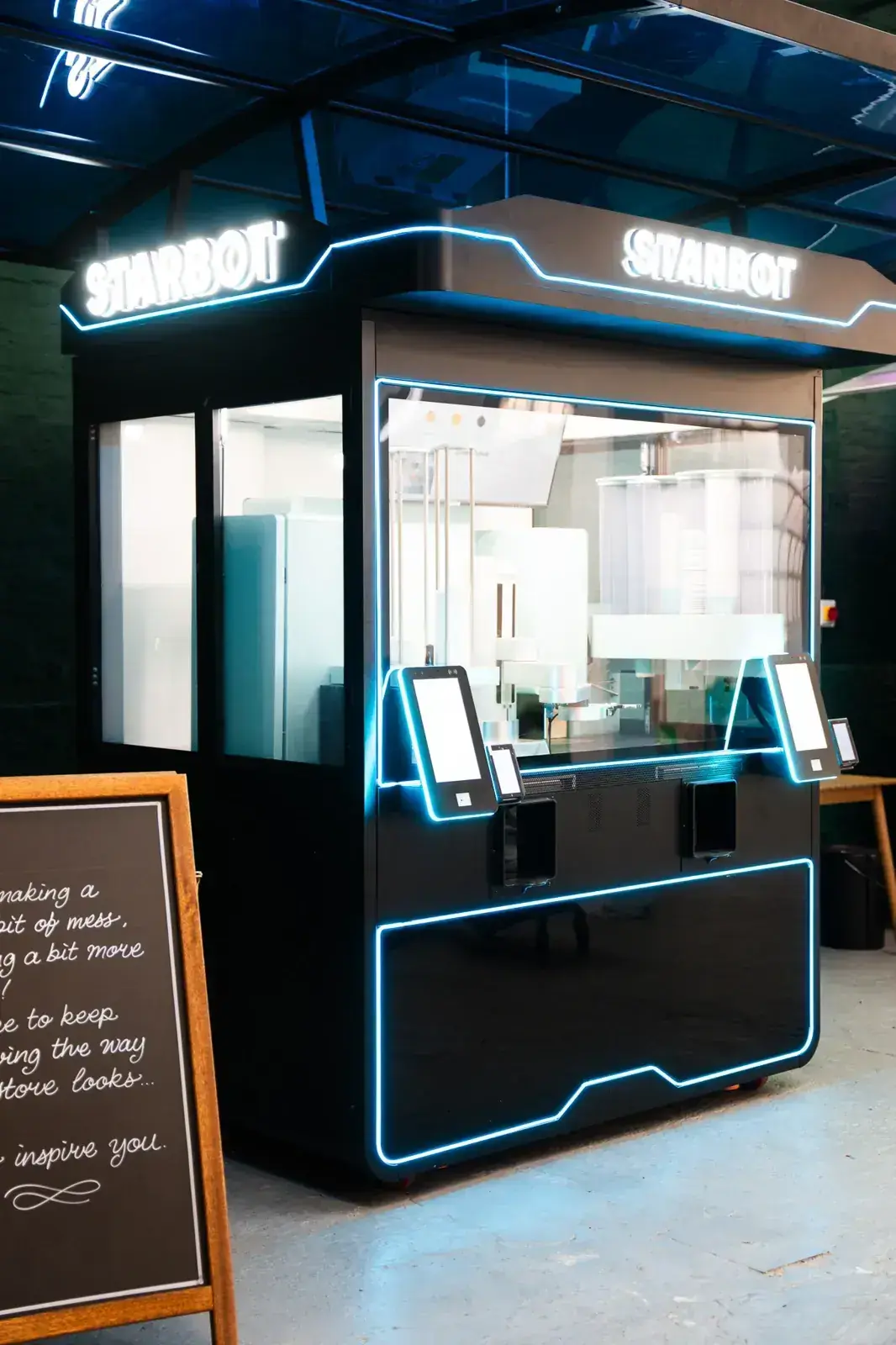
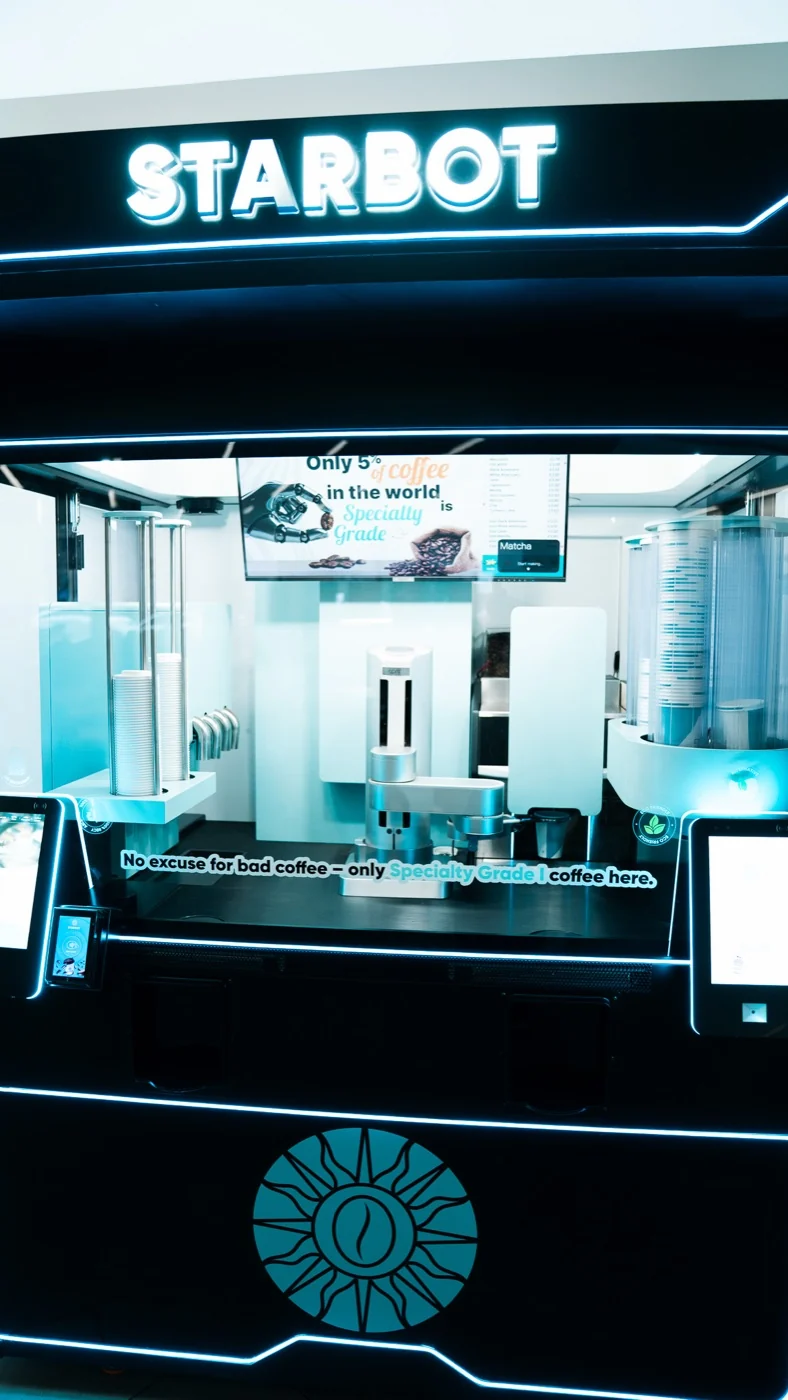
The STARBOT kiosk head on, showing the screen and collection hatch
Front elevation
A guest collecting a coffee from the STARBOT kiosk with no staff present
Served, with nobody behind it
The STARBOT kiosk from the side, showing its footprint against a wall
The unit, side on

Photographed at City St George’s, University of London — our live site. Real photography, no renders.

The first objection

“We give coffee away free to customers.”

What actually happens

Where the incumbent gives up

A pod machine next to a £60,000 car undoes the showroom in one cup.

This is the part nobody puts in the business case, because it is nobody’s job to write it down.

Our answer

What the kiosk does instead

Then it runs in host mode and you cover the cups. The point here is the impression, not the margin.

Same drink at 06:00 and at 22:00, in under 60 seconds, from 2.5 m² of floor.

The trading day

A day in car dealerships, hour by hour.

Not a generic day. This is how the demand actually arrives in this kind of building — including the hours a staffed counter is paid for and nobody comes.

Trading pattern · car dealerships

The service drop-off wall. Every booked job arrives inside ninety minutes, most of them on the way to work, and a proportion of them will stay and wait rather than take the courtesy car.

Waiting customers settle in the lounge for the length of a service, and this is where the machine earns its position. It is also when the aftersales desk is least able to make anyone a drink.

The quiet middle. A handful of browsers, a test drive or two, and staff. A staffed counter would be paid in full for this stretch; the kiosk simply is not busy.

Collections, handovers and the afternoon sales appointments. A handover is a photograph moment, and it is the one time of day a dealership actively wants a prop in the room.

The week's real sales day, with families in the showroom for hours and children who are not being sold anything. This is the day a babyccino at £1.50 stops being a novelty line on the menu.

Browsing without appointments, minimal staff on site, and no chance whatever of anyone standing behind a coffee machine. The kiosk trades exactly as it does on a Tuesday.

The workshop drinks more coffee than the showroom does and currently gets it from a kettle in the back. It is a steady base load underneath a spiky customer pattern.

Why it holds up here
Matches a premium showroom in a way a pod machine cannot
Fills a ninety-minute service wait with something customers film
Can run free-to-customer, with the venue covering consumables
Where it stands

The position decides the numbers.

Two spots forty metres apart in the same building can differ by half the sales. These are the positions that work in car dealerships — and the one that does not.

The customer lounge in aftersales

This is where the ninety-minute wait actually happens, and it is the position with the clearest commercial logic. The customer is captive, bored and forming an opinion about the invoice they are about to be handed, and a proper coffee is the cheapest possible intervention in that mood.

The showroom floor, in sight of the display cars

The impression position rather than the volume one. It works where the brand standards allow a free-standing unit in the display area, and it is the only siting where the arm is doing anything for the sales process — a customer who films it has stayed in the room longer than they intended.

Between the two, at the aftersales reception threshold

Most dealerships have a point where the service side meets the showroom, and a kiosk there is reachable by both audiences without duplicating the machine. On a single-franchise site with modest volume, this is usually the honest answer rather than two positions.

Not the workshop side of the door

The technicians are the steadiest users, but a kiosk in the workshop is a kiosk no customer ever sees, and the whole premium argument disappears with it. If the workshop needs its own drinks, that is a separate conversation and usually a different machine.

Getting it approved

How a yes actually happens here.

In a dealership the chain is short and the constraint is unusual. The dealer principal or general manager decides, the aftersales manager owns the lounge, and the marketing or brand manager checks it against the manufacturer's corporate identity standards. That last one is the real gate: franchised showrooms are built to a manufacturer specification covering furniture, finishes, signage and what may stand on the display floor, and it is audited.

The practical route through that is to treat the showroom and the lounge as two separate questions. Customer lounges are almost always the dealer's own space to furnish; the display floor is not. Where a group runs multiple franchises, the decision often moves up to an operations director who wants one arrangement across every site rather than a per-site negotiation, which is slower to start and much faster to roll out.

Who has to say yes

What estates and compliance ask · answered

Will it pass a manufacturer brand standards audit?

That is the manufacturer's call, not ours, and it depends on where it stands. Customer lounges are normally outside the specified display area and are the dealer's own to furnish; the display floor itself may be tightly governed. We would rather you check the standard before we survey than have a unit moved after an audit.

Can we give the coffee away free to customers?

Yes. It runs in host mode, the drinks are free at the point of use and the dealership covers the consumables. That is the usual arrangement here, because the return is the impression during a ninety-minute wait rather than a margin on a cup.

Does it need plumbing or any alteration to the showroom?

No. It stands on the floor, takes a refillable water supply and plugs into a standard 16A socket, so there is no drainage, no pipework and nothing fixed to the fabric of a building you may not own. When it leaves, the floor is as it was.

Who is liable for it, and is it insured?

We are, and it is. It is our equipment, tested and insured as our equipment, so it does not go on the dealership's asset register and your facilities cover is not being asked to stretch over it.

Can we roll the same arrangement across the group?

That is usually the better conversation. The sign-off is one operations decision rather than five, the servicing round covers several sites together, and the customer experience is consistent across the group, which is normally what a group operations director is actually buying.

What happens when the showroom is refitted?

We move it. Nothing is plumbed and nothing is fixed, so relocating it is a scheduled visit rather than a project — which matters in a sector that refits to a manufacturer cycle rather than when the dealer feels like it.

Nothing here needs plumbing, drainage or a fixing to the fabric of the building. The kiosk stands on the floor and plugs into a standard socket.

What the site has to be able to offer
2.5 m² of clear floor in the lounge or showroom, off the fire routeA standard 16A socket within reach of the positionA level entrance wide enough to bring the kiosk in — showroom doors are rarely a problemConfirmation of what the manufacturer's brand standards allow in that positionA named site contact for restocking and engineer access
Operations

Who does what, once it is in.

A vending contract creates work for your facilities team. This one does not: restocking, cleaning, faults and reporting are ours.

Restocking is scheduled off consumption, not a calendar

The kiosk reports what it has left. In a dealership that matters because demand is event-shaped rather than steady — a plate-change month, a launch weekend or a manufacturer service campaign can double a week's cups, and a fixed round would either run dry or waste a visit.

Host mode changes the money, not the machine

Where drinks are free to customers, the dealership covers the consumables and there is nothing for a customer to pay or for the desk to explain. It is a tariff setting, so a group can run the showroom free-to-customer and still charge in a staff area if it wants to.

Nothing for the aftersales team to clean

The milk path, the drip tray and the interior are on our schedule. There is no open jug, no hot plate and no grounds to empty behind a reception desk, which matters in a room where the surfaces are part of the sales environment and are photographed by customers.

Faults come to us first

The kiosk reports its own fault state, so we normally know before the service desk does. Nobody at the dealership has to log a job with a supplier, and there is no machine on your maintenance schedule sitting between a customer and their coffee.

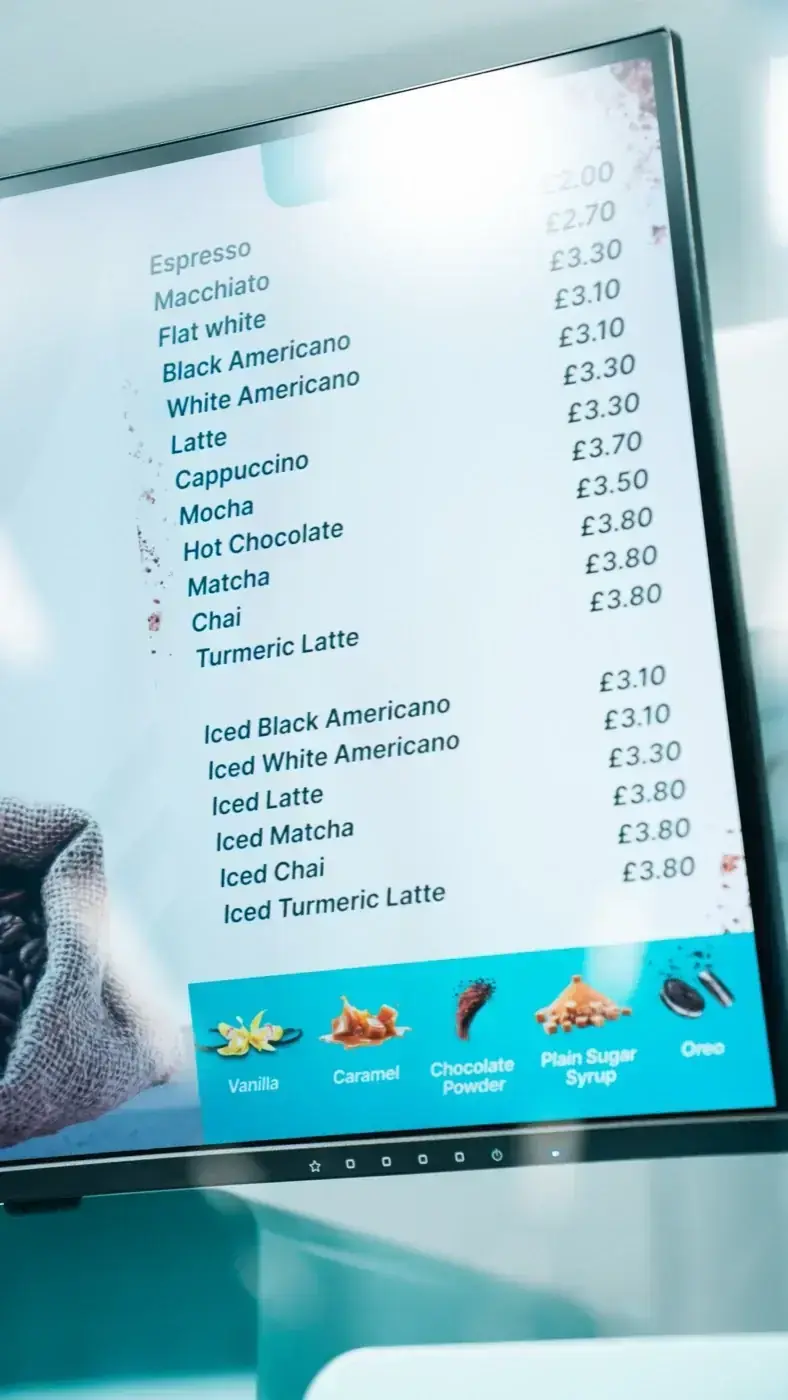
The STARBOT menu screen showing espresso, flat white, cappuccino and latte
The menu, on screen
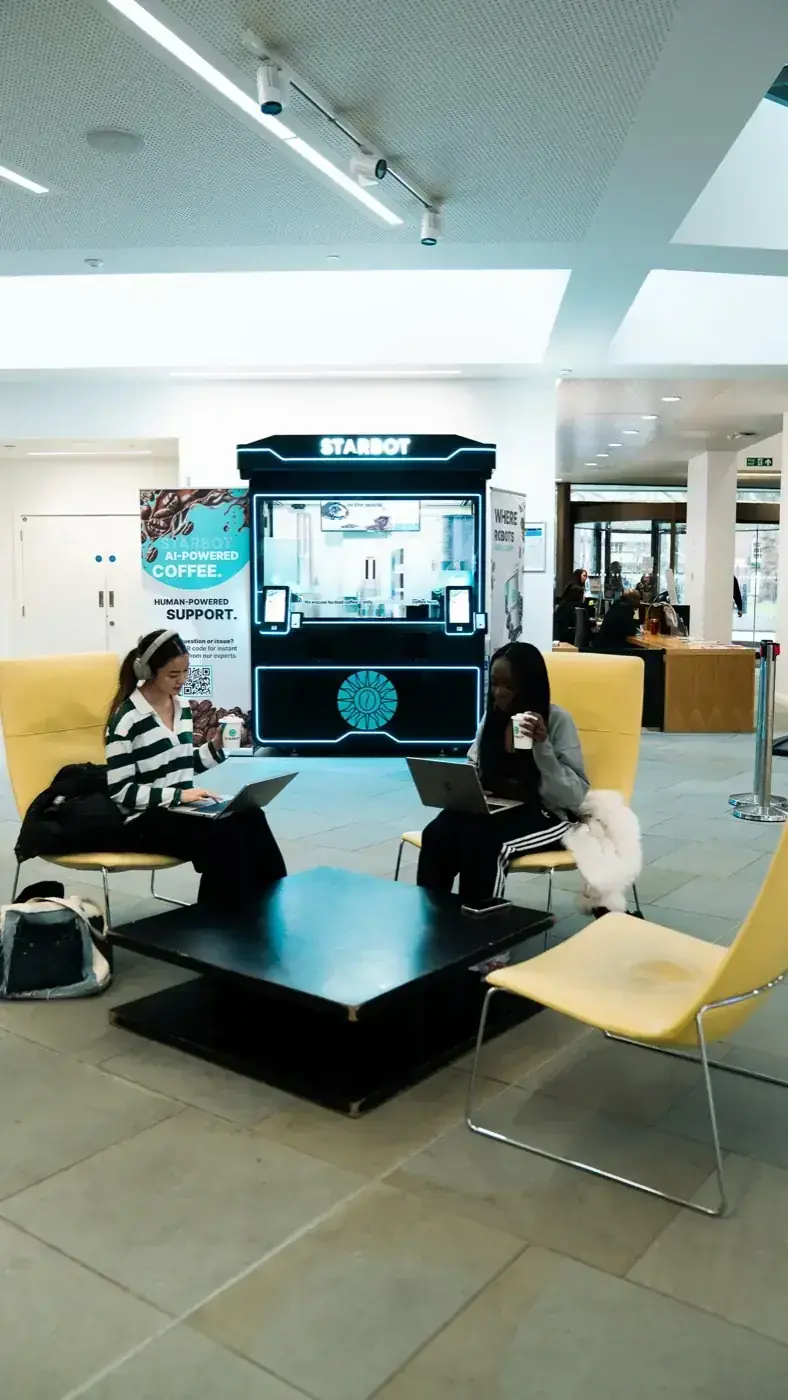
The STARBOT kiosk standing at ground level in a building lobby
Ground level, against a wall
People queueing at the STARBOT kiosk during a busy period
A queue that clears

Photographed at our live site in London. Real photography, no renders.

What gets signed

A site licence, not a lease.

A dealership signs a site licence rather than a lease. It is permission to place and operate the kiosk in an agreed position; it gives us no exclusive possession of any part of the showroom and creates no tenancy. That distinction matters here because a great many dealerships occupy their site under a lease from a property company or the manufacturer's own estate, and a licence does not touch that.

The commercial shape is different from every other venue on this site. Most sites take an agreed share of every cup; dealerships usually do not want a share at all, because they want the drink to be free to the customer. In that case the dealership covers consumables and the machine sits on the floor as a fixture of the experience rather than as a revenue line. Both arrangements exist on the same kiosk and the choice can be changed later.

Where a dealer prefers to run the machine itself, the same kiosk is available on a five-year lease at £1,790 a month — which in a sector that is used to funding equipment and demonstrator stock is often the more familiar route than a placement agreement.

Exit is plain, and in this sector it needs to be. Notice on either side, we collect the kiosk, no reinstatement, because nothing was altered. Franchises change hands, groups acquire sites and manufacturers mandate refits, and an agreement that survived none of that would simply not get signed.

The commercial shape — a share of every cup, or a fixed monthly fee for the space — is set out before anything is installed. See how hosting works.

Versus the alternatives

Every other option, including where we lose.

If one of the rows above ours fits your building better, take it. We would rather not install a kiosk than install one into a position that cannot carry it.

The optionHow it plays out hereWhere it falls down
A pod or capsule machine on a side table

Cheap, instant, and already in most customer lounges in the country.

It sits next to a car costing more than a house deposit and says the opposite of everything the showroom was designed to say. The cost per cup is also the highest of any option once somebody is ordering pods every month.

An office-grade bean to cup in the lounge

A real bean, a real grinder, and it looks the part from a distance.

The milk is the tell, and the maintenance is nobody's job — descaling and cleaning fall to whoever at the aftersales desk cares most, which is a rota that survives about a month. A customer who tastes it once forms the opinion you were trying to avoid.

A staffed coffee bar in a flagship showroom

The best experience available and genuinely right for a large flagship or a premium marque's brand centre.

You are paying a wage through the quiet middle of the day to serve a handful of waiting customers, plus cover for holidays and sickness. Below flagship volumes the cost per cup is many times ours, and the counter is closed on the Sunday browse.

Sending the customer to the retail park café

Costs the dealership nothing, and there is usually somewhere within a short walk.

The customer leaves the site during the ninety minutes you had them, and the aftersales upsell conversation happens to an empty chair. On a Saturday it is also how a family browse ends early.

A STARBOT kiosk

Barista-grade drinks without a wait, no staff, no rota, that footprint, and free to the customer in host mode if that is what the dealership wants.

Dealership volumes are low — this is the venue type on this site where the cup count is smallest, so as a revenue-share proposition it is usually weak and should be bought as an impression instead. Manufacturer brand standards may also simply forbid a third-party unit on the display floor, and a quiet single-franchise site may not justify one at all.

The last row is ours, with its real downside written in. Revenue share and unit pricing are agreed per site and are not published.

When to say no

Where this is the wrong answer.

Four cases in this venue type where we would tell you not to bother. They cost us installs; printing them costs less than a kiosk that never earns.

Siting mistakes

Four ways to put it in the wrong place.

Each of these has happened somewhere, and each shows up as the same thing on the report: a position that takes half of what the footfall said it would.

Putting it in the workshop or the staff area

The technicians will love it and no customer will ever see it. Every reason a dealer principal signed it off — the impression, the wait, the thing people film — is a showroom or lounge reason, and it evaporates the moment the machine is behind a door marked staff only.

Tucking it against the back wall of the lounge

A waiting customer has to decide to get up and cross a room full of other waiting customers, which most people will not do for a drink nobody offered them. The same kiosk on the route between the service desk and the seating gets used by people who were only walking past.

Siting it inside the specified display zone without checking

It passes for months and then an audit says it moves, usually during a launch when the showroom is at its busiest. Checking the brand standard first costs an email; discovering it afterwards costs the position and the goodwill.

Positioning it where a spill meets a demonstrator car

Showroom floors are polished, the display cars are within reach and customers carry drinks to the seats. A metre of separation and a sensible walking line matters more here than in any other venue, because the consequence is not a wet floor sign, it is a paint claim.

Where these cluster

The cities this venue type is thickest in.

Density matters to us as much as footfall: several sites inside one servicing round is what keeps a kiosk free to host.

Birmingham

The dealer estate around the M42 corridor is the densest in the country outside the South East, and the sites sit close enough together for a group rollout to be serviced as one round.

Manchester

A large regional dealer-group presence with several franchises inside a short drive, which is exactly the shape that makes a multi-site arrangement work.

Leeds

Premium marques cluster on the ring-road retail pitches here, and those are the showrooms where a pod machine next to the display cars is most obviously wrong.

Bristol

Out-of-town dealer parks with nothing within walking distance, so a waiting service customer either stays on site or drives away for ninety minutes.

Questions from this kind of building

The ones worth asking before you sign.

We give coffee away free to our customers. Does that rule this out?

No — it is the normal arrangement here. The kiosk runs in host mode, the drink is free at the point of use, and the dealership covers the consumables. What you are buying in that case is the impression during a ninety-minute service wait and the fact that a robot arm is the only thing in the showroom a customer will film, not a margin on a cup.

Will our manufacturer's brand standards allow it?

In the customer lounge, almost always, because lounges are usually the dealer's own space to furnish. On the display floor it depends entirely on the specification you are audited against, and that is the manufacturer's decision rather than ours. It is worth asking your brand manager before we survey rather than moving a unit after an audit.

How much space does it need in a showroom?

A corner of floor and a standard socket. There is no plumbing and no drainage, because it runs from a refillable water supply, so it can stand on a polished showroom floor rather than only where there is a drain. Nothing is fixed to the building and nothing is left behind if it moves.

Can we run it across all the sites in our group?

Yes, and that is usually the easier conversation. One operations decision replaces five separate ones, the servicing round covers the sites together, and the experience is consistent from one franchise to the next — which is normally the point for a group rather than the coffee itself.

What does it actually do for us commercially?

It holds a waiting customer on site for the length of the job. A service wait is ninety minutes and a negotiation is longer, and a customer who leaves for the retail park café is not in the chair when the aftersales conversation happens. That is the return, and it is worth more here than a share of cups ever would be.

Is it noisy in a quiet showroom?

There is a grinder, and it is audible in a room designed to be quiet. In a lounge or an open showroom it reads as activity rather than noise; directly outside a closed sales office or a handover room it does not. That is a siting decision we make on the walk-round rather than something you discover afterwards.

Who fills it and who fixes it?

We do both. The kiosk reports its stock and its fault state, so refills are scheduled from what it has actually sold and an engineer is usually on the way before your aftersales desk has noticed. Nothing goes on your maintenance schedule and there are no consumables for the dealership to order.

What is on the menu — our customers are not all coffee drinkers?

Espresso at £2.00 through to flat white, cappuccino and latte at £3.30, mocha at £3.70, and non-coffee drinks including hot chocolate at £3.50, chai and matcha at £3.80. There is also a babyccino at £1.50, which on a Saturday with families in the showroom is not a trivial line.

Our showroom is refitted every few years. Are we stuck with the position?

No. It is a site licence with notice on both sides, and because nothing is plumbed or fixed, moving it is a scheduled visit rather than a project. Dealerships refit to a manufacturer cycle rather than on their own timetable, so a machine that could not be moved would be the wrong machine for the sector.
Not what you were after? All sixteen venue types · Host a kiosk at your site · Own a STARBOT franchise · Lease a unit · Own one · £1,790/mo

Tell us about your building.

Postcode, venue type and rough daily footfall is enough to start. We come back with a footfall-based model for your site — usually within a day.

Or go direct — WhatsApp hello@starbot.co.uk

Tell us about your site.
We reply the same day.

No obligation, no credit search, no spam — one reply from the team with the exact numbers for your venue.

Prefer to talk? WhatsApp us — or ask Richard, bottom right.